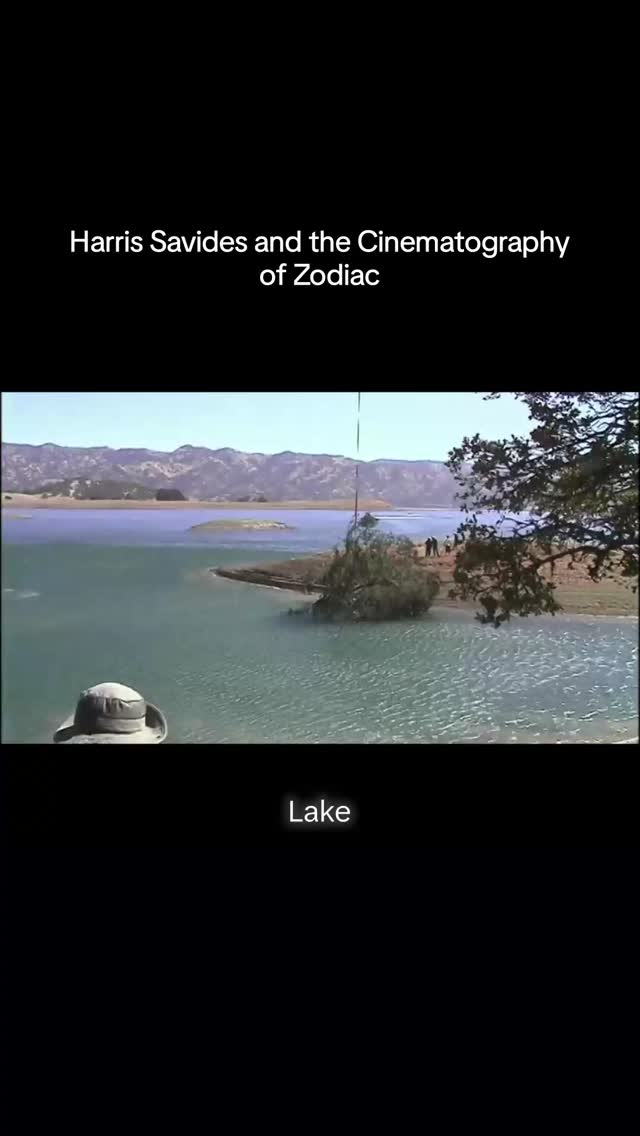
David Fincher’s Zodiac (2007) is a masterclass in procedural storytelling, yet its enduring legacy within the cinematography community stems equally from its relentless pursuit of visual authenticity. The film’s recreation of the Lake Berryessa crime scene, in particular, stands as a testament to this obsession, pushing the boundaries of what is typically considered 'set dressing' and venturing into a realm more akin to forensic reconstruction. For cinematographers, it's not just a visually striking sequence; it's a profound lesson in how every detail, no matter how minute, contributes to the psychological impact and narrative weight of an image.
The anecdote of helicoptering in trees to meticulously match the 1969 crime scene isn't just a quirky production tale; it speaks to a fundamental principle of Fincher’s approach, meticulously executed by his long-time collaborator and Director of Photography, Harris Savides, ASC. Savides, known for his nuanced and often starkly beautiful imagery across films like Gerry and Milk, brought a sensitivity to Zodiac that balanced Fincher's rigorous precision. Their collaboration on Zodiac, shot predominantly on the Thomson Viper FilmStream camera – an early digital cinema pioneer – allowed for an unprecedented level of control over the image, particularly in low-light and high-contrast scenarios, which were crucial for the film's gritty, documentary-like aesthetic.
Recreating Reality: Beyond the Frame
The decision to replant trees for the Lake Berryessa sequence wasn't merely about achieving a visual facsimile for the camera. It was about understanding the spatial dynamics of the crime itself. Fincher's directive wasn't just 'make it look like 1969'; it was 'make it function like 1969.' This meant considering the killer's line of sight, the victims' potential avenues of escape, and the crucial element of concealment. The camera, in this context, wasn't just an observer; it was an investigator, meticulously tracing the paths and perspectives that defined the horrific event. This level of environmental storytelling, where the physical space itself becomes a character, is a hallmark of truly exceptional cinematography.
“It wasn't just about making it look real; it was about understanding exactly how the killer could approach the victims unseen.”
Savides' lighting approach for this scene would have been critical. Rather than overtly dramatizing the moment with artificial theatricality, the focus would have been on naturalistic recreation. One can imagine the meticulous placement of diffusion to soften harsh sunlight, or the subtle use of negative fill to enhance lurking shadows, all designed to mimic the natural conditions of that fateful afternoon. The Thomson Viper, with its 4:4:4 uncompressed output, offered a latitude that allowed for significant post-production grading, enabling Fincher and Savides to fine-tune the color palette to a desaturated, almost forensic hue, further cementing the film's unsettling realism.
The Psychology of Precision
This commitment to hyper-realism extends beyond just the Lake Berryessa scene, permeating the entire visual fabric of Zodiac. From the period-accurate production design to the meticulous costuming, every element serves to immerse the viewer in the grim reality of the 1970s. For cinematographers, this illustrates the profound connection between the visual department and every other craft on set. The DP isn't just composing shots; they're collaborating with production designers and art directors to build a world that feels lived-in, authentic, and ultimately, believable.
The legend of Zodiac’s production, particularly these extreme measures for verisimilitude, serves as a powerful reminder that cinematography is not just about beautiful images for their own sake. It’s about visual storytelling, about evoking emotion, and about underpinning narrative with an unshakeable sense of truth. The choices made on set, from the camera package to the placement of a single tree, resonate deeply with the audience, shaping their understanding and emotional response to the story. This dedication to granular detail, this obsessive pursuit of authenticity, is precisely why the cinematography of Zodiac remains not just legendary, but a foundational text for aspiring and seasoned DPs alike.
It's a powerful lesson in the adage that 'God is in the details.' In the case of Zodiac, the devil certainly was, and Fincher and Savides ensured those details were meticulously, painstakingly, and chillingly present.
This article contains affiliate links. We may earn a small commission at no extra cost to you. Learn more.