David Fincher. The name alone conjures images of precision, psychological depth, and a visual language that is both stark and profoundly immersive. When we talk about a 'Fincher masterpiece,' we're not just discussing a well-directed film; we're delving into an entire philosophy of filmmaking, where every frame, every performance, and every technical choice is scrutinized to achieve a singular, unwavering vision. His 2007 procedural thriller, Zodiac, stands as a towering example of this ethos, a film that not only meticulously recreates a chilling true story but also pushed the boundaries of digital cinematography in its pursuit of verisimilitude.
The Instagram caption alludes to the allure of working with Fincher, and it's no exaggeration. Actors, cinematographers, and crew members alike understand that a Fincher set is a crucible, demanding absolute excellence and often requiring dozens of takes. This relentless pursuit of perfection extends far beyond the human element; it permeates every technical decision. For Zodiac, this meant a groundbreaking commitment to digital acquisition, a choice that, at the time, was still met with considerable skepticism by many in Hollywood.
The Thomson Viper and the Aesthetic of Reality
The film's visual backbone was largely built upon the Thomson Viper FilmStream camera, a bold choice for a major studio production in the mid-2000s. While other digital cameras existed, the Viper offered something unique: a true 4:4:4 RGB output directly to hard drives, bypassing the typical compression hurdles of tape-based systems. This wasn't just about resolution; it was about color fidelity and the ability to capture a raw, unvarnished image that Fincher and his longtime collaborator, Director of Photography Harris Savides, ASC, could then sculpt in post-production. Savides, known for his nuanced and often desaturated palettes in films like Gerry and Milk, brought a painterly eye to the Viper's clinical precision.
“The Viper allowed us to capture a sense of immediacy, a grittiness that felt authentic to the period and the unraveling obsession of the characters. We weren't chasing a 'film look'; we were pursuing a truth.”
The choice of the Viper was not made lightly. Fincher, ever the innovator, had already experimented with digital on Panic Room, but Zodiac was a full immersion. The camera's inherent sharpness, combined with Savides' masterful use of practical lighting and motivated sources, created a distinct aesthetic. The film often feels like a period document, a testament to the power of digital to render reality with an almost forensic detail. There's a deliberate lack of overtly 'cinematic' gloss; instead, we are presented with a world that feels lived-in, slightly faded, and utterly believable, mirroring the increasingly frayed nerves of the characters.
Lighting for Obsession: A Masterclass in Subtlety
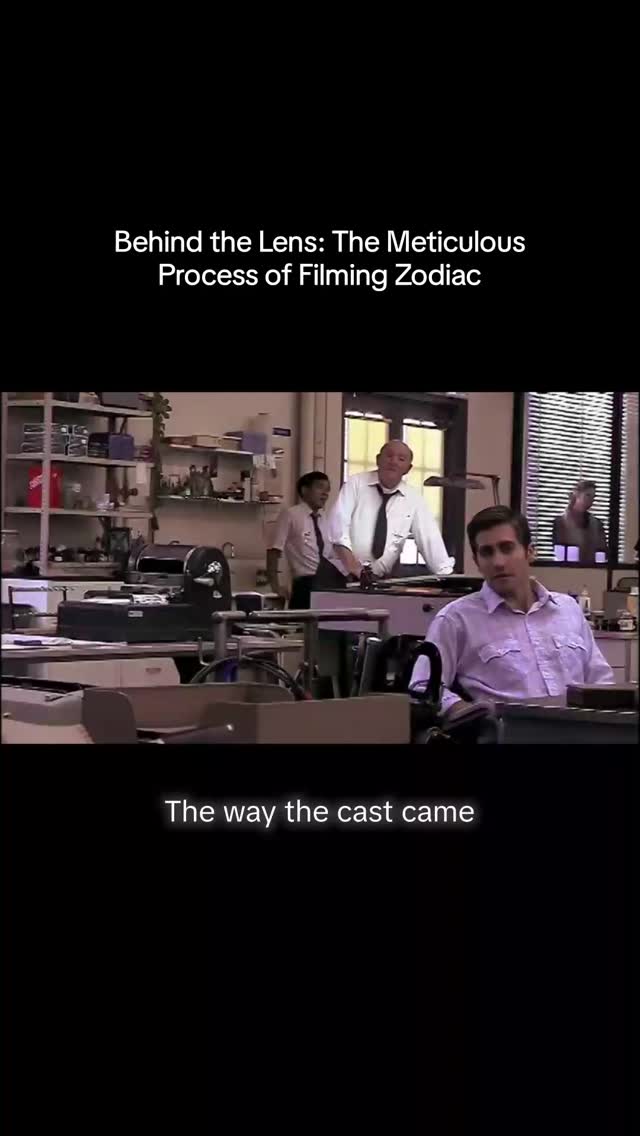
Savides' lighting philosophy for Zodiac was as meticulous as Fincher's direction. Rather than broad, theatrical strokes, the lighting often feels ambient, naturalistic, and at times, unsettlingly stark. Interior scenes are frequently bathed in the cool, indifferent glow of fluorescent lights, or the warm, yet isolating, pools cast by practical lamps. This wasn't about beauty shots; it was about conveying mood and psychological state. Consider the newsroom scenes, where the harsh overheads accentuate the relentless, often fruitless, work of the journalists. Or the iconic basement sequences, where shadows play a crucial role in amplifying the dread.
The technical precision extended to lens choices as well. While specific lens packages for the Viper varied, the emphasis was typically on sharp, clean glass that wouldn't impart too much character, allowing the digital sensor to do its work. This approach aligns with Fincher's desire for a 'transparent' camera, one that doesn't draw attention to itself but rather serves as a window into the narrative. The post-production process, where the raw Viper footage was graded and manipulated, was equally critical, transforming the clinical digital capture into the film's signature muted, yet rich, color palette.
Zodiac remains a benchmark not just for true-crime cinema, but for the evolution of digital cinematography. It proved that digital could not only stand alongside film but could offer unique advantages in capturing certain textures, details, and moods. Fincher and Savides didn't just make a movie; they crafted an experience, a slow-burn descent into obsession, rendered with an unwavering commitment to both narrative authenticity and technical innovation. It serves as a powerful reminder that the 'perfection' on a Fincher set isn't about flawlessness, but about an uncompromising dedication to the story through every available tool.
This article contains affiliate links. We may earn a small commission at no extra cost to you. Learn more.