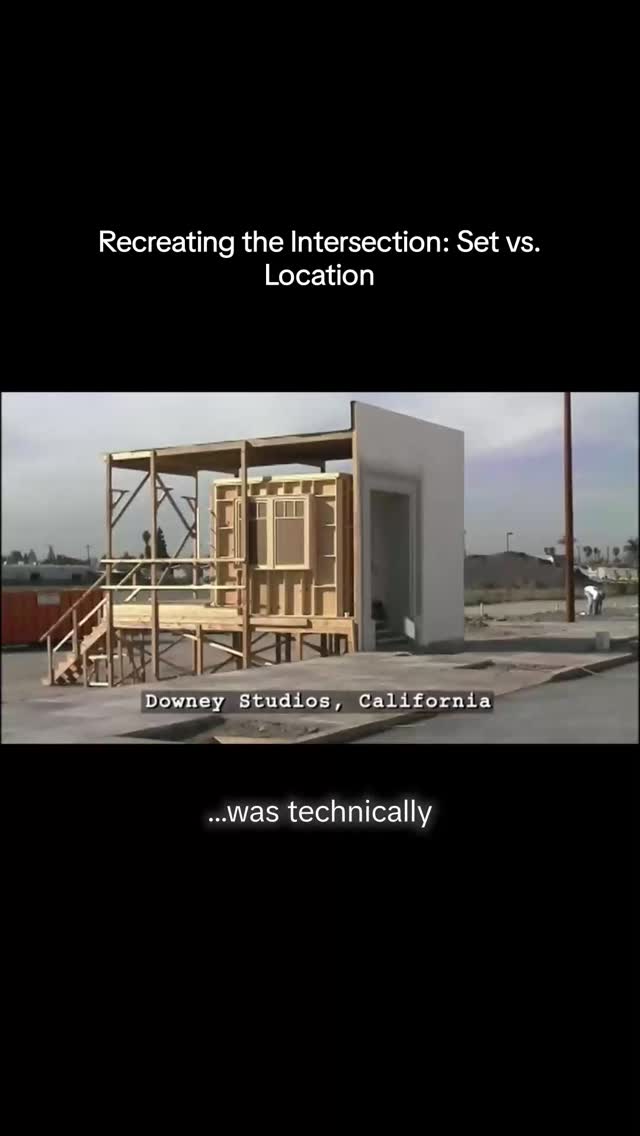
When we talk about the craft of cinematography, the discussion often gravitates towards lighting, camera movement, and lens choices. But the canvas upon which these elements are painted – the production design – is equally, if not more, critical. Few films exemplify this symbiotic relationship as profoundly as David Fincher's 2007 masterpiece, Zodiac. The film’s seamless integration of practical locations with bespoke studio constructs is a masterclass in visual storytelling, creating a world so authentically unsettling that distinguishing reality from artifice becomes an exercise in futility, even for those who built it.
The anecdote surrounding the Washington and Cherry intersection, a pivotal location in the Zodiac killer's reign of terror, is legendary. Instead of attempting to control a bustling San Francisco street for weeks, production designer Donald Graham Burt and his team embarked on an audacious endeavor: reconstructing the entire intersection from the ground up in a Downey parking lot. This wasn't merely a backdrop; it was a character in itself, painstakingly recreated down to the last brick, fire hydrant, and period-appropriate street sign. This level of granular detail, often unseen by the average viewer, is precisely what elevates Fincher's work and makes a film like Zodiac so viscerally impactful.
The Digital Canvas and its Implications
Zodiac arrived at a fascinating juncture in cinematic history, embracing digital cinematography with the Thomson Viper FilmStream camera when many DPs were still staunchly analog. This choice, spearheaded by Fincher and his longtime collaborator, DP Harris Savides, ASC, was not without its challenges but ultimately proved instrumental in achieving the film's distinctive look. The Viper's raw, uncompressed output provided an unprecedented level of data, allowing for extensive manipulation in post-production, a process Fincher has famously championed. This was a departure from traditional film workflows, where the look was largely baked in on set.
“The Viper gave us a degree of control over the image that was truly revolutionary for its time. It allowed us to push the boundaries of what was possible, especially in merging disparate elements into a cohesive whole.”
The digital workflow, particularly the raw data capture, was crucial for integrating the Downey set with actual San Francisco exteriors. It offered a consistent digital negative that could be graded and manipulated to match seamlessly, regardless of whether the footage was captured under controlled studio conditions or the unpredictable realities of location shooting. This wasn't about making digital look like film; it was about leveraging the strengths of digital to achieve a specific aesthetic and solve complex logistical puzzles. Savides' approach to lighting, often favoring practicals and available light augmented with subtle fills, further enhanced the verisimilitude, making the transitions between real and recreated environments imperceptible.
The Art of Invisible Storytelling
The true genius of Zodiac's production design and cinematography lies in its invisibility. The audience isn't meant to marvel at the cleverness of the set build; they're meant to be immersed in the chilling reality of 1970s San Francisco. The meticulous recreation of the Washington and Cherry intersection serves the narrative by grounding the horrific events in a tangible, believable world. It’s a testament to the power of collaboration between departments – cinematography, production design, and visual effects – all working in concert to serve the director's vision.
Fincher's filmography consistently demonstrates this commitment to technical precision in service of psychological depth. From the grimy, rain-slicked streets of Se7en to the sterile, oppressive environments of The Social Network, his films are defined by their carefully constructed visual worlds. For Zodiac, this meant not just accurately portraying a specific time and place, but evoking the pervasive dread and paranoia that gripped a city. The seamless blend of real and fabricated locations amplifies this feeling, making the threat feel omnipresent and inescapable.
In an era where CGI often dominates, the practical ingenuity displayed in Zodiac stands as a powerful reminder of the enduring artistry of physical set construction and the meticulous planning required to pull off such a feat. It's a film that pushes the boundaries of what's possible, not through bombastic visual effects, but through an unwavering commitment to authenticity and a profound understanding of how every element, from the smallest prop to the largest set piece, contributes to the overall cinematic experience. It's a masterclass not just in production design and cinematography, but in the very art of creating a believable world.