David Fincher’s Zodiac, a film that continues to haunt and captivate, is a masterclass in procedural tension and meticulous visual storytelling. While much has been written about its narrative precision and Fincher's directorial rigor, the cinematic alchemy behind its unsettlingly authentic 1970s San Francisco often goes unsung. At the heart of this visual triumph lies the audacious and pioneering work of cinematographer Harris Savides, ASC, who, alongside Fincher, embraced nascent digital technologies to craft a world that felt both deeply real and subtly manipulated. This wasn't just about capturing images; it was about constructing an illusion so seamless, so integrated, that its digital origins remain a revelation even today.
The film’s aesthetic, characterized by its muted palette, stark contrasts, and an almost forensic attention to detail, perfectly mirrors the obsessive nature of its protagonists. Savides, known for his ability to imbue narratives with a palpable sense of mood and character through light and lens, found an ideal partner in Fincher. Their collaboration on Zodiac pushed the boundaries of what was then possible, particularly concerning on-location shooting. The challenge was immense: how to recreate a period San Francisco, particularly iconic neighborhoods like Presidio Heights, without the logistical nightmares and financial burden of extensive set builds or disruptive location control?
The Thomson Viper and the Digital Backlot
The answer, surprisingly for a film so grounded in gritty realism, lay in the digital realm. Savides, a cinematographer with a profound understanding of film stock’s nuances, made the bold choice to shoot significant portions of Zodiac with the Thomson Viper FilmStream camera. This wasn't merely about convenience; it was a strategic decision that unlocked unprecedented creative control. The Viper, an early digital cinema camera, captured raw, uncompressed 4:4:4 data, effectively providing a digital negative with immense latitude for post-production manipulation. This choice, at a time when digital acquisition was still met with considerable skepticism, speaks volumes about Fincher and Savides' forward-thinking approach.
"The Viper allowed us to capture raw data, giving us the freedom to digitally reconstruct entire environments without anyone being the wiser. It was about achieving an invisible effect, not a flashy one."
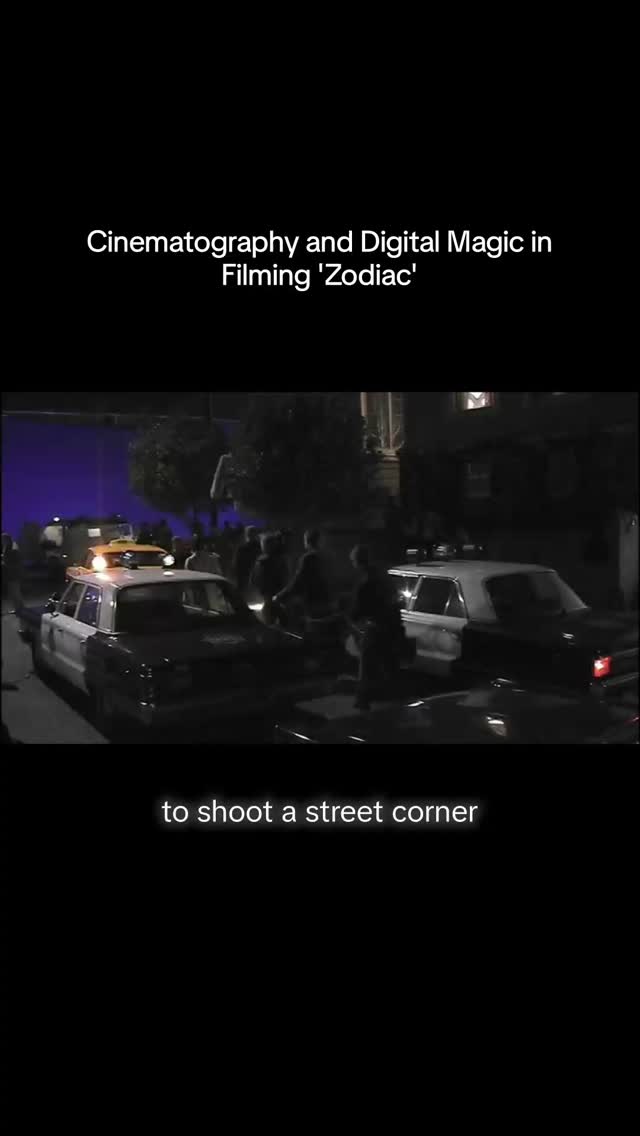
The genius of this approach became evident in the handling of those challenging location shots. Rather than painstakingly dress or block off entire city blocks to revert them to their 1970s appearance, the team leveraged the Viper's capabilities for what amounted to a digital backlot. Savides would capture the essential elements on location – the actors, the immediate foreground – while knowing that the Viper's high-quality digital capture would allow the production to digitally remove modern elements, add period-specific details, and even reconstruct entire buildings or streetscapes in post-production. This wasn't green screen trickery in the conventional sense, but a more subtle, integrated form of digital set extension and environmental sculpting.
Invisible Effects: A Masterclass in Subtlety
The impact of this technique is profound precisely because it is so imperceptible. Audiences are immersed in the period setting without ever questioning its authenticity, a testament to the seamless integration of digital effects. This wasn't about creating fantastical worlds; it was about meticulously recreating a historical reality. The Viper's ability to capture vast amounts of color and luminance data proved crucial here, allowing the visual effects team to match and blend digital elements with the photographed footage with remarkable fidelity. The resulting images maintain a grounded, almost documentary-like feel, even where significant digital intervention has occurred.
Savides' lighting philosophy, often characterized by its naturalism and use of practical sources, further enhanced this illusion. Even when shooting for digital reconstruction, his approach to light and shadow ensured that the integration would feel organic. His work on films like Margot at the Wedding and Greenberg showcases a similar commitment to visual truth, albeit with different technological approaches. In Zodiac, the confluence of his seasoned eye and Fincher's exacting vision, empowered by the Viper, allowed for a level of control over the visual fabric of the film that would have been impossible through purely practical means.
Zodiac stands as a pivotal moment in the history of digital cinematography, not for its overt spectacle, but for its pioneering use of digital tools to achieve a heightened sense of realism and period accuracy. It's a powerful reminder that technology, in the hands of visionary artists like Harris Savides and David Fincher, is not merely a substitute for practical filmmaking but an expansive canvas for creative ingenuity. The film’s haunting atmosphere and indelible imagery are a direct result of this audacious blend of traditional craft and revolutionary digital technique, proving that sometimes, the most stunning visual effects are those you never even notice.
This article contains affiliate links. We may earn a small commission at no extra cost to you. Learn more.