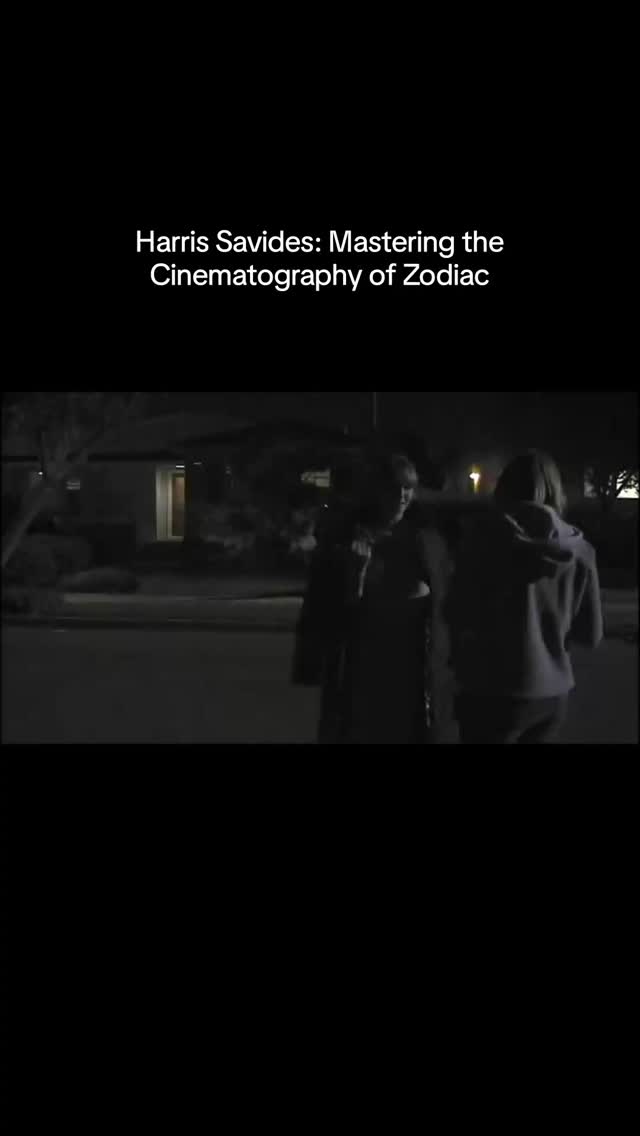
In the annals of cinematic innovation, few films stand as starkly as David Fincher’s 2007 masterpiece, Zodiac. Beyond its gripping narrative and meticulous historical reconstruction, Zodiac represents a watershed moment in the evolution of digital cinematography, largely due to the audacious vision of its director and the late, great cinematographer Harris Savides, ASC. Their decision to shoot almost entirely on the then-nascent Thomson Viper FilmStream camera was not merely a choice of convenience, but a deliberate, almost philosophical embrace of a new visual paradigm that would irrevocably alter the landscape of filmmaking.
At a time when digital acquisition was still largely viewed with skepticism by many in Hollywood, Savides and Fincher saw the Viper not as a compromise, but as an opportunity. The camera, a 4:4:4 full-bandwidth HD camera, offered a 1920x1080 resolution and, crucially, the ability to record uncompressed raw data directly from the sensor via its FilmStream output. This was revolutionary. Unlike other digital cameras of the era, which often recorded highly compressed video, the Viper's workflow, often leveraging an IT-based system like the S.Two D-Mag, allowed for a level of data integrity previously unheard of in digital cinema. This meant that Savides was capturing the purest possible signal, preserving an extraordinary amount of detail and dynamic range that could then be manipulated with unprecedented flexibility in post-production.
The Viper's Unfiltered Gaze: Crafting a Gritty Reality
The aesthetic implications of this technical choice were profound. Savides, known for his ability to imbue images with a palpable sense of mood and atmosphere, found in the Viper a tool perfectly suited to Zodiac's stark, almost documentary-like realism. The camera's inherent characteristics — its slightly desaturated color rendition, its nuanced handling of shadow detail, and its ability to capture the subtle textures of the San Francisco Bay Area in the 1970s — contributed significantly to the film's unsettling authenticity. While some might have characterized the Viper's image as 'clinical' or 'harsh' compared to film, Savides embraced these qualities, using them to underscore the grim, unrelenting nature of the Zodiac investigation.
“We weren’t trying to make it look like film; we were trying to make it look like Zodiac.” – Harris Savides, ASC
This quote, often attributed to Savides regarding his approach to Zodiac, encapsulates the ethos behind their digital pioneering. It wasn't about mimicking celluloid, but about forging a new visual language. Savides, whose filmography includes masterpieces like Gerry and Milk, consistently demonstrated a mastery of light and shadow, and with Zodiac, he adapted his painterly approach to the digital canvas. He often employed soft, diffused sources, sometimes motivated by practicals, to create a naturalistic yet foreboding atmosphere. The Viper’s sensitivity, while not exceptional by today’s standards, allowed for effective low-light shooting, particularly in the film’s many nocturnal or dimly lit interiors, without introducing excessive noise that would compromise the detailed textures he sought to capture. This was crucial for maintaining the film's grounded, unvarnished look.
Beyond the Sensor: The Post-Production Powerhouse
The true power of the Viper's raw data capture was fully unleashed in post-production. The uncompressed files provided an immense canvas for color grading, allowing Fincher and his team to sculpt the film's distinctive palette. The muted tones, the subtle shifts in light, and the overall cool, slightly desaturated look were not inherent to the camera but meticulously crafted in the digital intermediate. This post-centric workflow, enabled by the Viper's data-rich output, foreshadowed the modern digital cinematography pipeline, where the look of a film is often as much a product of grading as it is of on-set capture.
Savides's work on Zodiac was a masterclass in adapting to and exploiting new technologies. His willingness to venture into uncharted digital territory, coupled with Fincher's relentless pursuit of visual perfection, resulted in a film that not only stands as a cinematic achievement but also as a pivotal moment in the history of digital image acquisition. It demonstrated unequivocally that digital cinema, when approached with a discerning eye and a deep understanding of the craft, could deliver images with the same depth, texture, and emotional resonance as film, while opening up new avenues for creative control. The legacy of Zodiac, therefore, extends far beyond its narrative, serving as a testament to the power of innovation in the hands of true artists.