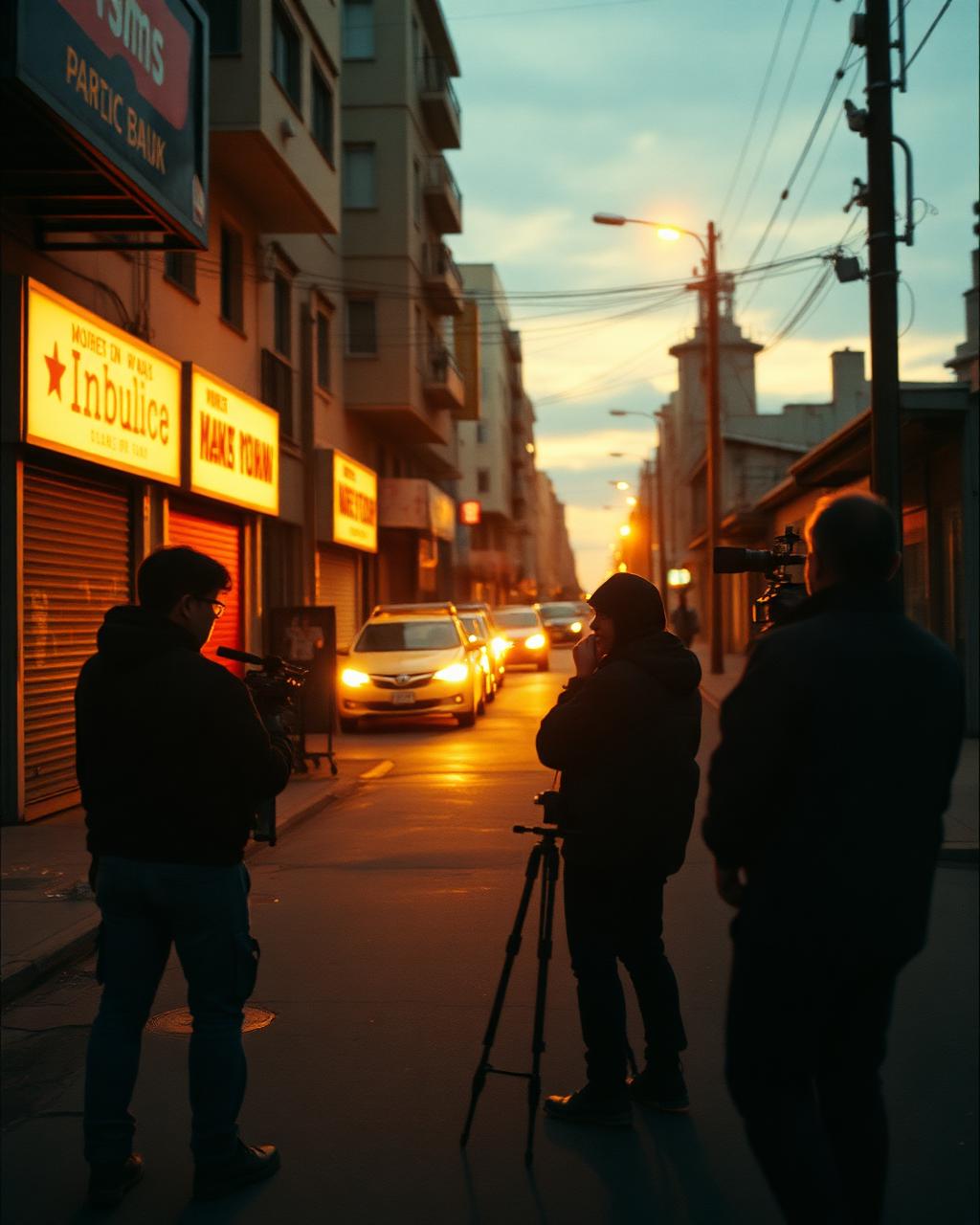
Benjamin Loeb worked with a crew of seven in Hong Kong and used every available light source the city offered. No external lighting equipment. No gaffer. No grip truck. Just a DP and a camera moving through a dense urban environment, recognizing and using the light that already existed.
The city's commercial density meant that within a short walking distance, Loeb had access to extraordinary variety of light qualities. A fluorescent-lit food court providing bright, cool commercial light. Outdoor market stalls with their own practical sources creating warm pools of light in the night. Covered walkways with overhead fixtures creating structured zones of brightness and shadow. Residential streets with mixed street lighting from different eras. Neon signage. Interior restaurant light. Each light source is motivated by the urban function it serves. Each one is ready to be used without negotiation or supplemental modification.
Kogonada told IndieWire about the production process: "We would talk about how many meetings you would have to have to just shoot in one of these locations. But sometimes we saw this great noodle shop and we are like, that is our noodle shop. And then the next day, we are shooting at this incredible space." The speed and spontaneity of location selection created a production where the camera was responsive to the city rather than imposing predetermined plans onto the city.
The editorial intelligence was in choosing which locations to shoot at what time of day. A location's light changes from morning to afternoon to evening to night. Loeb had to understand how each location's existing light would photograph in the morning (high contrast, blue-ish), at midday (harsh, desaturated), in late afternoon (warm, golden), and at night (dark, practical-dependent). The choice to shoot a particular location at a particular time of day was the cinematographic decision. The light was already there.
The result is a film with visual texture that most productions cannot achieve with full lighting packages. The city's organic light sources create color variety, spatial depth, and visual richness that artificial lighting often flattens. There is a lesson for cinematographers with bigger budgets: the most interesting light is often already in the world, waiting to be found. Supplemental equipment can improve light or fix problems, but it rarely creates the kind of visual richness that real urban or natural light provides. Zero lighting budget. Maximum visual variety. Hong Kong did the work. Loeb had to find it, not build it. That is available light at scale.
Gear Recommendations
- Aputure 600d Pro LED | Adorama – B&H Photo
- Nanlite Forza 300B | Adorama – B&H Photo
- Aputure 300d Mark II | Adorama – B&H Photo
- Astera Titan Tube Kit | Adorama – B&H Photo
Note: Links above are affiliate links. Occupy Cinematography may earn a commission on qualifying purchases at no additional cost to you.