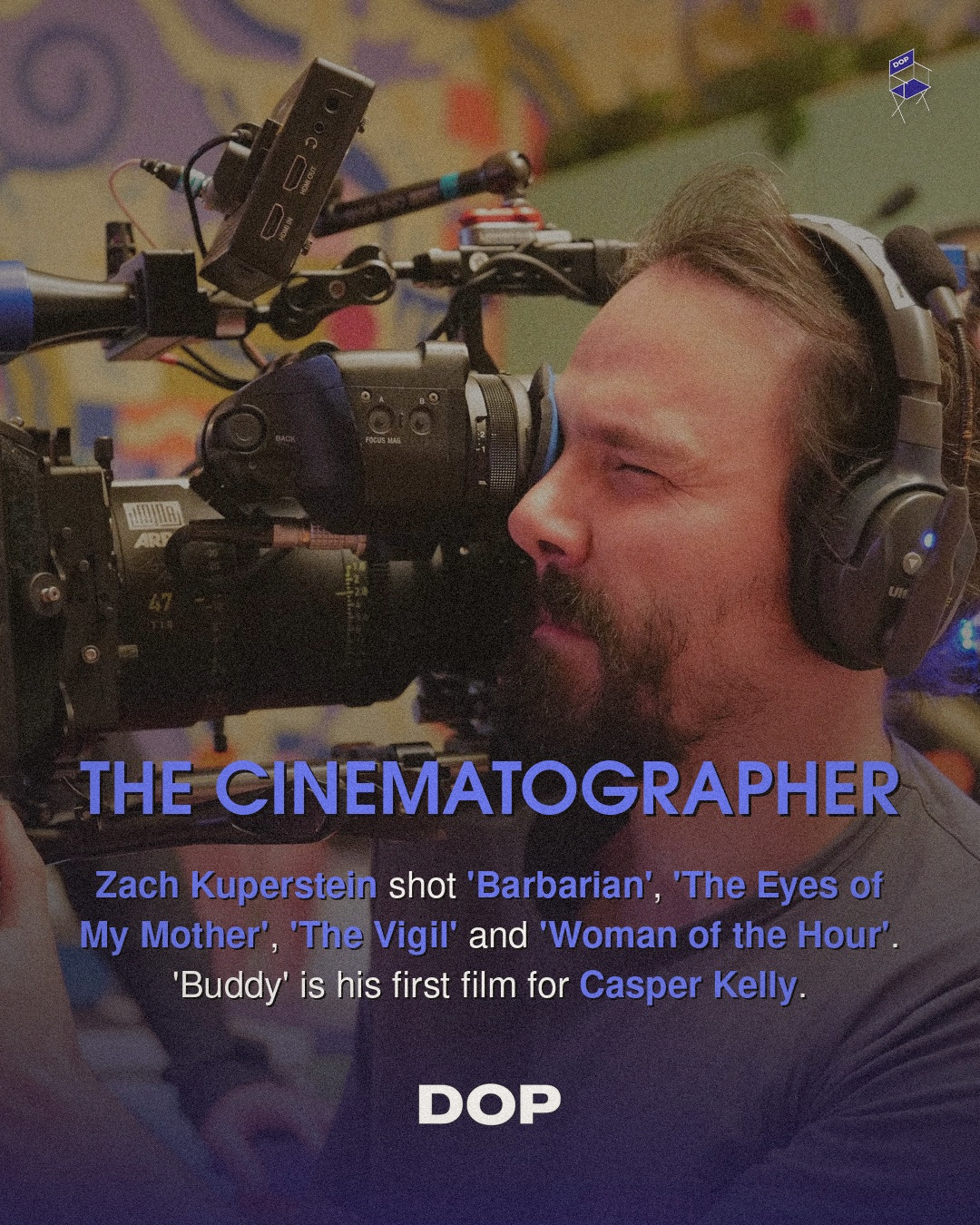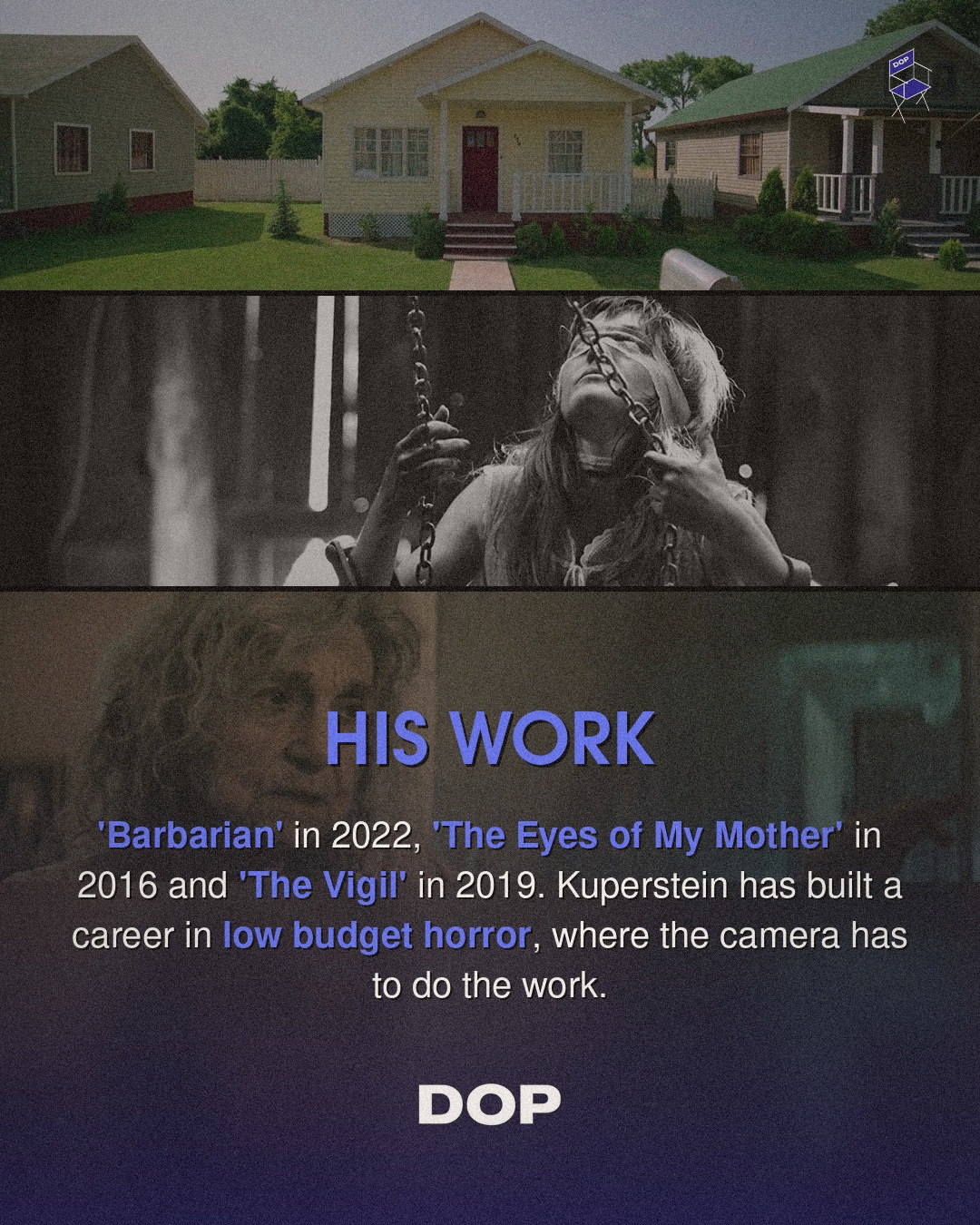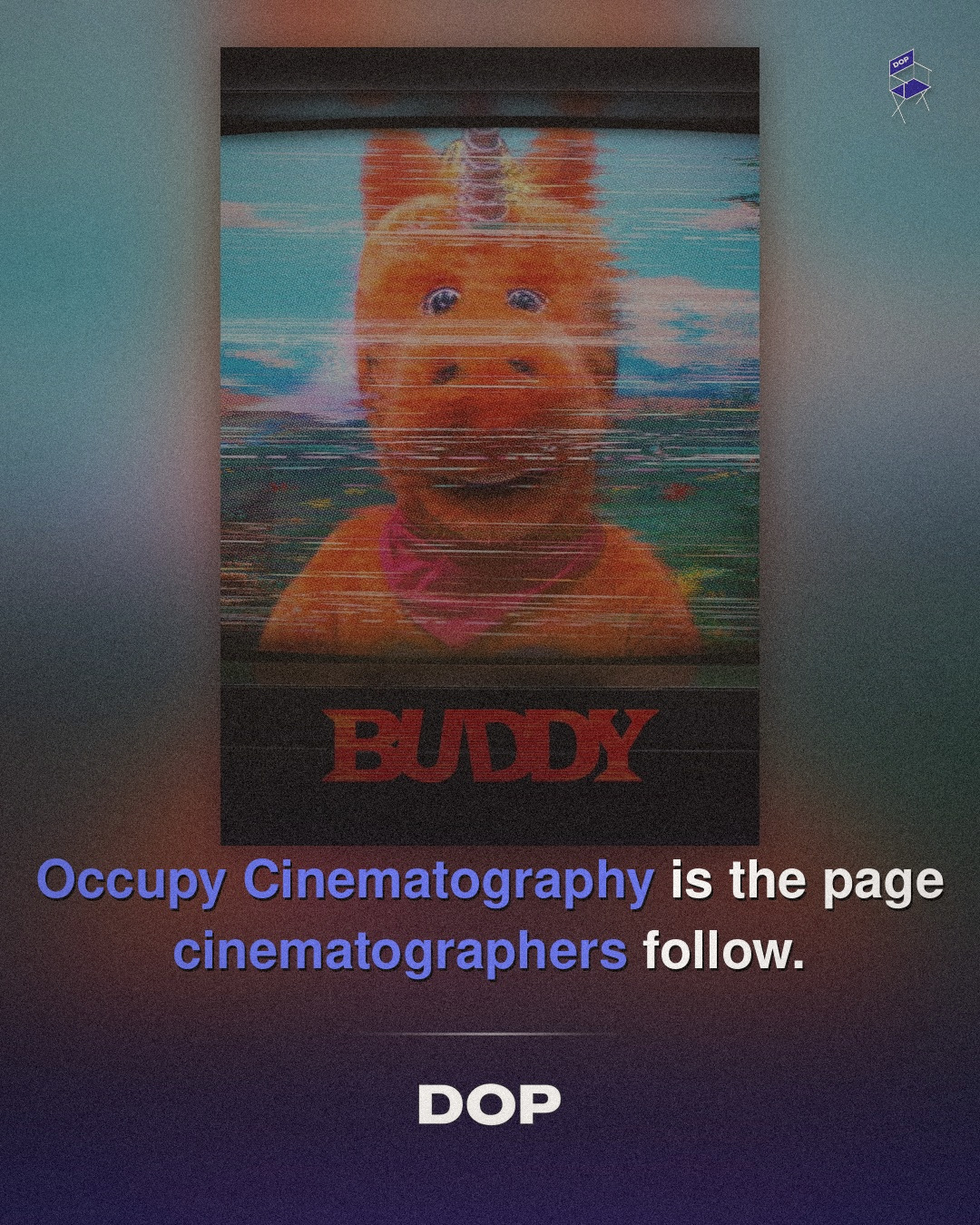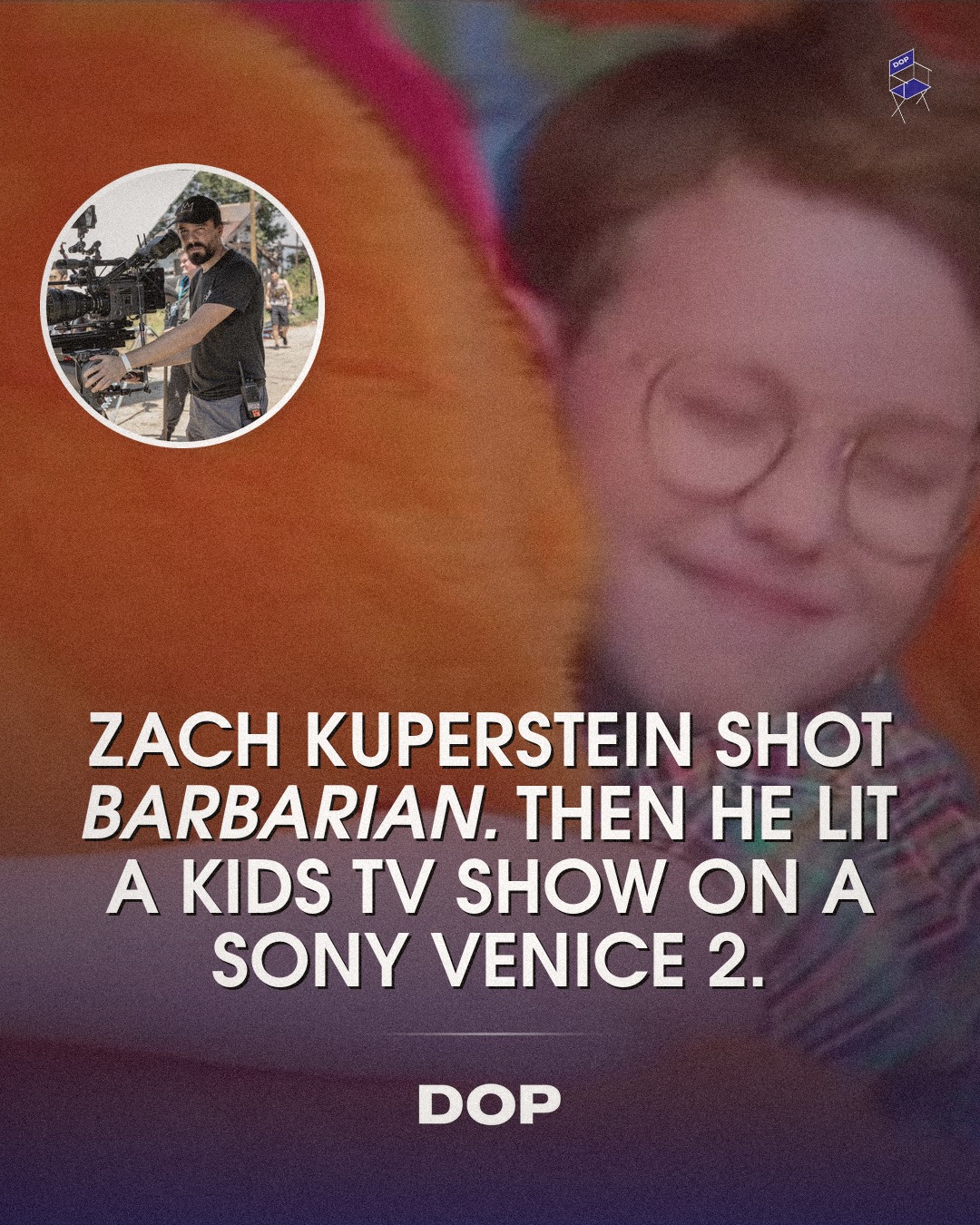
Few contemporary cinematographers command low-budget dread quite like Zach Kuperstein. From the stark, crystalline monochrome of Nicolas Pesce’s The Eyes of My Mother to the suffocating orthodox enclosure of The Vigil and the masterclass in spatial subversion that was Barbarian, Kuperstein has repeatedly demonstrated an uncanny ability to turn logistical constraints into visceral visual grammar. With Buddy, his first collaboration with surrealist director Casper Kelly, the manic mind behind Adult Swim’s viral fever dream Too Many Cooks, Kuperstein tackles a project that demands an entirely different kind of formal dexterity: weaponized pop-culture nostalgia.
Kelly’s hyper-specific brand of dark comedy and psychological horror lives and dies on aesthetic authenticity. To sell a descent into madness steeped in the visual vernacular of 1990s children’s programming, the imagery could not rely on superficial digital filters or post-production VHS plug-ins. It required tactile optical alchemy. Facing a narrative that spans divergent realities, Kuperstein designed three distinct visual architectures within a unified production workflow, transforming camera and glass choices into narrative milestones.
Engineering Three Eras on One Sensor
Rather than tethering the production to multiple legacy camera bodies, Kuperstein mounted the Sony Venice 2 as his digital backbone. The Venice 2’s dual-base ISO (800 and 3200) and full-frame 8.6K sensor offered the exact canvas required to pull off radical sensor-cropping strategies. By reconfiguring the active sensor window on the fly, Kuperstein and his camera team could seamlessly pivot between vastly different lens mounts and optical formats without destabilizing the on-set footprint.
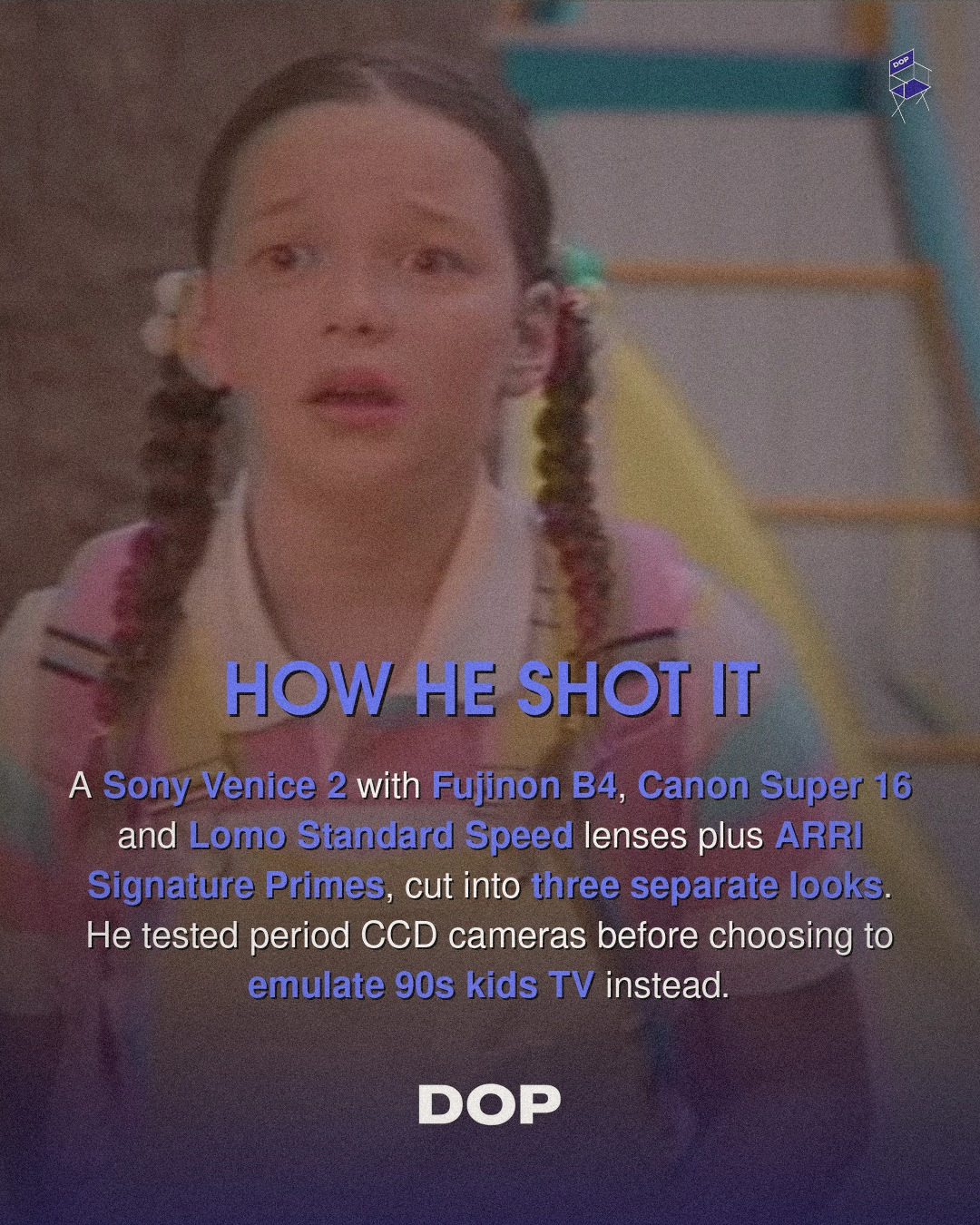
The lens roster for Buddy reads like a survey of optical evolution across half a century. To anchor the film’s baseline contemporary segments, Kuperstein utilized ARRI Signature Primes. Their telecentric optical design, velvety organic skin tones, and gentle focus roll-off provided an ultra-clean, clinical modern counterpoint. But when the narrative fractures into nostalgic television and vintage memory, the glass shifts aggressively. Kuperstein tapped Soviet-era Lomo Standard Speeds for their erratic flares and chromatic aberrations, vintage Canon Super 16 primes for their dense, tactile edge decay, and legacy Fujinon B4-mount broadcast zooms to directly access the language of standard-definition studio television.
“We weren’t just chasing a degraded look; we were chasing the psychological grammar of broadcast television, the flat focal depth, the chromatic fringe, and the way cheap optical coatings reacted to hard incandescent light.”
Before locking into this hybrid approach, Kuperstein conducted rigorous pre-production camera tests with period-accurate 1990s 3-CCD broadcast cameras. While the authentic SD camcorders naturally yielded the unmistakable digital smear and interlacing of the era, their razor-thin dynamic range and cumbersome legacy media pipelines introduced unacceptable compromises in low-light environments. Instead, Kuperstein opted to capture the optical signature of period-accurate B4 zoom lenses directly onto the Venice 2 sensor, using optical adapters and targeted sensor cropping to preserve shadow latitude while capturing the unmistakable deep depth-of-field and highlight bloom native to broadcast glass.
Dialing the Look: Lighting Ratios and Post Alchemy
The lighting philosophy behind Buddy mirrors this clash of formats. For the sequences inspired by Saturday morning puppet programming, Kuperstein abandoned modern soft-lighting conventions in favor of theatrical, high-key studio rigs: hard fresnel sources overhead, saturated primary gels, and fill ratios that evoke the non-threatening cheerfulness of low-rent sets. When the narrative pivots toward psychological horror, the lighting collapses into Kuperstein’s signature low-key naturalism, carving actors out of the gloom with harsh practicals and aggressive negative fill.
Bringing these disparate formats into a coherent film required an exacting post-production pipeline overseen by senior colorists Sam Daley and Tom Zavertnik. Rather than smoothing away the optical eccentricities of the vintage glass, the color team accentuated the mechanical characteristics of each lens group. Daley and Zavertnik tailored dedicated LUTs that modulated contrast curves to mimic early video clipping, lifted black levels to reproduce vintage tube-monitor characteristics, and retained the razor-sharp micro-contrast of the Signature Primes for modern frames.
The result is a dynamic showcase of cinematographic versatility. In an era where period pastiche often defaults to superficial software overlays, Kuperstein’s work on Buddy demonstrates the enduring power of optical discipline. By understanding the mechanical truth of how light traveled through broadcast and sub-35mm glass thirty years ago, Kuperstein continues his reign as one of the most intellectually rigorous DPs working in genre cinema today.
This article contains affiliate links. We may earn a small commission at no extra cost to you. Learn more.