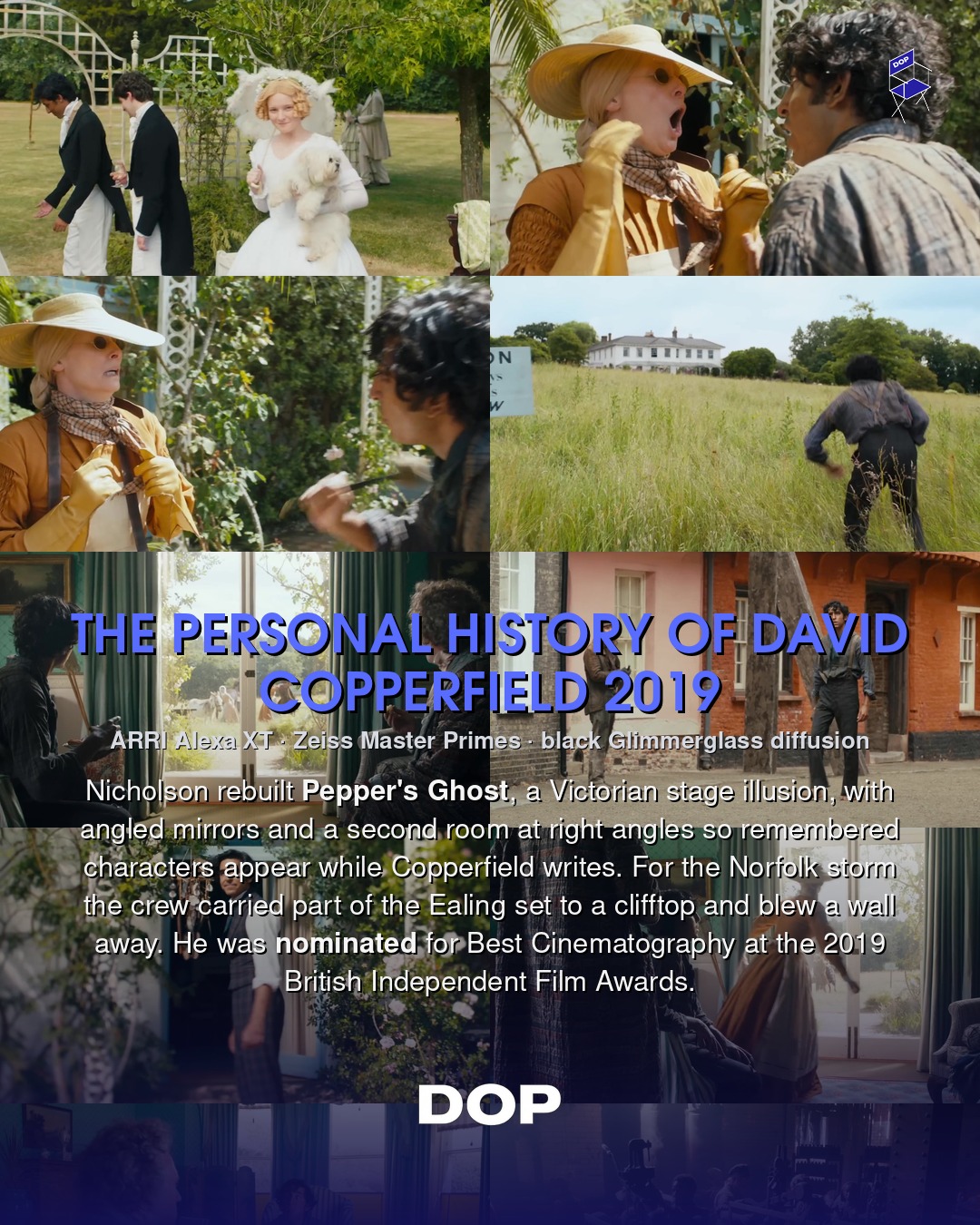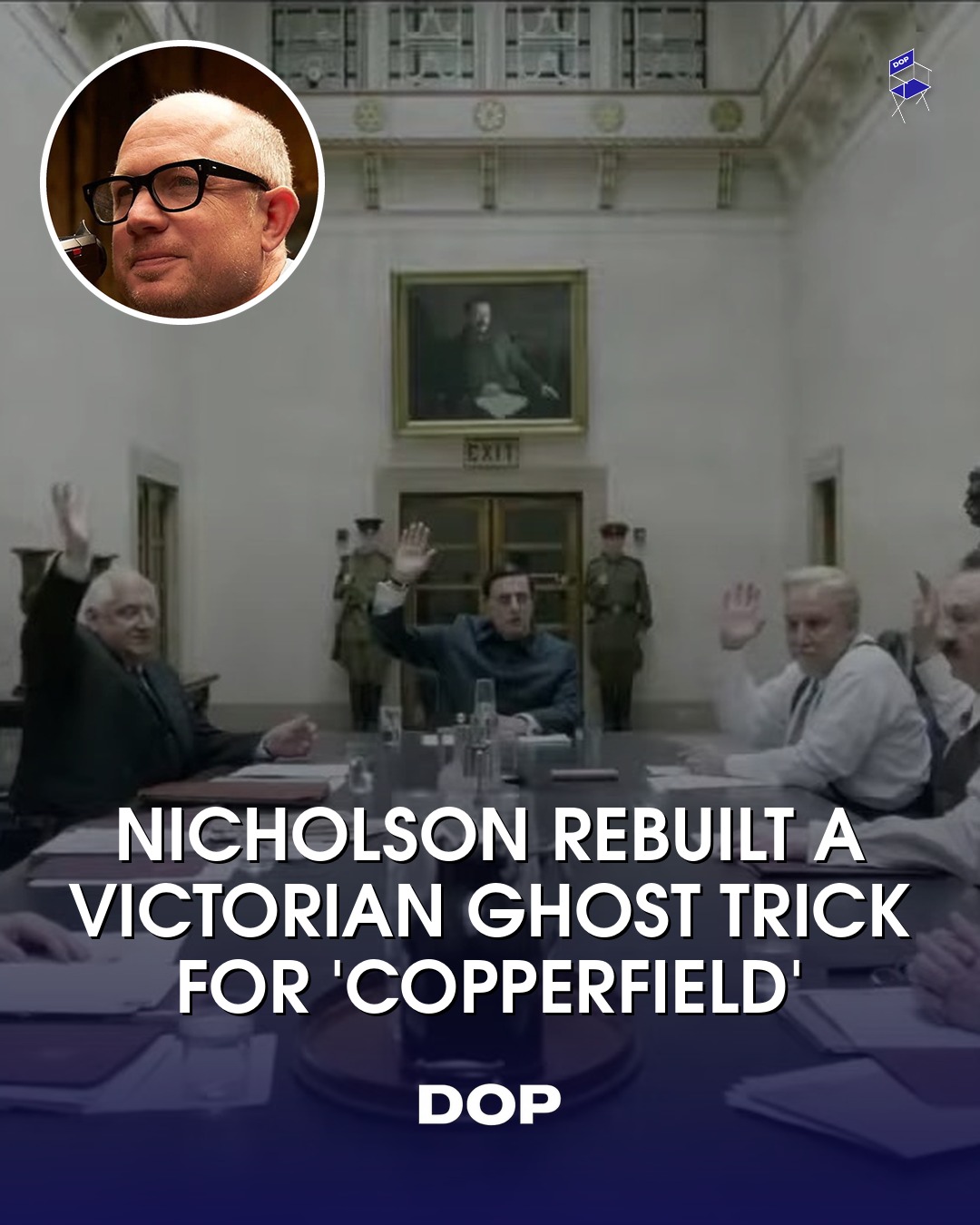
In an era where digital compositing has become the default answer to visual abstraction, Armando Iannucci’s The Personal History of David Copperfield offered an invigorating antidote: genuine, tactile theatricality captured wholly in-camera. Tasked with visualizing the mercurial, memory-soaked psyche of Charles Dickens’s most autobiographical protagonist, cinematographer Zac Nicholson BSC looked backward into the history of stagecraft rather than downward into post-production VFX pipelines.
Resurrecting Pepper’s Ghost in the Modern Frame
The standout technical achievement of the film’s visual language is Nicholson’s operational resurrection of Pepper’s Ghost, an illusion popularized in 1862 by English scientist John Henry Pepper. To allow David Copperfield’s remembered past to materialize directly inside the writer’s workspace, the camera department designed an intricate optical rig using angled semi-reflective beam-splitter glass set at 45 degrees before the taking lens. A secondary room, constructed at a precise right angle to the primary set, housed the 'ghost' actors.
The secret to pulling off this Victorian stage trick on modern, high-dynamic-range cinema sensors lies entirely in strict photometric balance. Nicholson and his electrical team had to precisely coordinate dual lighting setups across both physical spaces. By modulating dimmers on the off-axis set, Nicholson could dial in the opacity and spectral presence of Copperfield’s memories in real time, allowing phantom figures to fade organically into the background wallpaper without a single frame of green screen.
“We wanted the cinematic grammar to mirror the subjective theatricality of memory itself, where the past isn't a digital insert, but a physical presence sharing the same air and light as the protagonist.”
Embracing the Elements on the Norfolk Coast
Nicholson’s aversion to artificial visual shortcuts extended to the production's most volatile exterior set pieces. For the climactic Norfolk storm sequence, rather than constructing a soundstage facsimile wrapped in LED volumes or blue screen, the production transported actual sections of their Bury St Edmunds architectural set directly onto an exposed coastal clifftop. The crew then detonated and tore the wall away amid real maritime winds, driving rain, and practical wind machines.
Shooting in such severe natural environments demanded total agility from the camera package. Nicholson favored swift, fluid operating modes that could react intuitively to shifting squalls of coastal light and the kinetic staging typical of Iannucci’s ensemble blocking. The resulting frame carries an unmistakable atmospheric grit, lens elements lashed by real saltwater and actors physically battling authentic coastal turbulence.
The Operator’s Instinct: From Shane Meadows to Tom Hooper
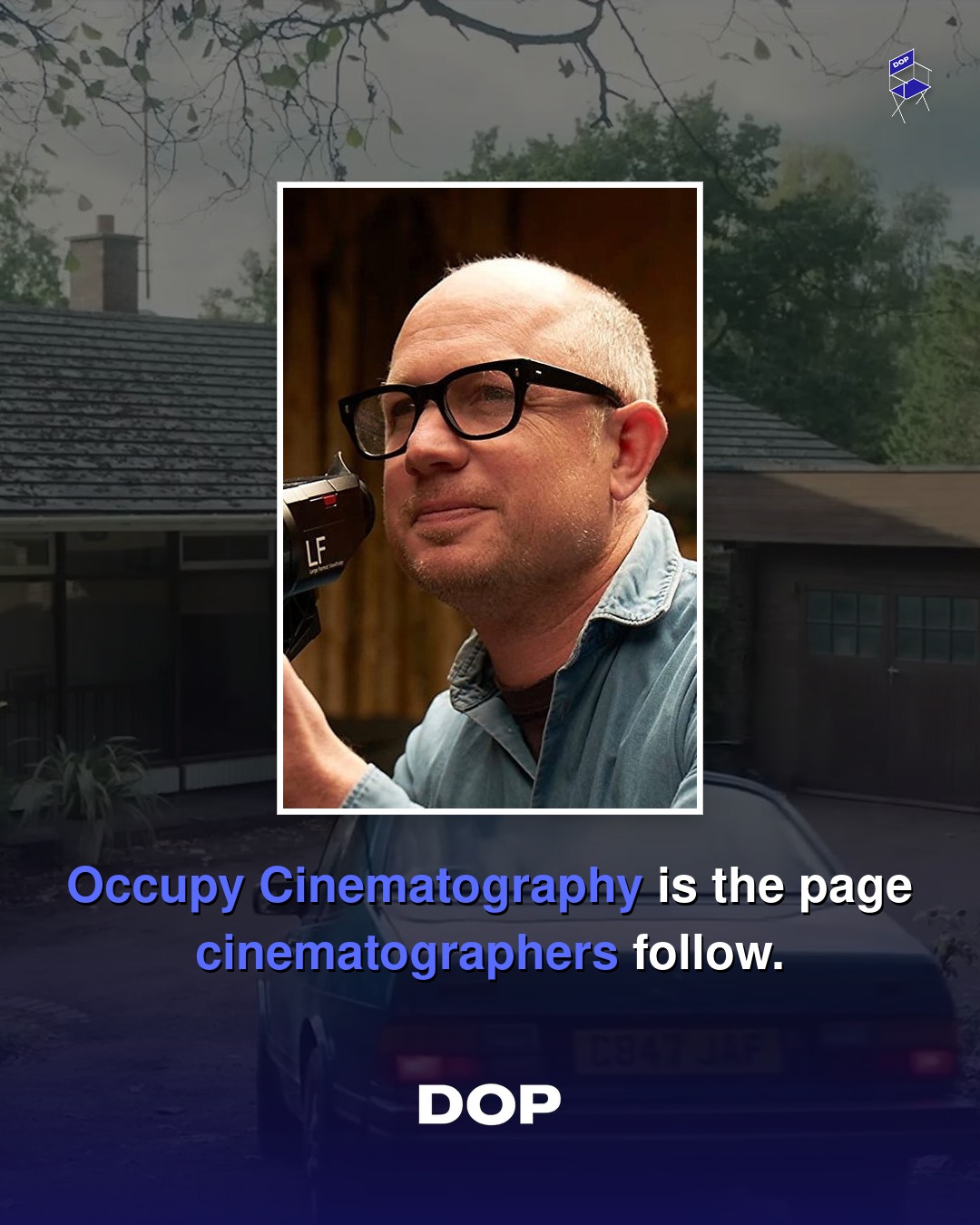
This commitment to raw physical immediacy is the hallmark of Nicholson’s extensive background as an A-camera and Steadicam operator. Having cut his teeth on the naturalistic, performance-driven sets of Shane Meadows and Stephen Poliakoff, Nicholson developed an acute sense of spatial timing. He later brought that kinetic discipline to Tom Hooper’s masterclasses in dynamic framing, operating on The King’s Speech alongside DP Danny Cohen BSC and strapping into the Steadicam rig for the relentless, continuous takes of Les Misérables.
That deep operational muscle memory translates directly into Nicholson’s lighting philosophy as a director of photography. His frames never feel clinical or rigid; instead, the camera breathes with the performers, allowing naturalistic roll-off, energetic camera moves, and period textures to co-exist harmoniously. His work on The Personal History of David Copperfield earned him a well-deserved British Independent Film Award (BIFA) nomination for Best Cinematography in 2019.
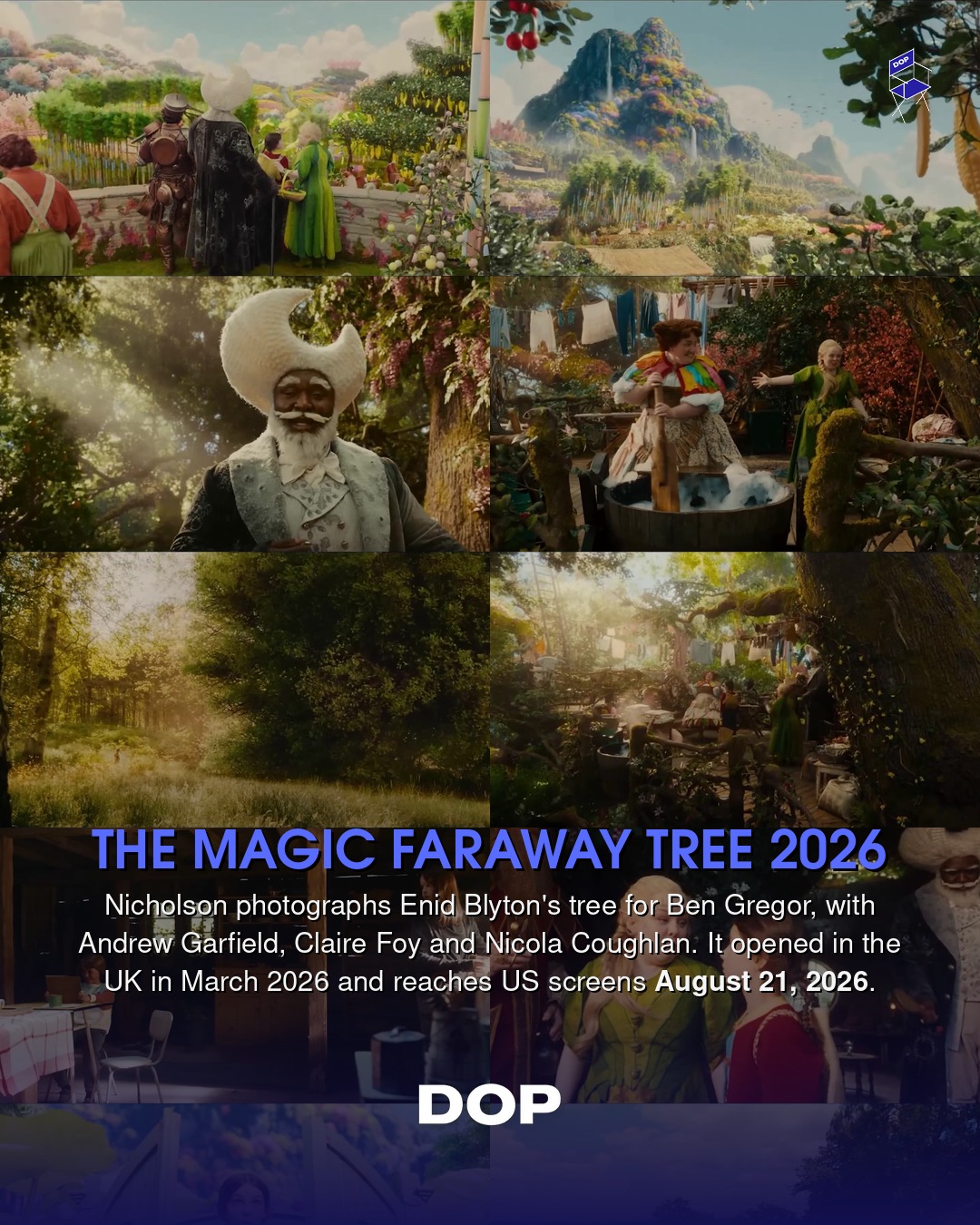
Looking ahead, Nicholson brings his signature blend of practical visual whimsy and technical rigor to director Ben Gregor’s adaptation of Enid Blyton’s The Magic Faraway Tree, slated for release in August 2026. If his past work serves as any precedent, audiences and cinematographers alike can expect a masterclass in in-camera worldbuilding.