The Robby Müller Legacy: Honoring Subtlety and Story
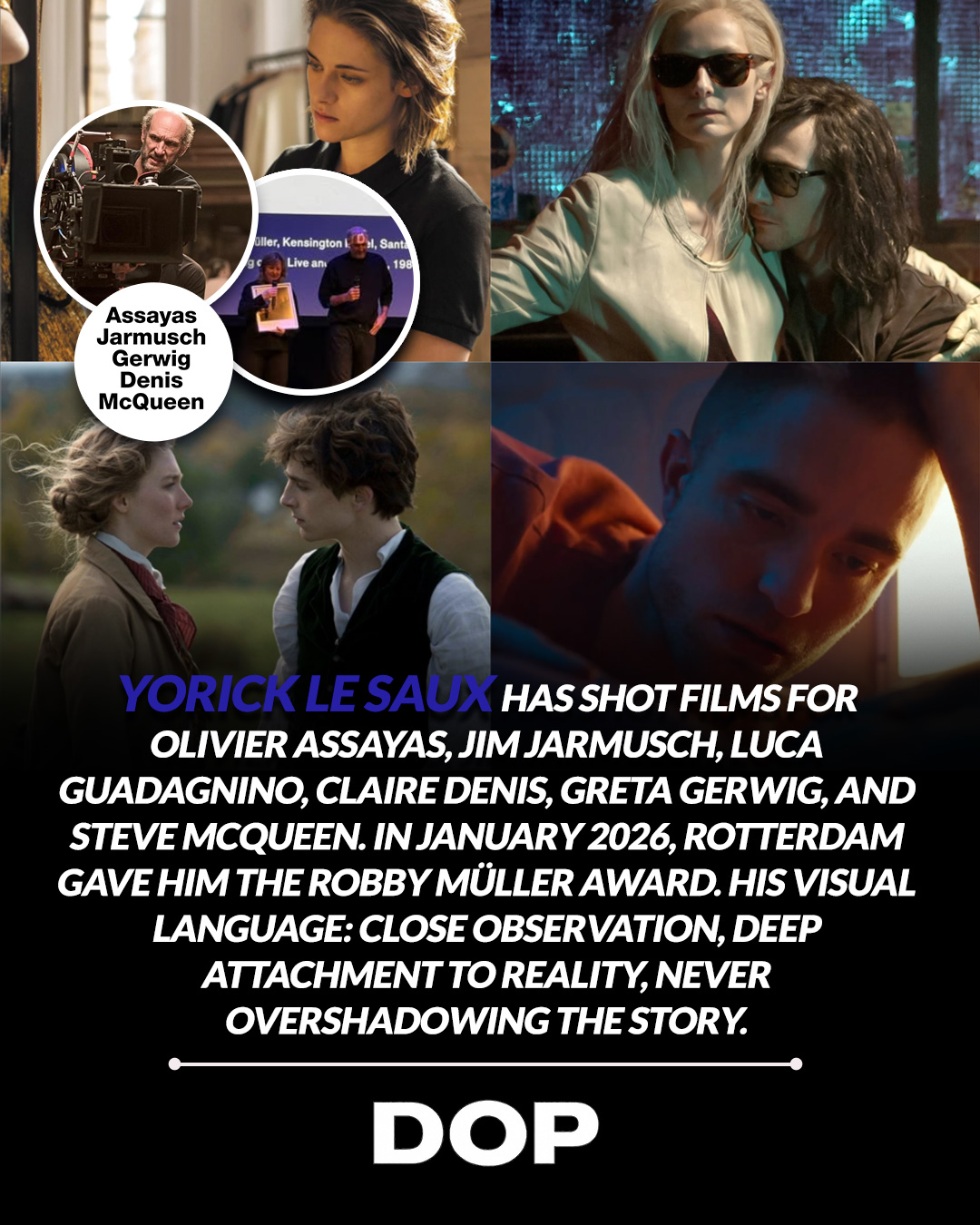
The International Film Festival Rotterdam (IFFR) bestowed the prestigious Robby Müller Award upon Yorick Le Saux in January 2026, a fitting tribute to a cinematographer whose work embodies the very spirit of the award’s namesake. Robby Müller, known for his nuanced, often understated visual contributions to films by Wim Wenders and Jim Jarmusch, championed a philosophy where the camera serves the narrative with an almost invisible grace. Le Saux, a graduate of La Fémis in 1994, has carved out a similar path, demonstrating an unparalleled ability to adapt his visual language to the distinct visions of a diverse pantheon of auteur directors, including Olivier Assayas, Jim Jarmusch himself, Luca Guadagnino, Claire Denis, Greta Gerwig, and Steve McQueen. The IFFR jury's commendation of his 'close observation and a deep attachment to reality, supporting and elevating the story without ever overshadowing it' perfectly encapsulates the ethos that defines his prolific career.
This recognition underscores a crucial aspect of masterful cinematography: the ability to craft compelling imagery that resonates emotionally and intellectually without drawing undue attention to its own technical brilliance. Le Saux’s filmography is a testament to this principle. From the intimate, almost voyeuristic gaze of Assayas's character studies to the stark, often brutal realism of McQueen's narratives, Le Saux consistently finds the visual vocabulary that amplifies the film's core themes. His work is never merely beautiful for beauty's sake; it is always in service of the story, the character, and the director's specific intent.
A Chameleon's Eye: Adapting to Auteur Visions
One of the most striking aspects of Le Saux's career is his remarkable versatility and deep-seated collaborative spirit, a hallmark of the European art cinema model. He has forged sustained partnerships with directors whose visual needs are formally distinct, yet he consistently delivers. Consider his work with Olivier Assayas, where films like Clouds of Sils Maria and Personal Shopper are characterized by a fluid, often handheld camera that immerses the viewer in the subjective experience of the characters. The camera becomes an extension of their emotional state, observing rather than dictating. In contrast, his collaboration with Jim Jarmusch on Only Lovers Left Alive showcases a more stylized, nocturnal palette, bathed in rich, often melancholic hues, where the camera movements are deliberate, almost balletic, reflecting the timeless, languid existence of its vampire protagonists.
"Le Saux's visual language is defined by close observation and a deep attachment to reality, supporting and elevating the story without ever overshadowing it."
This adaptability extends to the starkly different worlds he creates. For Luca Guadagnino's I Am Love, Le Saux employed a vibrant, almost tactile cinematography, capturing the opulence of Italian high society and the simmering passions beneath its surface with a rich, sun-drenched aesthetic. Then, he transitioned to the cold, isolating vastness of space in Claire Denis's High Life, where his camera navigates the claustrophobia of a spaceship with stark, almost clinical precision, using available light and naturalistic textures to create a sense of existential dread. Each project demands a unique approach to lighting, framing, and camera movement, and Le Saux consistently delivers, never imposing a 'house style' but rather finding the visual soul of each film.
The Technical & Philosophical Underpinnings of 'Close Observation'
Le Saux's philosophy of 'close observation' is not merely an aesthetic choice; it’s a technical discipline. It often involves a preference for natural light or meticulously crafted artificial light that mimics natural sources, allowing for a more organic interaction with the environment. His lens choices frequently lean towards primes that offer a clean, undistorted view, prioritizing clarity and subtle character over overt stylistic flourishes. For instance, in films like Little Women for Greta Gerwig, Le Saux's cinematography is bright, warm, and inviting, utilizing a soft, diffused light that evokes a sense of nostalgia and intimacy, often achieved with classic Cooke S4 or similar lenses known for their gentle fall-off and pleasing skin tones. The color science in his films is typically naturalistic, favoring accurate rendition of tones rather than heavily stylized grading, which further supports the idea of an 'unadorned reality.'
Even in a film like Steve McQueen's Blitz, where the subject matter might suggest a harsher, grittier approach, Le Saux's observational eye ensures that the visual language, while unflinching, remains grounded in the human experience. The camera acts as a witness, allowing the raw emotions and brutal realities to unfold without excessive manipulation. This commitment to non-imposition is what allows Le Saux to serve such a broad spectrum of directors, from the poetic lyricism of Assayas to the direct, often confrontational narratives of McQueen. His genius lies in his ability to disappear, to let the story breathe through images that feel inherently right for the world being presented, making him one of the most respected and quietly influential cinematographers working today.
This article contains affiliate links. We may earn a small commission at no extra cost to you. Learn more.