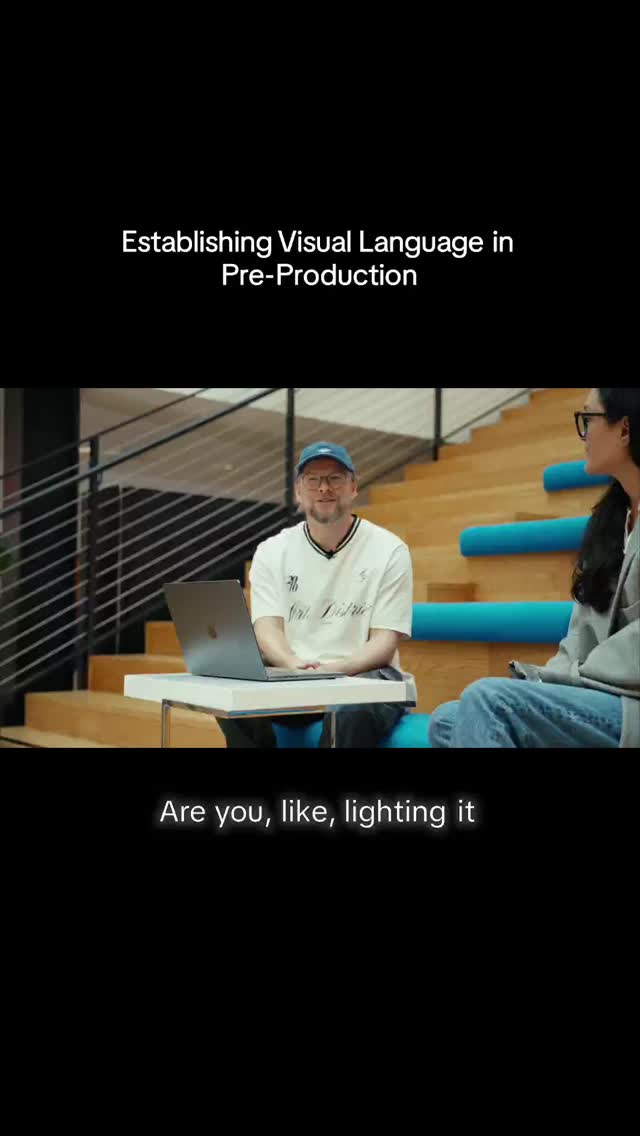
For many crew members, camera checkout day at a rental house is an exercise in routine logistics. It is a world of checking serial numbers, tweaking backfocus on a Siemens star, setting up frame lines, and verifying that every cable in the assistant’s ditty bag actually works. But for visionary Directors of Photography, the prep stage is something far more vital: it is the creative laboratory where the visual grammar of a film is tested, refined, and set in stone.
Pointing a high-end cine lens at a flat, evenly lit resolution chart will tell you if the glass is sharp and clean. What it will not tell you is how that lens breathes when tracking an actor into dark shadows, or how the sensor’s dynamic range handles steep light fall-off when you kill the ambient fill. To truly understand your look, you have to push beyond the default rental floor setup and actively build the contrast, mood, and separation your story demands.
Beyond the Resolution Chart: Crafting Mood in Prep
One of the most telling marks of an experienced DP during prep is their immediate refusal to accept the default lighting conditions of the prep bay. Typical prep spaces are flooded with uninspired, high-key fluorescent tube lighting or distracting ambient spill from neighboring checkouts. While this neutral brightness is helpful for inspecting gear, it is entirely antithetical to testing cinematic texture.
A pro move on test day involves stripping away that flat ambient wash. By deploying heavy floppy solids to block surrounding spill and setting up a dedicated single-source key, you instantly recreate the physics of a real set. It allows you to observe how the sensor handles steep contrast and how the fall-off behaves in three-dimensional space.
Camera prep isn't merely about verifying that equipment functions; it is the sandbox where a film's shadow philosophy is born.
The Physics of Separation and Light Fall-Off
Understanding light fall-off comes down to a practical application of the inverse-square law, but testing it in prep is where intuition meets engineering. When you place a key light, such as an ARRI SkyPanel S60-C pushed through an 8x8 frame of Magic Cloth, close to a subject, the intensity drops off drastically over a short distance. This steep fall-off naturally darkens the background without requiring extra flags, creating instant separation and painterly depth.
During a recent test pairing an ARRI Alexa 35 with vintage Cooke Speed Panchros, this exact technique revealed how the sensor’s tonal roll-off interacted with the organic wide-open spherical aberration of vintage glass. By controlling the proximity of the light and aggressive negative fill, the team observed precisely where the shadows surrendered detail to pure black, allowing them to dial in custom look-up tables (LUTs) long before stepping onto set.
Simulating Set Dynamics Save Time on Day One
Testing under realistic lighting conditions also uncovers potential technical bottlenecks. Flares, sensor chromatic aberration, highlights clipping on skin tones, and subtle color shifts in low exposure are details you cannot afford to discover on Day One of principal photography when sixty crew members are waiting on you. Testing wide aperture settings under extreme shadow conditions guarantees you know the exact limits of your glass.
Furthermore, evaluating focus fall-off and bokeh under controlled, moody lighting provides the camera operator and 1st AC with an immediate feel for the project's spatial dynamic. It aligns the entire camera and lighting departments around a unified visual goal.
Pre-Production as Visual Insurance
Ultimately, taking control of the rental stage’s lighting environment is an investment in creative certainty. Logistics and gear checks are necessary, but transforming a sterile prep floor into a miniature soundstage is what separates basic technical execution from true visual artistry.
When the clock starts ticking on a high-budget set, confidence comes from knowing precisely how your camera system, lenses, and lighting style interact. By fighting for intentional darkness and deliberate light sculpting during pre-production, you ensure that every frame shot on set serves the core visual language of the story.
This article contains affiliate links. We may earn a small commission at no extra cost to you. Learn more.