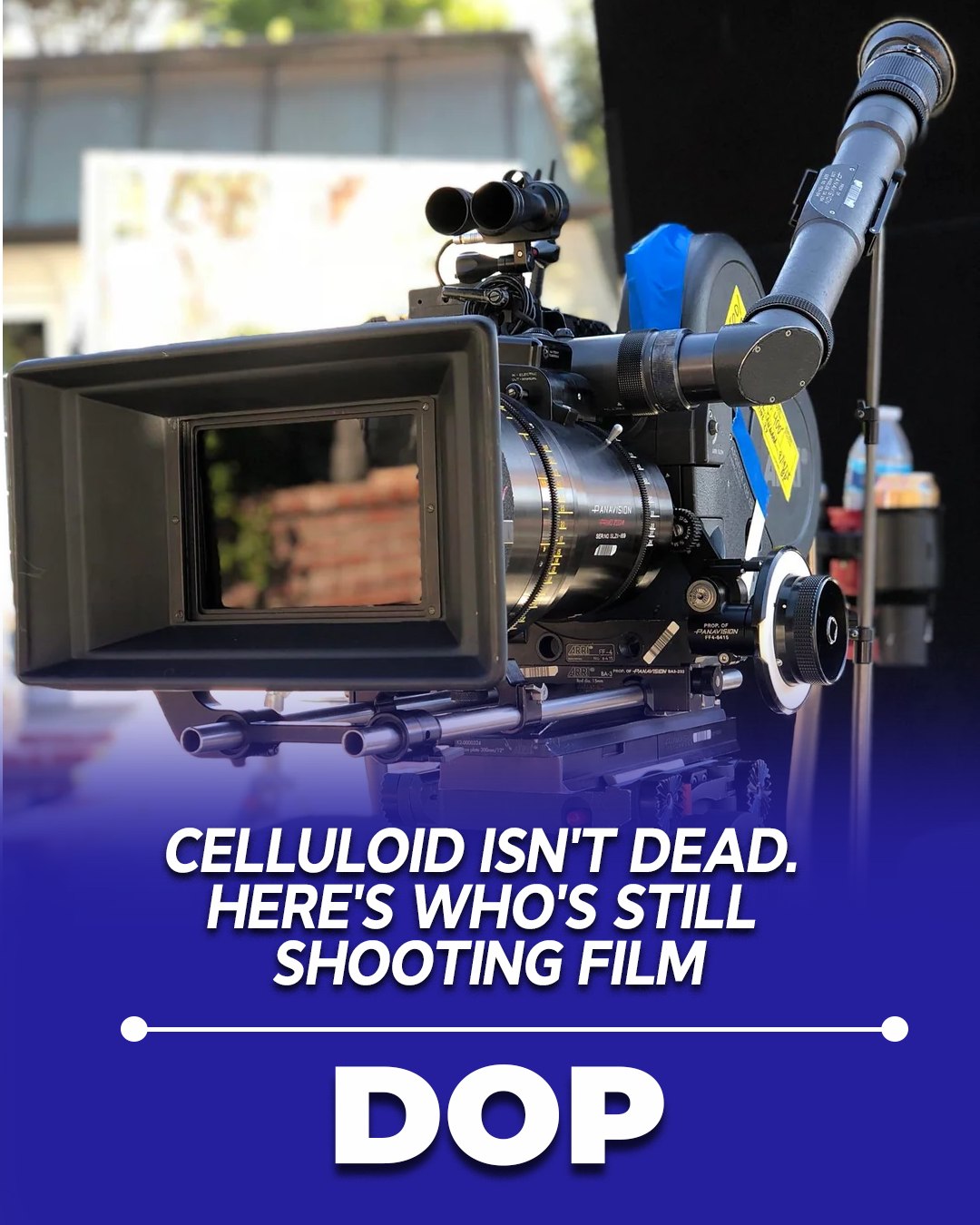
In an era dominated by high-resolution digital sensors like the ARRI Alexa 35 and Sony Venice 2, the persistent reliance on physical motion picture film remains one of the most intriguing phenomena in modern cinematography. Entering 2026, digital workflow efficiency and low-light sensor performance have reached unprecedented heights. Yet, when the industry's most influential directors and directors of photography set out to craft high-profile event cinema, celluloid continues to be their primary canvas.
Major productions such as Sinners, captured on massive IMAX 65mm glass, the tactile 35mm grain of Werwulf, and the sweeping scale of The Odyssey in 15-perf 65mm demonstrate that film is far from an archaic relic. Instead, it serves as a deliberate, uncompromising artistic choice for filmmakers seeking visual texture, sub-surface color depth, and an organic connection to the moving image.
Large Format Tactility: The IMAX 65mm Resurgence
The technical arguments for shooting on large-format celluloid extend far beyond simple resolution metrics. While digital sensors record luminance and chrominance values across a fixed grid of photosites, film emulsion captures light through chemical reactions within layers of suspended silver halide crystals. In large formats like 15-perf IMAX 65mm, this creates a frame area nearly ten times larger than standard 4-perf 35mm. The result is an unprecedented spatial rendering of depth, micro-contrast, and subtle color gradations across human skin tones.
Pairing 65mm negative stock, such as Kodak Vision3 500T 5219 or 250D 5207, with vintage optical designs creates a unique visual signature. Large-format optics, including modified Panavision System 65 or Hasselblad-derived glass, yield an extraordinarily shallow depth of field while preserving natural geometric perspective. The way emulsion handles extreme highlight overexposure, rolling off softly into density rather than hard-clipping sensor photodiode values, gives large-format film an unmatched atmospheric realism.
Film isn't a vintage compromise; it's an uncompromising medium of optical texture, highlight compression, and organic life that no digital lookup table can fully replicate.
Infrastructure, Laboratory Processing, and Set Discipline
Critics of celluloid frequently point to supply chain vulnerabilities and operating logistics as barriers to entry. Processing high volumes of negative requires specialized chemistry, strict environmental controls, and skilled technicians. However, Kodak's steady manufacturing output combined with expanded photofinishing capabilities at institutions like FotoKem in Burbank prove that the infrastructure supporting celluloid is resilient and evolving.
Modern film workflows seamlessly bridge photochemical capture with high-end digital post-production. Today's lab pipelines process negatives using the standard ECN-2 chemical process before routing them to ultra-high-resolution optical scanners like the Lasergraphics Director or ARRISCAN 70. Scanning at 4K or 8K resolution in 16-bit logarithmic space captures the full dynamic headroom of the film negative, providing colorists with an exceptionally rich digital intermediate for final grading.
Beyond aesthetics, the physical workflow of shooting stock alters set psychology. Loading a 400-foot 35mm magazine or a 1000-foot 65mm mag introduces an inherent discipline to the camera department and director. Every take carries physical cost and time limitations, encouraging deliberate blocking, precise lighting setups, and intentional performance from the cast.
The Imperfect Imperative in Modern Cinematography
Lighting for film requires a distinct philosophical approach compared to digital capture. Where digital DPs often light conservatively to protect clean shadow details and guard against blown highlights, film cinematographers can embrace bold, contrasty lighting schemes. The organic halation around bright practical lights, the gentle bloom of optical highlights, and the natural chromatic density inherent to dye layers provide a painterly baseline that digital grain algorithms struggle to recreate authentically.
Ultimately, the choice to shoot film in 2026 is not about nostalgia or resisting technological progress. It is an acknowledgment that different mediums yield fundamentally different visual textures. Just as oil paints co-exist with digital illustration tools, film stock remains an indispensable instrument in the cinematographer's toolkit, ensuring that the unique magic of photochemical cinema continues to light up the big screen.
This article contains affiliate links. We may earn a small commission at no extra cost to you. Learn more.