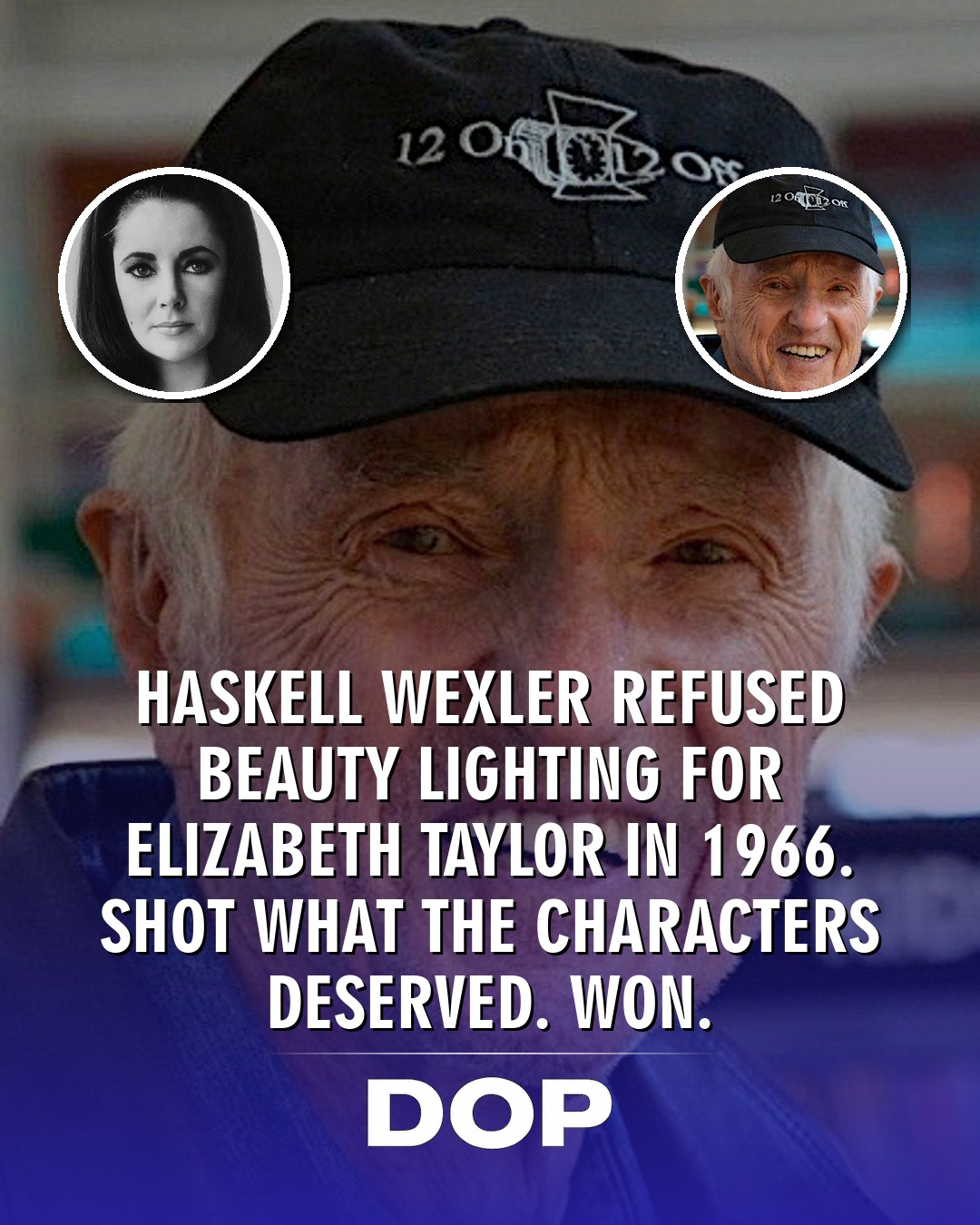
In 1966, Hollywood was still largely beholden to the studio system's aesthetic demands, particularly when it came to its leading ladies. The prevailing wisdom dictated that a star of Elizabeth Taylor's caliber, commanding a million-dollar salary and a percentage of the gross, should be lit with an almost ethereal glow – soft, high-key, and impeccably flattering. This was the era of 'glamour lighting,' designed to preserve and enhance the idealized image of a movie star. Then came Haskell Wexler, ASC, and his audacious approach to Who's Afraid of Virginia Woolf?, a film that not only shattered narrative conventions but redefined what cinematography could achieve in the service of character and story.
Wexler, a cinematographer known even then for his unyielding commitment to realism, made a radical choice: he would light Elizabeth Taylor not as the glamorous icon the world knew, but as Martha, the bitter, alcohol-soaked, and aging wife at the heart of Edward Albee's searing play. This meant discarding the soft boxes and silk diffusers that typically coddled leading actresses. Instead, Wexler embraced stark, often lower-key lighting, sometimes even deliberately flat, to emphasize Martha's ravaged appearance. He didn't just avoid flattering her; he actively sought to expose the character's vulnerabilities, her weight gain, her smeared makeup – every detail that underscored her emotional decay.
The Technical Rebellion: Light as Psychological Weapon
To understand the magnitude of Wexler's decision, one must consider the tools and techniques at his disposal in the mid-1960s. While color film was gaining traction, Virginia Woolf was shot in black and white, allowing for a heightened play of light and shadow, and a starkness that color might have softened. Wexler likely employed a range of tungsten units, from Fresnels for focused, hard light to open-face units for broader, less flattering illumination. The contrast ratios he achieved were far removed from the gentle gradients of typical Hollywood fare. He wasn't afraid to let shadows deepen, to create harsh lines, or to let highlights blow out slightly, all in service of the narrative's psychological intensity.
"He wasn't afraid to let shadows deepen, to create harsh lines, or to let highlights blow out slightly, all in service of the narrative's psychological intensity."
The choice of lenses would have been equally critical. While specific lenses are not widely documented for this production, it's safe to assume Wexler favored sharp, perhaps slightly wider lenses in certain close-ups to capture every unflinching detail of Taylor's performance, rather than the softer, more telephoto lenses often used to compress features and create a more conventionally attractive portrait. The film's gritty aesthetic wasn't just about lighting; it was about the overall approach to visual fidelity, a commitment to showing, not hiding.
Defying the Studio, Defining a New Era
Director Mike Nichols initially voiced concerns, famously remarking that the early dailies were "too dark." This reaction was entirely understandable given the industry norms. But Wexler, ever the artist, stood firm. He understood that the darkness wasn't a flaw; it was the very essence of the film's emotional landscape. The dimly lit, claustrophobic interiors of George and Martha's home became a visual metaphor for their suffocating marriage, the stark lighting a brutal mirror to their soul-baring verbal warfare.
The result was nothing short of revolutionary. Who's Afraid of Virginia Woolf? became only the second film in history to be nominated in every eligible Academy Award category, ultimately winning five, including Best Cinematography (Black-and-White) for Wexler. His work was not just recognized; it was celebrated for its boldness and its profound impact on the storytelling. This wasn't just about making a beautiful image; it was about making an honest one.
Wexler's uncompromising visual language helped usher in a new era of maturity in Hollywood filmmaking. It demonstrated that cinematography could be more than just illumination; it could be a psychological weapon, a narrative tool that actively participates in the character's unmasking. His work on Virginia Woolf stands as a powerful testament to the cinematographer's role not just as a technician, but as an artist who, through light and shadow, can peel back the layers of performance to reveal the raw, often uncomfortable, truth beneath.