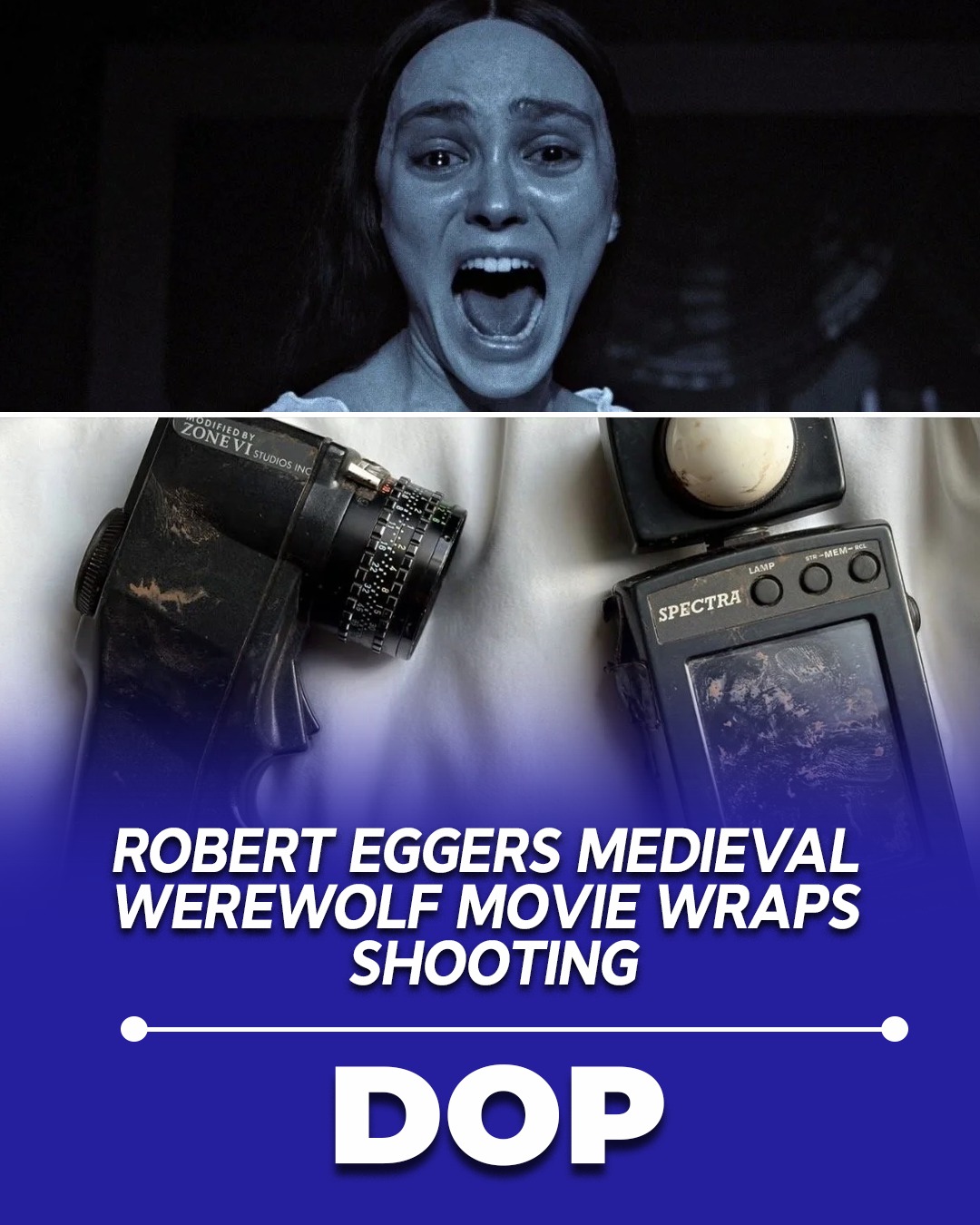
The announcement of Robert Eggers' Werwulf, slated for a Christmas 2026 theatrical release, sends a ripple of anticipation through the film community, particularly among those who venerate the art of cinematography. This period werewolf film marks the fourth collaboration between Eggers and his trusted visual architect, Jarin Blaschke. Their partnership, forged in the primal forests of The Witch, refined in the claustrophobic confines of The Lighthouse, and expanded across the epic landscapes of The Northman, has consistently delivered some of the most distinctive and impactful imagery in contemporary cinema. With Werwulf entering the competitive awards season, the industry is already abuzz with predictions for Blaschke’s continued recognition.
Blaschke's approach to Eggers' meticulously crafted worlds is not merely about capturing images; it's about translating historical authenticity and psychological states into a tangible, visceral experience. For The Witch, he embraced natural light and period-accurate lighting sources, often pushing the limits of available light photography to achieve a haunting, painterly quality. The film's stark, desaturated palette and deep, inky blacks were not just aesthetic choices but served to deepen the sense of dread and isolation. This commitment to verisimilitude, even when it demands technical challenges, is a hallmark of his craft.
A Masterclass in Visual Storytelling
Moving to The Lighthouse, Blaschke's genius truly shone in its monochromatic grandeur. Shooting on 35mm black-and-white film with spherical lenses, he meticulously recreated the aesthetic of early 20th-century photography, specifically drawing inspiration from the works of Edward Weston and Alfred Stieglitz. The choice of a narrow 1.19:1 aspect ratio, reminiscent of early sound films, further amplified the suffocating intimacy and psychological unraveling of the two protagonists. The harsh, unforgiving light, often practicals within the lighthouse itself, sculpted the faces of Willem Dafoe and Robert Pattinson, transforming them into grotesque, almost mythological figures. It was a masterclass in how restricted visual parameters can unlock profound narrative depth.
"Blaschke's camera isn't just an observer; it's an active participant, a character in itself, breathing the same air as the subjects and feeling the same primal fears."
Then came The Northman, a stark departure in scale but not in Blaschke's commitment to visual integrity. Here, he utilized large format ARRI Alexa LF and Mini LF cameras, often paired with Panavision H-Series lenses, to capture the breathtaking, brutal beauty of 10th-century Viking sagas. The expansive vistas, the raw power of nature, and the visceral brutality of combat were rendered with a clarity and depth that immersed the audience directly into Amleth's quest for vengeance. Blaschke's lighting for The Northman often leaned into a more naturalistic, sun-drenched yet still moody palette, a contrast to the starkness of his previous work, but always with an eye for historical accuracy and dramatic impact.
Anticipating Werwulf's Visual Language
Given this formidable filmography, what can we anticipate from Werwulf? The period setting immediately suggests Blaschke will once again delve into historically informed lighting practices. Will he return to the raw, practical light sources of The Witch, perhaps pushing the boundaries of low-light cinematography to evoke the terror of a moonlit hunt? Or will he employ a more stylized approach, perhaps drawing on gothic horror traditions or even the chiaroscuro of classical painting to depict the beastly transformation and the paranoia it engenders?
The choice of camera and lens package will be critical. Will he continue with the large format digital capture that offered such textural richness in The Northman, or might he opt for a more intimate, perhaps even anamorphic, approach to emphasize the supernatural elements and the transformation? The 'werewolf' motif itself presents a tantalizing opportunity for Blaschke to explore the interplay of light and shadow, the grotesque and the beautiful, and the blurring lines between humanity and savagery. His ability to craft distinct visual languages for each of Eggers' unique narratives is unparalleled, and Werwulf promises to be another compelling chapter in their collaborative legacy. The awards buzz is not just hype; it's a testament to a cinematographer who consistently elevates the medium and challenges our perceptions of what visual storytelling can achieve.
This article contains affiliate links. We may earn a small commission at no extra cost to you. Learn more.