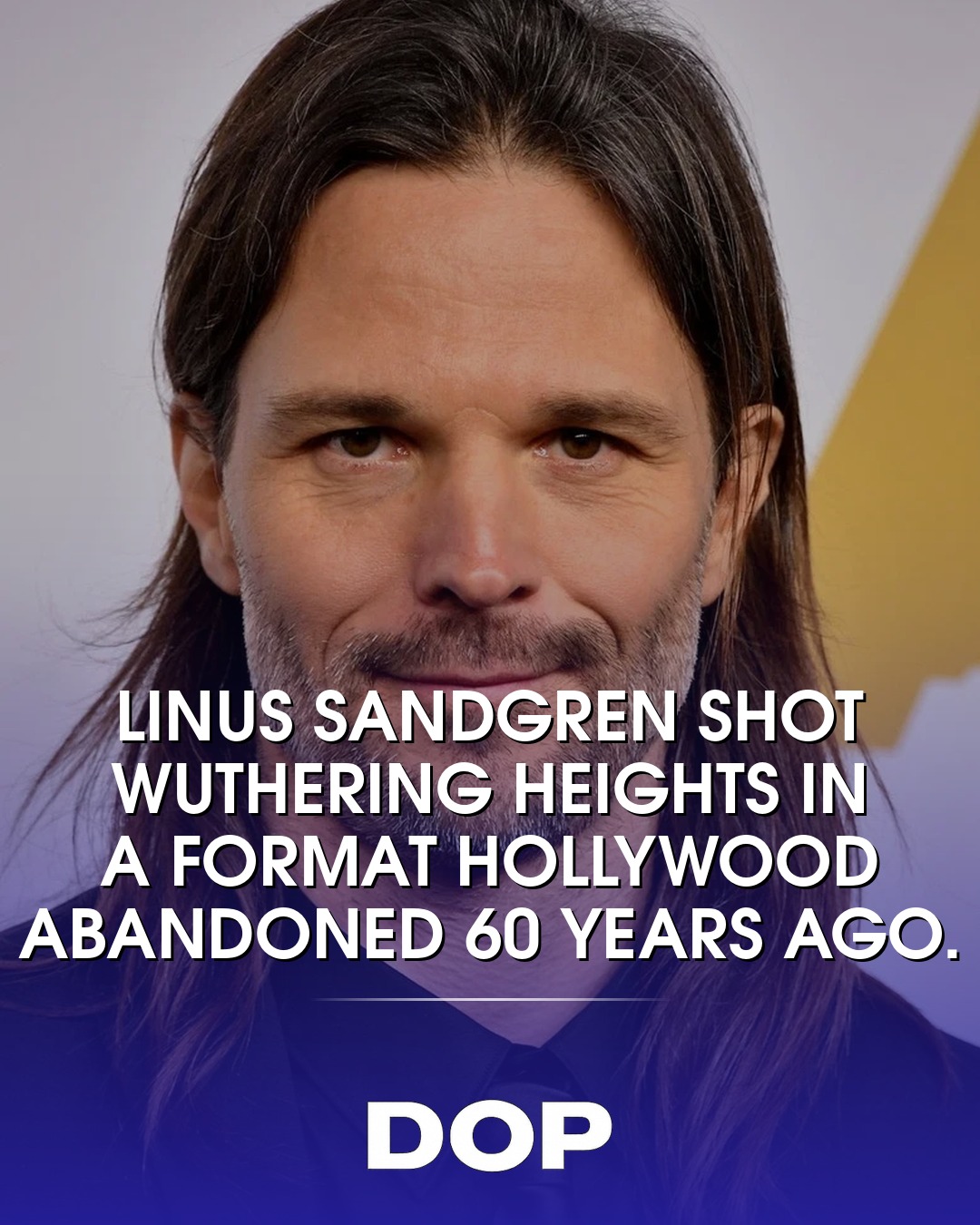
In an era increasingly dominated by digital capture, the announcement that acclaimed cinematographer Linus Sandgren ASC FSF BSC opted for VistaVision for Emerald Fennell’s adaptation of Wuthering Heights sent a ripple of excitement and intrigue through the cinematography community. This isn't merely a quaint historical homage; it's a deliberate, technically astute decision that speaks volumes about Sandgren's commitment to visual texture, resolution, and the unique aesthetic properties of large-format film. For Occupy Cinematography, this move represents a powerful affirmation of the enduring relevance of celluloid, especially when wielded by a master.
VistaVision, a format originally developed by Paramount Pictures in 1954, is a fascinating beast. Unlike standard 35mm film, which runs vertically through the camera with a 4-perf frame, VistaVision orients the film horizontally, exposing an 8-perforation frame. This seemingly simple reorientation has profound implications: it nearly doubles the surface area of the negative compared to standard 35mm. The result? An image fidelity that, even by today’s demanding standards, registers as breathtakingly sharp and detailed. As Sandgren himself has demonstrated, this expanded negative area translates to a resolution comparable, if not superior, to modern 8K digital capture, particularly when considering the organic grain structure and color rendition inherent to film.
The Technical Canvas: Beaumont Cameras and Panavision Primos
To achieve this cinematic resurrection, Sandgren didn't simply unearth dusty, vintage equipment. He partnered with Panavision London, who provided updated Beaumont cameras. These aren't just re-housed relics; they are meticulously engineered machines designed to handle the 8-perf horizontal pull-down with precision and reliability. The choice of Panavision Primo lenses to pair with these cameras is equally significant. Primo lenses are renowned for their exceptional optical quality, minimal chromatic aberration, and a consistent, albeit characterful, rendering across the set. This combination suggests a desire for both technical perfection and a specific aesthetic – one that balances sharpness and detail with a cinematic warmth and depth that Primos are celebrated for. It's a testament to Panavision's ongoing commitment to film innovation, providing tools that bridge the gap between historical formats and contemporary production needs.
“VistaVision's expanded negative area translates to a resolution comparable, if not superior, to modern 8K digital capture, particularly when considering the organic grain structure and color rendition inherent to film.”
Capturing the Moors: Texture, Light, and Fidelity
The decision to employ such a high-fidelity format for Wuthering Heights is no mere technical flex; it’s intrinsically tied to the narrative and setting. Emily Brontë’s classic novel is steeped in the raw, elemental beauty and brutality of the English moorlands. Sandgren, known for his ability to craft evocative and immersive visuals in films like La La Land and No Time to Die, understands that the landscape is a character unto itself. VistaVision's unparalleled resolution allows for an almost tactile rendering of this environment – the gnarled textures of the heather, the swirling mists, the subtle shifts in light across the vast, unforgiving terrain. The format's inherent ability to capture fine detail ensures that every blade of grass, every stone, and every nuance of the desolate landscape contributes to the film's immersive atmosphere. This isn't just about 'sharpness' for its own sake; it's about translating the very soul of the setting onto the screen with an almost photographic veracity, allowing the audience to feel the biting wind and the isolation of the moors.
Sandgren's lighting philosophy, often characterized by a naturalistic approach with an emphasis on motivated sources and a painterly use of available light, finds a perfect canvas in VistaVision. The larger negative's increased dynamic range and subtle color separation mean that the delicate interplay of light and shadow, so crucial to capturing the mood of the moors, can be rendered with exceptional fidelity. Imagine the deep, brooding skies, the fleeting moments of sunlight breaking through, and the chiaroscuro of interior scenes – all captured with a richness and depth that lesser formats might struggle to convey. It's a choice that elevates the visual storytelling, allowing the environment to breathe and actively participate in the emotional arc of the characters.
The Broader Implications: A Statement on Craft
This bold move by Sandgren serves as a powerful reminder of the diverse palette available to cinematographers. In an industry often fixated on the latest digital sensor, his embrace of a classic, large-format film stock is a significant statement. It underscores that the choice of capture medium is not merely a technical specification but a fundamental creative decision that profoundly impacts the film's aesthetic and emotional resonance. It challenges the assumption that 'newer' always means 'better,' instead advocating for the right tool for the specific story. For Occupy Cinematography, Sandgren's work on Wuthering Heights is more than just another film; it’s a masterclass in intentional cinematography, pushing boundaries by looking to the past, and proving that the pursuit of visual excellence knows no single format or era.