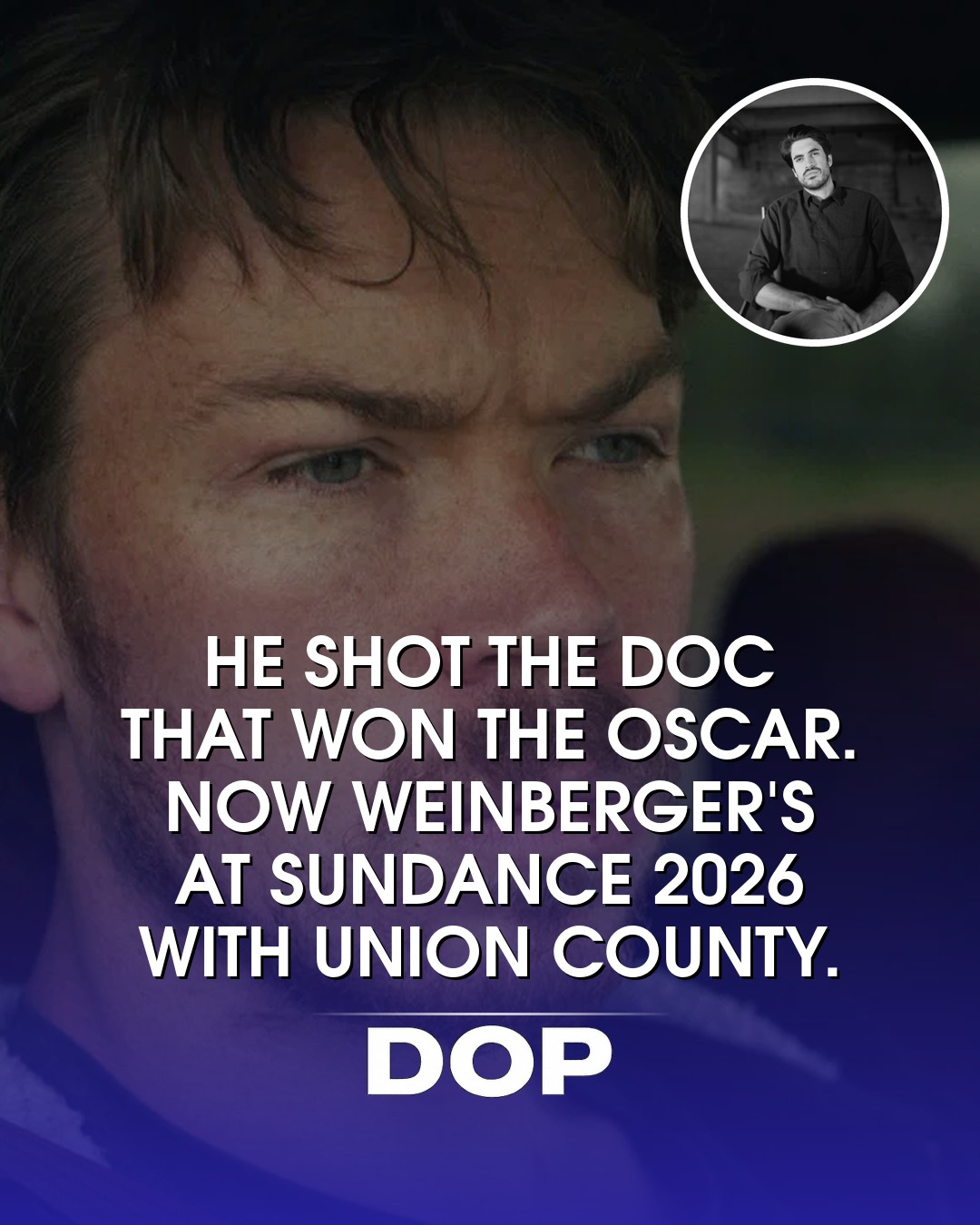
The Sundance Film Festival has long been a crucible for cinematic talent, a place where emerging voices and refined craft converge to define the independent landscape. Among the standout features from the 2026 lineup, Adam Meeks' Union County, lensed by Stefan Weinberger, emerged as a potent example of how precise cinematography can elevate a compelling narrative from its award-winning short film origins to a major festival contender. Weinberger's work on Union County is not just technically proficient; it's a masterclass in visual storytelling, charting a significant trajectory for a cinematographer who is quickly becoming one of the most compelling DPs working today.
Weinberger's collaboration with Meeks on Union County is particularly illuminating when viewed through the lens of their previous work on The Line (2023). While The Line showcased a more stylized, almost painterly approach to urban alienation, Union County leans into a visceral realism, a grittier aesthetic that serves the film's thematic exploration of rural American life. This adaptability speaks volumes about Weinberger's range and his ability to attune his visual language to the specific demands of a story. The transition from short to feature is often fraught with challenges, but Weinberger and Meeks successfully scaled their vision, maintaining the core essence of the original while expanding its narrative and visual scope. This requires not just technical skill but a deep understanding of pacing, character, and the subtle nuances that differentiate a concise short from an expansive feature.
The Digital Democratization of Craft
The rise of high-quality digital cinema cameras has undeniably lowered the barrier to entry for cinematographers, enabling DPs like Weinberger to build formidable visual portfolios outside the traditional, often prohibitive, studio system. This democratization of tools means that raw talent and a distinct visual voice can now find expression more readily. Union County, in all its stark beauty, is a testament to what can be achieved with a keen eye and a mastery of contemporary digital workflows. While specific camera and lens choices for Union County have yet to be fully disclosed, early impressions suggest a preference for cameras known for their robust dynamic range and natural color reproduction, likely something in the ARRI Alexa or Sony Venice lineage, paired with vintage or character-rich modern prime lenses to achieve that blend of sharp clarity and emotional texture.
“Weinberger's work on Union County is not just technically proficient; it's a masterclass in visual storytelling, charting a significant trajectory for a cinematographer who is quickly becoming one of the most compelling DPs working today.”
The lighting philosophy evident in Union County appears to favor naturalism, often leveraging available light or meticulously crafted motivated practicals to sculpt faces and environments. This approach lends an authenticity to the film's world, allowing the audience to feel immersed rather than merely observing. There's a sensitivity to the quality of light – often soft, diffused, and moody – that enhances the emotional landscape without drawing undue attention to the lighting itself. This is the hallmark of truly effective cinematography: it serves the story so seamlessly that it becomes an integral part of the narrative fabric, rather than a separate, showy element.
Defining a Visual Signature
Weinberger's emerging visual signature is characterized by a profound respect for realism, often imbued with a subtle, almost melancholic beauty. His framing choices are deliberate, frequently utilizing negative space to emphasize isolation or the vastness of the characters' surroundings. The color palette in Union County, in contrast to the perhaps more saturated tones of The Line, seems to lean towards desaturated, earthy hues, reflecting the film's setting and thematic concerns. This controlled use of color, combined with a precise understanding of exposure, allows for rich, nuanced images even in challenging low-light conditions, maintaining detail in both highlights and shadows – a testament to the capabilities of modern digital sensors and Weinberger's skill in harnessing them.
The journey of a cinematographer from acclaimed independent features to a prominent position in the industry is a path well-trodden by many of the greats. Weinberger's contribution to Union County, recognized at a festival as prestigious as Sundance, positions him firmly among the DPs to watch. His ability to transition between narrative styles, to adapt his visual approach to the specific needs of a story, and to consistently deliver images that are both technically impeccable and emotionally resonant, speaks to a deep understanding of the craft. As Occupy Cinematography, we are always on the lookout for cinematographers who push boundaries and redefine visual storytelling. Stefan Weinberger, with Union County, has done precisely that, offering one of the most striking DP contributions from the 2026 festival circuit and setting a high bar for the visual language of independent cinema.
This article contains affiliate links. We may earn a small commission at no extra cost to you. Learn more.