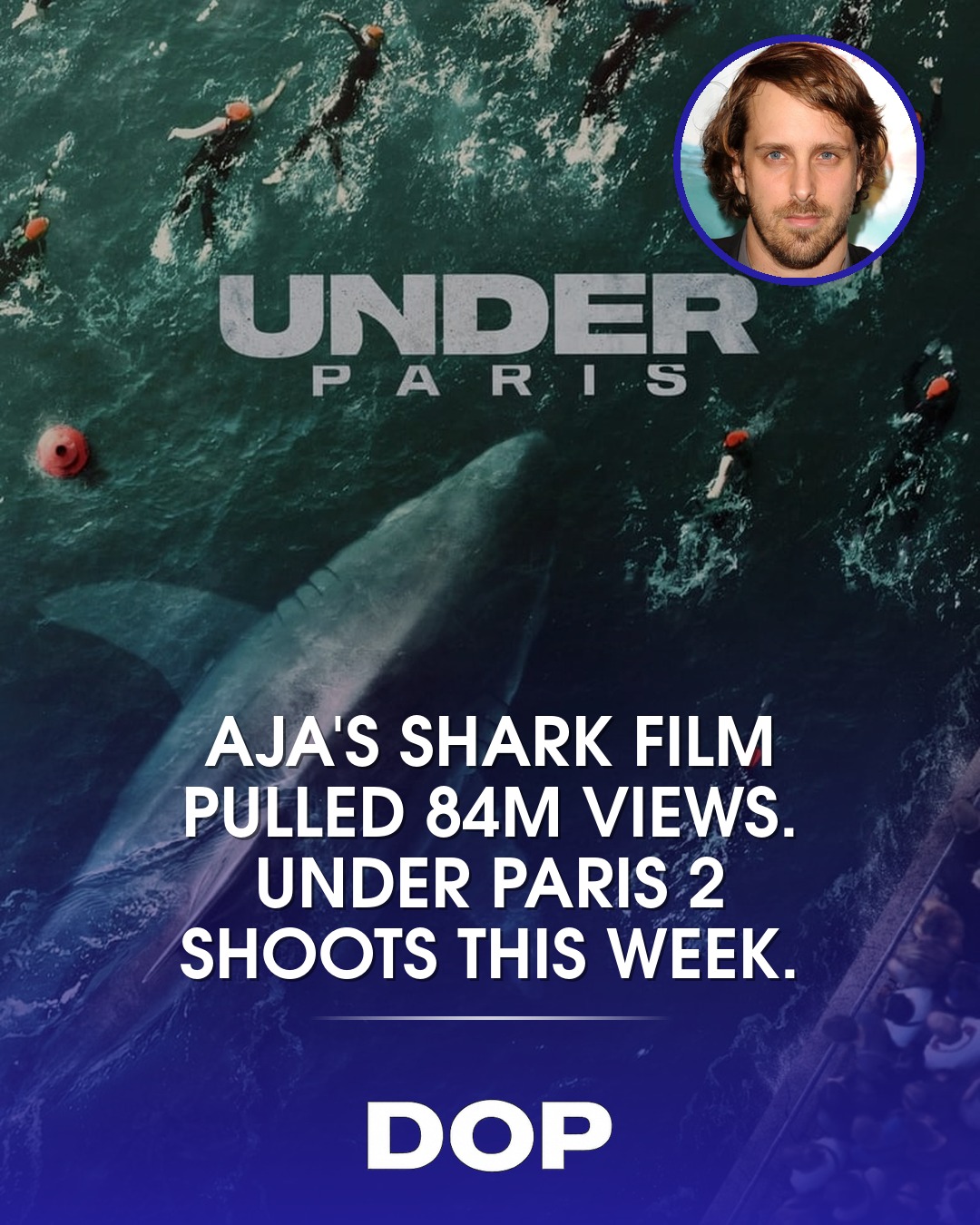
The announcement that Alexandre Aja has commenced principal photography on Under Paris 2 in the South of France has sent ripples through the cinematic community. The original Under Paris, a sleeper hit that devoured Netflix records with over 84 million views in its inaugural month, proved that audacious genre filmmaking, when paired with compelling visuals, can captivate a global audience. For cinematographers, the first film was a masterclass in controlled chaos, a testament to meticulous planning and innovative execution in one of the most challenging environments imaginable: underwater.
The initial challenge for DP Axel Cosnefroy on Under Paris was Herculean. Simulating the murky, historical depths of the Seine within massive water tank facilities in Belgium and Spain demanded a unique blend of technical prowess and artistic vision. Beyond the obvious hurdles of waterproofing and specialized gear, the true artistry lay in crafting a visual language that felt both claustrophobic and expansive, terrifying yet strangely beautiful. Cosnefroy and Aja opted for a grittier, naturalistic approach, often employing practical lighting fixtures submerged alongside the actors to create believable light sources amidst the artificial gloom. This commitment to in-camera realism, rather than relying solely on post-production wizardry, is a hallmark of Aja's work and a philosophy that resonates deeply with the craft-focused ethos of Occupy Cinematography.
Evolving the Aquatic Aesthetic
Now, with Under Paris 2, the stakes are not just higher in terms of narrative; they are amplified for the cinematography. The first film largely confined its aquatic horrors to the submerged streets of Paris. The sequel, with its promise of expanded scale and "mixed-environment cinematography," suggests a departure from these familiar depths. This opens up a fascinating array of possibilities and challenges for the returning visual team. Will we see more open-water sequences, demanding different lighting strategies and camera movements? How will the transition between land and water be handled visually, maintaining continuity of tone and tension?
“The true artistry lay in crafting a visual language that felt both claustrophobic and expansive, terrifying yet strangely beautiful.”
Consider the technical implications. Shooting in the South of France, with its vibrant natural light, could push the aesthetic in new directions. Will the team maintain the desaturated, cold palette of the original, or will a more sun-drenched, almost idyllic surface world contrast sharply with the unseen terrors beneath? This contrast could be incredibly potent, heightening the horror when the familiar becomes frightening. The choice of camera and lens package will be critical. While the first film likely leveraged robust digital cinema cameras known for their low-light capabilities and dynamic range, such as ARRI Alexas, the move to mixed environments might necessitate even more specialized rigs for seamless transitions and diverse shot requirements. The character of the lenses, from wide-angle perspectives emphasizing vastness to tighter, more intimate shots for character dread, will define the visual rhythm.
The DP's New Horizon
The return of stars Bérénice Bejo and Nassim Lyes means their performances will once again be intimately tied to the aquatic environment. For the cinematographer, capturing their fear and resilience within these challenging settings requires not just technical expertise but also a profound understanding of performance. How does one light a face underwater to convey emotion, especially when reflections and refractions can distort? How are underwater close-ups achieved with clarity and impact, avoiding the common pitfalls of murky, indistinct imagery?
Aja's filmography, from the visceral intensity of High Tension to the claustrophobic dread of Crawl, consistently demonstrates a director who understands the power of the frame. He is a director who empowers his cinematographers to push boundaries, to find beauty and horror in equal measure. The success of Under Paris wasn't just its high-concept premise; it was its unflinching visual execution, its ability to make the improbable feel terrifyingly real. As Under Paris 2 begins its journey, we eagerly anticipate the visual innovations it will bring, the new benchmarks it will set for aquatic cinematography, and the fresh challenges it will overcome in expanding its thrilling narrative beyond the initial confines of the Parisian depths. This is not just a sequel; it's an opportunity for cinematographers to witness the evolution of a demanding craft, pushing the boundaries of what's possible beneath the surface and on screen.