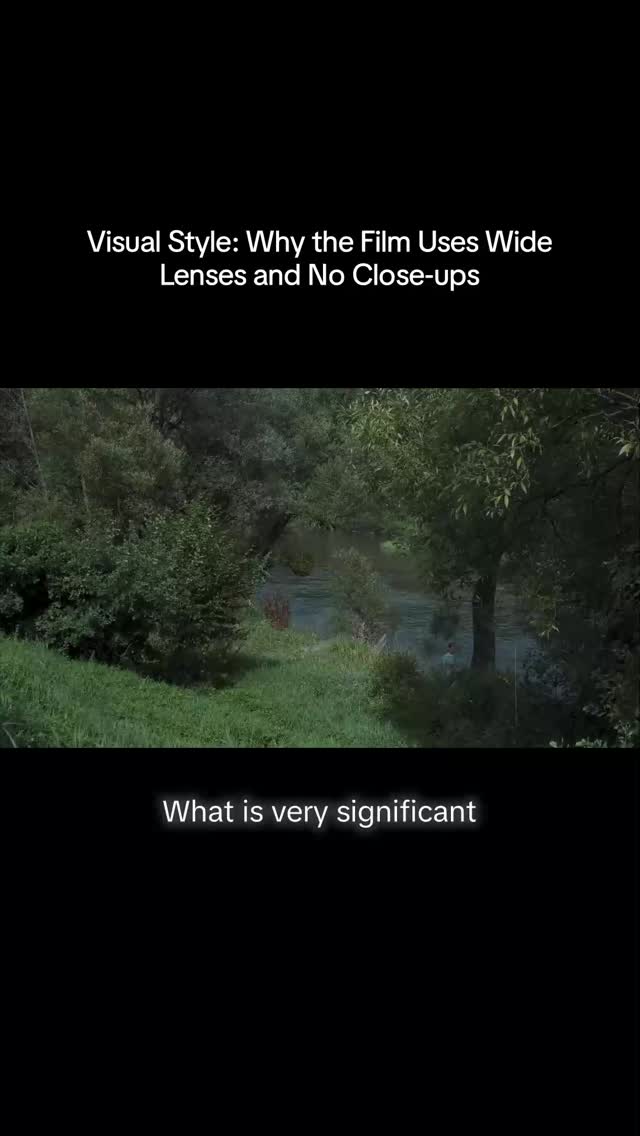
In an era often dominated by the visceral intimacy of the close-up, certain cinematographers bravely chart a different course, challenging conventional notions of audience engagement. Łukasz Żal, a name synonymous with a meticulous, almost painterly approach to visual storytelling, stands as a prime example. His work on projects where an 'objective yet immersive' aesthetic is paramount offers a masterclass in how deliberate technical choices can sculpt a film's very soul. The Instagram caption hints at a profound strategy – a rejection of the manipulative gaze in favor of an observational distance that paradoxically deepens immersion.
Żal’s filmography, particularly his collaborations with directors like Paweł Pawlikowski on films like Ida and Cold War, showcases a profound understanding of how to communicate emotion and narrative through composition, light, and lens choice, often without resorting to overt emotional cues. This isn't detachment for detachment's sake; it's a carefully constructed space for the audience to inhabit, to observe, and to draw their own conclusions. The 'tactical genius' mentioned isn't just about pretty pictures; it's about a philosophical stance on filmmaking.
The Wide-Angle Philosophy: Objectivity Through Perspective
The eschewal of close-ups and the embrace of wider lenses are foundational to this objective aesthetic. While a 50mm lens often mirrors human vision, wider focal lengths – think 28mm, 35mm, or even wider – inherently push the viewer back, revealing more of the environment and the subject's relationship to it. This compositional strategy transforms characters from isolated entities into integral parts of a larger, often inescapable, world. It forces the audience to actively scan the frame, to read body language and environmental cues rather than being spoon-fed emotion through a tightly framed face. For Żal, the wide lens isn't just about field of view; it's about establishing a moral and emotional distance that empowers the viewer.
“By ditching close-ups and opting for wide lenses, the team creates an objective, unmanipulated flow that lets the story breathe.”
This approach stands in stark contrast to the prevalent 'coverage' mentality, where a scene is shot from multiple angles, often prioritizing close-ups for emotional impact in the edit. Żal’s method, conversely, implies a trust in the scene's inherent power and the actors' performances within a carefully curated frame. It's a testament to the power of deliberate framing as a narrative device, where the frame itself becomes a character, dictating the viewer's relationship to the story.
Depth of Field & Multi-Camera Discipline
The mention of maintaining a deep depth of field, especially with 'ten cameras rolling at once,' introduces another layer of technical sophistication and production discipline. Achieving deep focus, where both foreground and background elements remain sharp, typically requires stopping down the lens (e.g., f/8, f/11) and/or utilizing wider lenses. This choice further reinforces the objective gaze, presenting the world in its entirety, without the selective emphasis of shallow depth of field that often guides the viewer's eye to a specific point. It encourages a more contemplative, holistic viewing experience.
The challenge of coordinating ten cameras, each likely set to achieve deep focus, speaks volumes about the meticulous planning and communication required on set. This isn't a haphazard spray-and-pray approach; it's a highly choreographed ballet of camera placement, lighting consistency, and exposure control across multiple units. Imagine the gaffing challenge alone, ensuring consistent light levels across a wide shot for ten cameras, all while maintaining the desired aesthetic. This level of discipline ensures that despite the multiplicity of capture, the visual language remains cohesive and intentional.
The Unique Visual Language of Constraint
Ultimately, what emerges from these choices is a unique visual language born from what might initially seem like constraints. The absence of close-ups forces storytelling through blocking, performance, and environmental context. The deep focus, combined with wide lenses, creates a stage-like environment where every element within the frame holds significance. The logistical complexity of multi-camera, deep-focus setups demands a level of precision that elevates the craft beyond mere technical execution.
Żal’s work reminds us that cinematography is not merely about recording an image, but about shaping perception. His strategic use of focal length, depth of field, and camera deployment crafts an experience that is both immersive – by allowing the viewer to exist within the scene – and detached – by refusing to manipulate their emotional response through conventional means. It's a powerful demonstration of how a deep understanding of the camera's capabilities, combined with a clear artistic vision, can define a film's singular identity, proving that sometimes, less truly is more, especially when 'less' is so profoundly intentional.