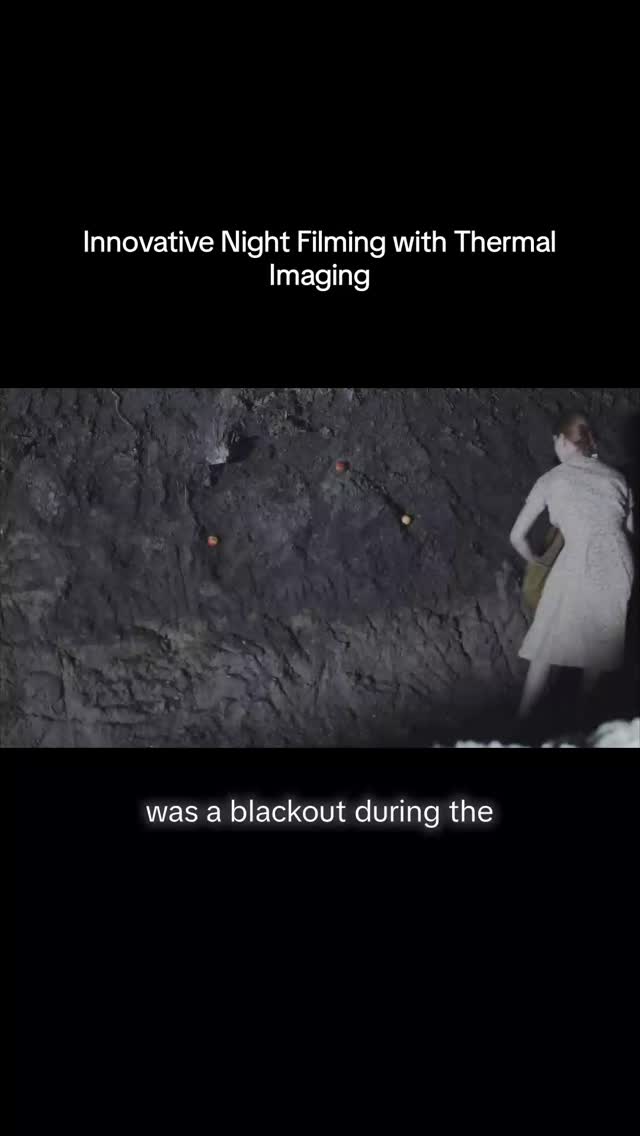
In an industry often defined by its technological advancements, true innovation isn't just about adopting the latest gear; it's about reimagining what's possible with existing tools, and sometimes, even repurposing those never intended for cinematic application. Such is the case with cinematographer Łukasz Żal, whose recent revelation about a particular WWII blackout sequence sent ripples of excitement and admiration through the cinematography community. The challenge: how to visually represent absolute, historical darkness – a pitch-black atmosphere that is inherently un-cinematic – without resorting to mere audio cues or heavily stylized, unrealistic dimness.
Żal, known for his audacious and often stark visual language in films like Ida and Cold War, is no stranger to pushing the envelope. His work often prioritizes emotional resonance over conventional beauty, embracing texture, contrast, and unconventional lighting to serve the narrative. For this particular sequence, the solution was nothing short of brilliant: a military-grade thermal camera, unceremoniously hacked, then paired with modern AI upscaling. This wasn't merely a technical flex; it was a profound act of creative problem-solving, yielding a haunting, unique aesthetic that would have been utterly unattainable with standard filming equipment.
The Unseen Spectrum: Thermal Imaging's Cinematic Debut
The decision to employ a thermal camera speaks volumes about Żal's commitment to verisimilitude, even when that reality is visually absent. Standard cameras, whether film or digital, capture light in the visible spectrum. A blackout, by its very definition, removes that light. A thermal camera, however, operates on a different principle, detecting infrared radiation emitted by objects based on their temperature. This allows it to 'see' heat signatures, rendering the world in gradients of warmth rather than light and shadow. The inherent challenge, of course, is that cinematic thermal cameras are not commonplace. Military-grade units are designed for surveillance and targeting, not for nuanced narrative storytelling.
"This wasn't merely a technical flex; it was a profound act of creative problem-solving, yielding a haunting, unique aesthetic that would have been utterly unattainable with standard filming equipment."
The 'hacking' involved would have been extensive, likely requiring modifications to the sensor's output, custom lens adaptation for a more cinematic field of view, and a deep understanding of its raw data capabilities. The goal wasn't just to capture heat; it was to translate that data into an image that conveyed the oppressive, disorienting nature of a WWII blackout. Imagine the ghostly outlines of figures, the faint warmth of breath, the subtle heat emanating from unseen machinery – all rendered in an alien, almost spectral palette. This is a far cry from the familiar green-and-black of typical military thermal footage; Żal's team would have meticulously color-graded and processed this raw thermal data to create a bespoke visual language.
AI Upscaling: Bridging the Resolution Gap
One of the primary limitations of many specialized cameras, especially those repurposed from non-cinematic applications, is resolution. Military thermal cameras are often optimized for immediate interpretation, not for high-fidelity, large-screen presentation. This is where the integration of modern AI upscaling becomes a critical component of Żal's methodology. AI upscaling algorithms, particularly those leveraging deep learning, can intelligently infer missing pixel information, dramatically enhancing the perceived resolution and detail of lower-quality source material. This isn't just simple interpolation; it's a sophisticated process that can reconstruct textures and sharpen edges, effectively transforming the raw, perhaps grainy, thermal footage into something suitable for a feature film.
The combination is ingenious: the thermal camera provides the unique, otherwise invisible visual information, while the AI upscaling elevates that information to a cinematic standard. This synergy highlights a powerful trend in modern post-production, where computational cinematography is becoming an increasingly vital tool in the DP's arsenal. It allows for the capture of previously uncapturable phenomena, then refines that raw data into a polished, narrative-serving image. For Żal, whose monochrome masterpieces often lean on the tactile quality of light and shadow, the thermal spectrum offers a new dimension of texture and presence, creating an uncanny sense of bodies moving through an unlit void.
A Masterclass in Creative Problem-Solving
This approach is a testament to the fact that groundbreaking cinematography isn't solely about the latest ARRI or RED camera; it's about vision, ingenuity, and a willingness to transcend conventional boundaries. Żal's work here isn't just technically impressive; it's deeply artistic. The eerie, almost alien quality of thermal vision perfectly encapsulates the terror and disorientation of a blackout, forcing the audience to experience the scene not just visually, but almost sensorily. It speaks to the core of what Occupy Cinematography champions: the relentless pursuit of visual storytelling, even when it means venturing into uncharted technical territory.
Łukasz Żal has once again demonstrated that the most compelling images often emerge from the most challenging constraints. By turning a limitation – the absence of light – into an opportunity for radical visual experimentation, he has not only delivered a haunting and unique look but has also offered a blueprint for future cinematographers seeking to push the very definition of what a camera can capture and what an audience can experience.