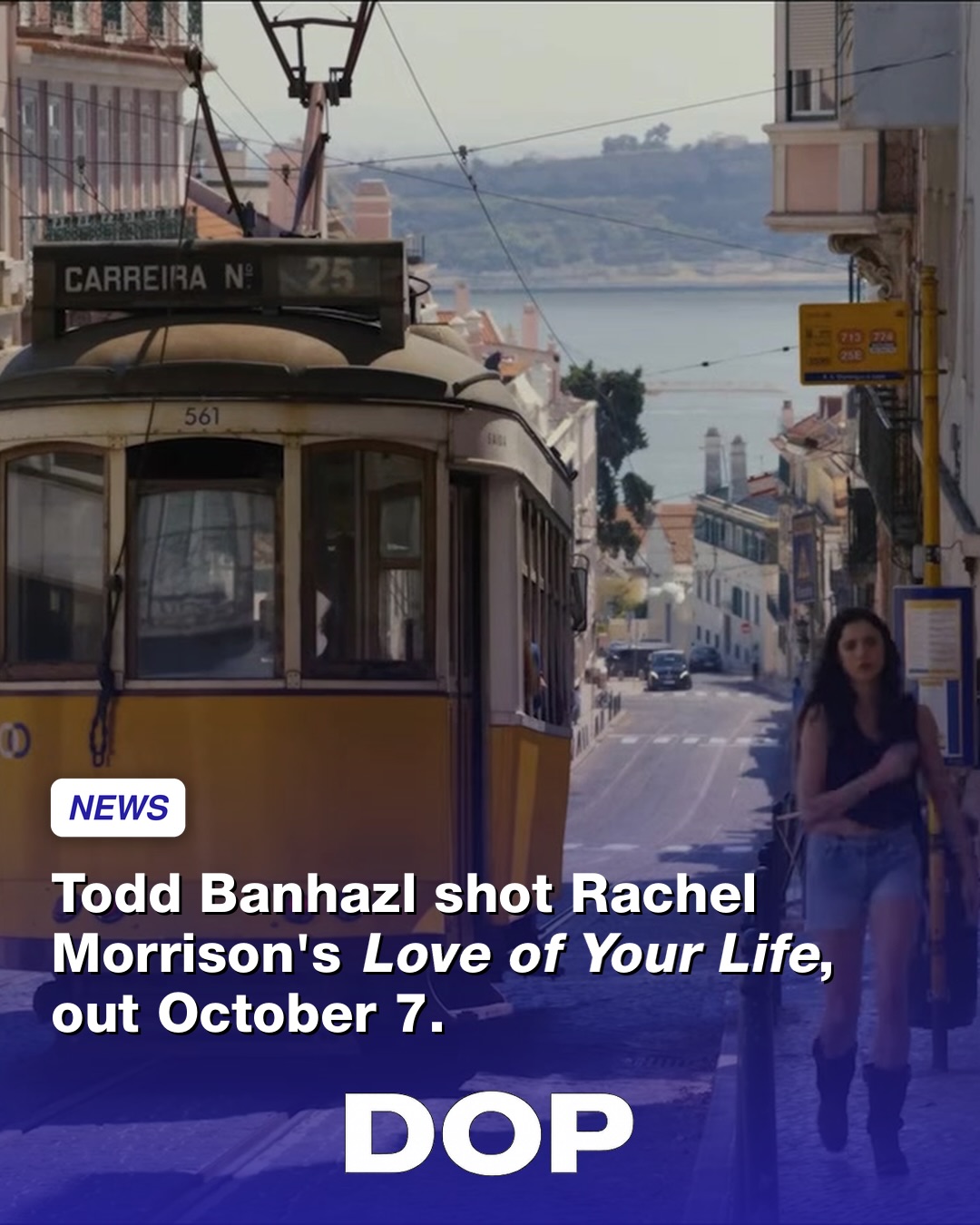
When two cinematographers of the caliber of Rachel Morrison, ASC, and Todd Banhazl converge on a single project, the cinematic world takes notice. Morrison, a trailblazer whose nomination for an Oscar for Mudbound shattered a glass ceiling, steps into the director's chair for her second feature, Love of Your Life. Entrusting the visual reins to Banhazl, known for his distinctive work on films like Blow the Man Down and the visually arresting Dirty Computer for Janelle Monáe, signals a profound understanding of visual language and a shared commitment to evocative storytelling. The production, spanning Europe from August to October, hints at a narrative rich in varied textures and environments, ripe for Banhazl's nuanced approach.
Banhazl’s filmography reveals a cinematographer who is as comfortable with intimate, character-driven drama as he is with heightened, stylized narratives. His work on Blow the Man Down, for instance, showcased a keen eye for capturing the stark beauty and emotional grit of coastal Maine, employing natural light and a slightly desaturated palette to underscore the film’s dark humor and simmering tension. This ability to imbue landscapes with character and emotion will undoubtedly be crucial for Love of Your Life, especially given its European setting. One can anticipate a sophisticated interplay between environment and emotion, where the architecture and natural light of each location become integral to the characters' journeys.
The Art of Collaborative Vision
The dynamic between a director and their cinematographer is always a delicate dance, but when both possess such a deep understanding of visual grammar, it elevates to a symphonic collaboration. Morrison, having spent years translating directors' visions into light and shadow, brings an unparalleled empathy and clarity to her direction. She understands intrinsically the challenges and opportunities inherent in image-making. This shared language likely allowed Banhazl a unique freedom, anchored by a clear directorial intent. It’s not merely about executing a shot list; it’s about a deeply informed dialogue on mood, subtext, and the psychological impact of framing and light.
“The true magic happens when a director and cinematographer speak the same visual language, not just in terms of technique, but in the very soul of the story they are trying to tell.”
Considering Banhazl’s past work, we might expect a preference for anamorphic lenses, which he has utilized to great effect in creating a cinematic sweep and characterful bokeh, particularly in Dirty Computer. The subtle distortions and unique fall-off of anamorphics can lend a dreamlike quality or a sense of expansive intimacy, depending on how they are employed. Paired with a modern digital cinema camera, perhaps an ARRI Alexa Mini LF for its exceptional dynamic range and color science, Banhazl could be chasing a blend of contemporary clarity with classic cinematic texture. The choice of sensor and glass is never arbitrary for a DP of his caliber; it’s a deliberate decision to sculpt the visual tone.
Technical Poise and Emotional Resonance
Lighting will undoubtedly be a cornerstone of Love of Your Life. Banhazl has demonstrated a mastery of both naturalistic and stylized lighting. In Blow the Man Down, his use of practicals and available light created an authentic, lived-in feel, while for Dirty Computer, he crafted elaborate, high-contrast set pieces with a more theatrical, often colorful, approach. For a European-set drama, one could imagine a sophisticated blending of these styles: perhaps soft, diffused natural light for intimate interiors, contrasted with the dramatic chiaroscuro of European cityscapes at night, or the crisp, golden hour glow over ancient architecture. The European light, with its unique quality, offers a rich canvas for a DP who understands how to harness it.
The film's score, composed by the acclaimed Dustin O’Halloran, known for his poignant and evocative work, will undoubtedly intertwine with Banhazl’s visuals to create a holistic sensory experience. The interplay between O’Halloran’s melancholic piano and orchestral textures and Banhazl’s carefully composed frames promises a deeply immersive emotional landscape. Color science, too, will be paramount. Given Banhazl’s previous output, a nuanced approach to color grading, perhaps leaning into muted tones with strategic pops of color, could be employed to reflect the emotional arc of the narrative, avoiding overt stylization unless it serves a specific story beat.
The anticipation for Love of Your Life, hitting theaters on October 7, is not just for the story it tells, but for the visual language through which it will be conveyed. With Todd Banhazl at the helm of cinematography under Rachel Morrison's direction, audiences are poised to witness a truly collaborative masterpiece, a testament to the power of the image in modern cinema. This is a film where every frame is not just seen, but felt, a true celebration of the craft of cinematography.
This article contains affiliate links. We may earn a small commission at no extra cost to you. Learn more.