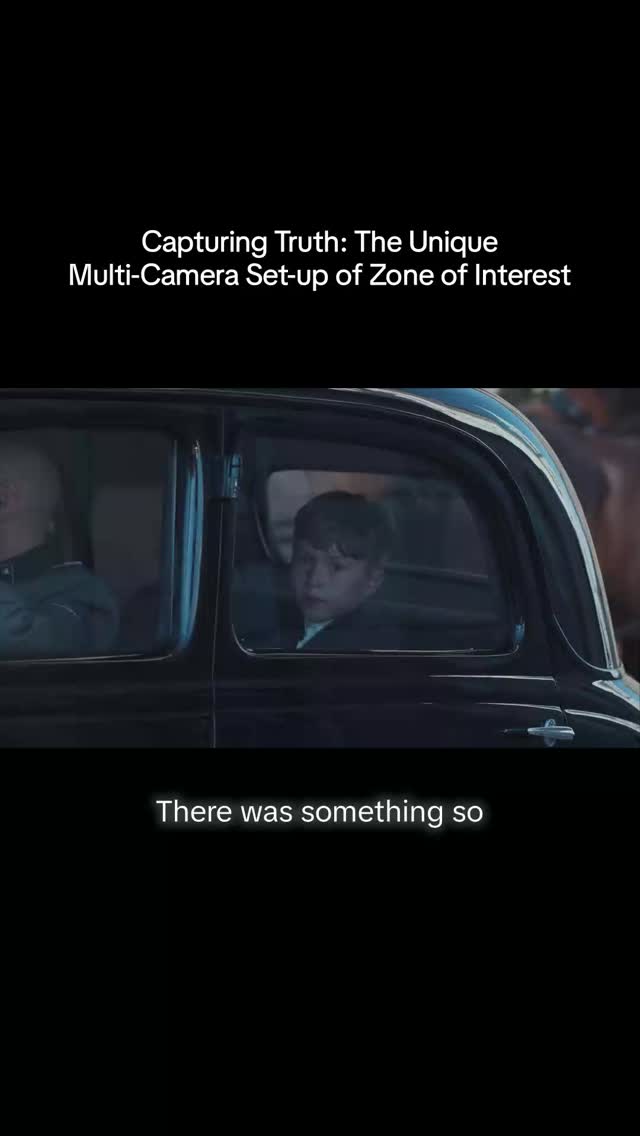
In an industry often defined by its colossal crews, intricate setups, and the constant hum of on-set activity, the production methodology behind Jonathan Glazer’s *The Zone of Interest* stands as a stark, almost defiant, counter-narrative. It wasn't merely a film shoot; it was a meticulously orchestrated disappearing act, a deliberate erasure of the cinematic apparatus to reveal a chilling, unvarnished reality. For cinematographers and filmmakers, this film is not just a masterclass in visual storytelling, but a profound philosophical statement on the very nature of observation and performance.
The core of this radical approach, spearheaded by Glazer and his brilliant Director of Photography, Łukasz Żal (renowned for his work on *Ida* and *Cold War*), was to dissolve the traditional boundaries between actor and lens. Imagine a set where the usual choreography of camera moves, lighting adjustments, and crew presence is largely absent. Instead, the production adopted a 'mission control' model. This wasn't about hiding cameras for a single shot; it was about integrating them so seamlessly into the environment that they became part of the architecture itself, silent witnesses to the unfolding domestic horror.
The Invisible Eye: Technical Innovation Meets Ethical Imperative
Żal’s technical execution was nothing short of revolutionary. Using a combination of discreetly placed ARRI Alexa Mini cameras, often hidden within the set — disguised as light fixtures, or even built into walls — the team created a multi-camera surveillance network. This wasn't about achieving a documentary aesthetic in the verité sense; it was about creating an environment where the actors could simply *exist* within the space, unburdened by the usual performance anxieties induced by a crew. The result is a disturbing intimacy, a voyeuristic perspective that implicates the viewer in the banality of evil unfolding onscreen.
“We didn't want the actors to perform for the camera; we wanted them to live in the space. The cameras became part of the environment, silent observers, which allowed for a terrifying authenticity.” – Łukasz Żal on the philosophy behind The Zone of Interest’s cinematography.
The lighting strategy further cemented this philosophy. Rather than traditional film lights, Żal primarily relied on practicals and existing ambient light, supplemented by meticulously placed, often small, LED sources that were integrated into the set design. This naturalistic approach, while visually striking, served a deeper purpose: it maintained the illusion of an untouched, observed reality. The color science, too, played a crucial role, favoring a desaturated, almost clinical palette that underscored the film's chilling detachment. This wasn't about beautiful imagery in the conventional sense, but about creating a visual language that felt stark, objective, and deeply unsettling.
Beyond the Gaze: Performance and Presence
The impact of this approach on performance cannot be overstated. Without the constant interruption of resetting shots, adjusting marks, or the presence of a sprawling crew, actors Christian Friedel and Sandra Hüller were given an unprecedented freedom to inhabit their characters. They were not performing for a lens; they were living within a reconstructed reality. This allowed for moments of unscripted authenticity, subtle gestures, and nuanced interactions that might have been lost in a more traditional filmmaking environment. The 'mission control' room, where Glazer and Żal observed the feeds, became a crucial nerve center, allowing them to capture these organic moments as they unfolded.
Żal’s filmography, particularly his black-and-white masterpieces *Ida* and *Cold War*, showcases a profound understanding of composition, light, and the human face. Yet, *The Zone of Interest* pushes his artistry into new territory. While those earlier films were meticulously framed and artfully lit, here, the artifice is stripped away, replaced by an almost surgical precision in observation. The static, almost surveillance-like framing, combined with the actors' uninhibited performances, creates a palpable sense of unease. It forces the audience to confront the horror not through dramatic exposition, but through the mundane, chilling details of everyday life lived next to atrocity.
A New Paradigm for Reality in Cinema
What *The Zone of Interest* ultimately offers is a profound challenge to conventional filmmaking. It suggests that sometimes, the most powerful way to capture raw, unfiltered reality is not by adding more, but by strategically removing. By dissolving the traditional furniture of cinema — the booms, the clapperboards, the shouts of 'action' — Glazer and Żal created a space where artifice receded, allowing a hauntingly present reality to emerge. This isn't just about technical innovation; it's about an ethical stance on how we choose to represent the world, and what responsibilities come with that representation. For cinematographers, it’s a powerful reminder that sometimes, the most impactful visual statements are made when the hand of the artist is least visible, leaving only the stark, undeniable truth on screen.