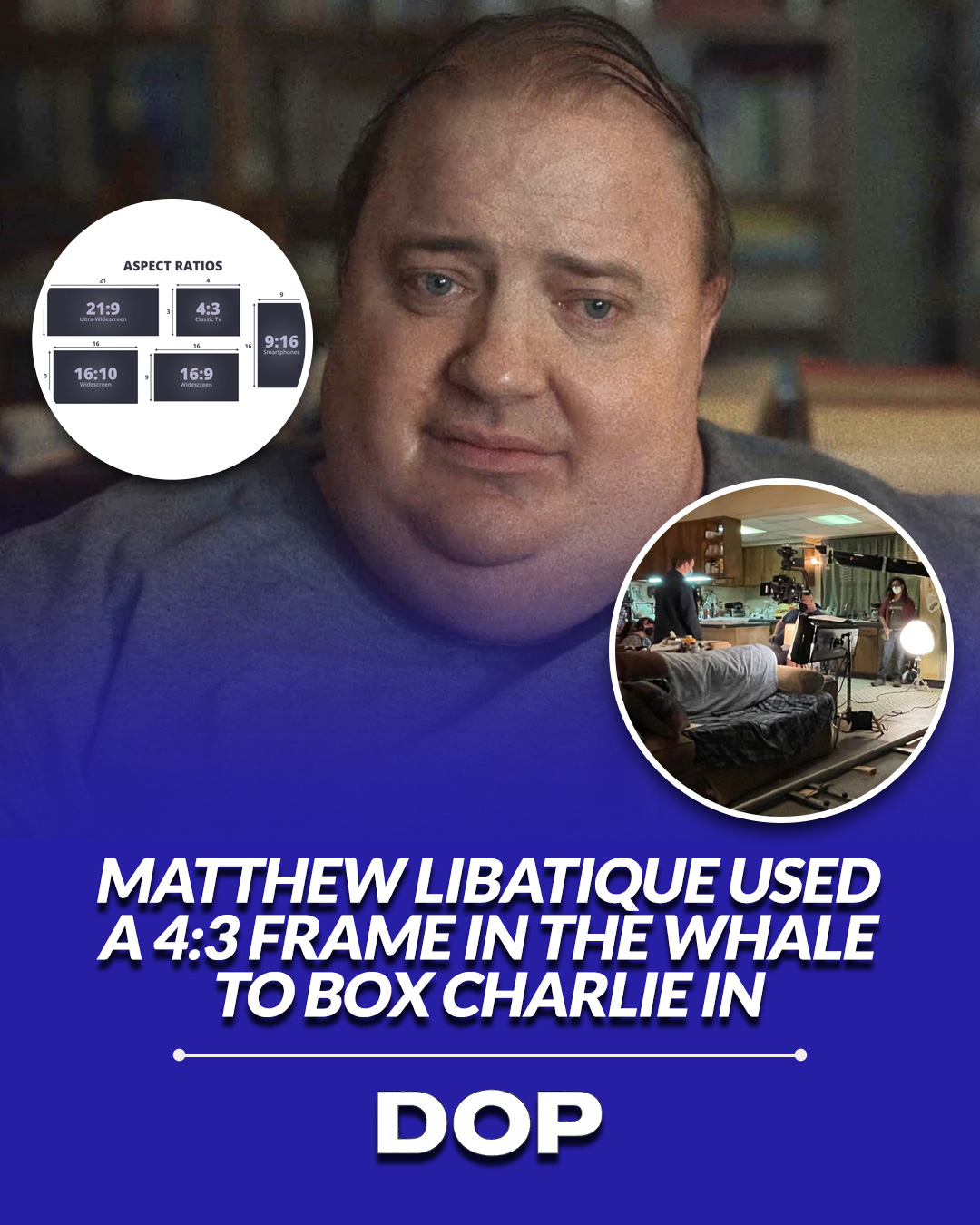
In an era dominated by sprawling widescreen epics and the immersive allure of anamorphic grandeur, Matthew Libatique ASC's bold choice for Darren Aronofsky's The Whale stands as a masterclass in deliberate constraint. Opting for a narrow 4:3 aspect ratio, Libatique, known for his dynamic and often visually extravagant work on films like Black Swan and A Star Is Born, consciously reined in the frame, transforming it from a window to a world into a suffocating box. This isn't just an aesthetic preference; it's a profound narrative decision, making the very shape of the image an active participant in the film's tragic story.
The immediate and visceral impact of the 4:3 frame is its inherent verticality and horizontal constriction. For Brendan Fraser’s character, Charlie, a reclusive and morbidly obese English teacher, this choice is nothing short of brilliant. Charlie is often framed tightly within the confines of his apartment, his immense physical presence filling the screen, leaving little to no negative space. Doorways, walls, and the edges of furniture become extensions of his internal and external prisons. The audience is invited, or rather forced, to feel the same claustrophobia, the same crushing weight that Charlie endures. This isn't merely about showing his physical state; it's about making us inhabit it, to experience the world as he does, limited, confined, and overwhelmingly present within his own suffering.
The Psychology of the Box
Libatique’s approach to composition within this tight aspect ratio is meticulously calculated. He frequently employs central framing, emphasizing Charlie's isolation and the immovable nature of his circumstances. The camera often remains static, or moves with a deliberate slowness that mirrors Charlie’s own labored movements, further enhancing the sense of entrapment. When the frame does open up, even for a brief exterior shot or a wider view within the apartment, the 4:3 still asserts its presence, reminding us that Charlie’s world, regardless of its momentary expansion, remains fundamentally circumscribed by his condition. This consistent visual language ensures that the aspect ratio itself becomes a character, a silent, unyielding antagonist that reinforces Charlie’s emotional and physical imprisonment.
“The 4:3 aspect ratio in The Whale isn’t just a stylistic choice; it’s a narrative weapon, forcing the audience to feel the same suffocating pressure and confinement as Charlie.”
Technically, shooting 4:3 in a contemporary digital workflow often involves either cropping a larger sensor or utilizing specific lenses designed for such ratios, or even anamorphic lenses with a different de-squeeze factor. While the specific camera and lens package for The Whale were not overtly publicized as a technical marvel separate from the story, Libatique's long-standing collaboration with Aronofsky suggests a deep understanding of how to extract maximum emotional impact from chosen tools. His preference for organic, often available-light aesthetics, combined with a precise control over color and contrast, would have been key in rendering Charlie's world with such stark realism and emotional depth within the narrow frame.
A Masterclass in Visual Storytelling
The decision to shoot 4:3 is a brave one in today's cinematic landscape. It defies the commercial expectation of expansive visuals and instead leans into intimacy and intensity. For cinematographers, The Whale serves as a powerful reminder that the fundamental elements of filmmaking, including the often-overlooked aspect ratio, are potent storytelling devices. It's a testament to the idea that sometimes, less is more, and that strategic limitation can yield profound emotional resonance. Libatique and Aronofsky didn't just tell Charlie's story; they made us feel the walls closing in, the air growing thin, and the immense weight of a life lived within a self-imposed, and visually reinforced, cage.
This film challenges DPs to think beyond convention, to consider how every technical choice, from sensor size to lens choice to the very shape of the image, can serve the narrative. The 4:3 aspect ratio in The Whale is not a gimmick; it’s an integral, deeply felt component of Charlie's tragic journey, demonstrating how the frame itself can become a powerful metaphor for character and confinement.
This article contains affiliate links. We may earn a small commission at no extra cost to you. Learn more.