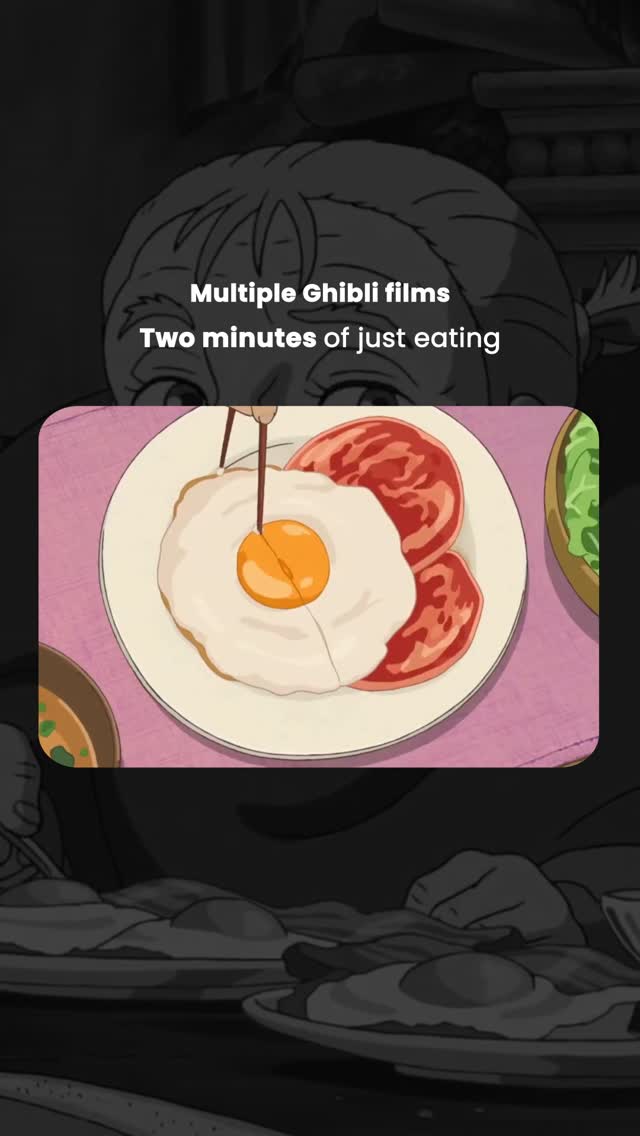
In an era dominated by hyper-accelerated cutting and frantic camera movement, Hayao Miyazaki’s approach to visual storytelling offers a masterclass in temporal control. At Studio Ghibli, animators don't merely draw food; they conduct field studies. They observe the exact viscosity of sizzling pork fat, the specific refraction of light through a plume of rising steam, and the micro-fractures in a crust of newly baked bread. In Ponyo, a simple two-minute sequence dedicated to preparing and eating instant ramen becomes an anchor for the entire emotional architecture of the film.
For live-action directors of photography and camera operators, this hyper-focused observation reveals a vital truth: visual intimacy is constructed through texture, light, and above all, time. When we look at how Ghibli renders these quiet domestic rituals, we see a philosophy that translates directly into cinematography choices, from lens selection and depth of field to key-to-fill ratios and camera placement.
The Physics of Micro-Texture and Directional Light
Consider the technical precision required to make a static scene feel alive. In live-action tabletop and culinary cinematography, capturing the sheen of oil or the movement of steam demands deliberate lighting architecture. Steam, much like smoke or rain, relies almost entirely on strong backlight or rim light to shear through the background space and register on sensor. Without a high-contrast rim light, subtle atmospheric details simply collapse into the midtones.
Ghibli’s artists approach these beats with the mind of a veteran DP working with vintage macro optics. They understand how light specularly reflects off liquid surfaces, creating hot highlights that give sub-surface scattering its tactile reality. When translates to camera package choices, achieving this level of sensory intimacy often calls for fast prime lenses, such as a 50mm or 75mm macro paired with gentle diffusion like a ¼ Hollywood Black Magic, to round off hard digital edges while preserving micro-contrast in the highlights.
The Mechanics of Ma: Temporal Space in Visual Storytelling
Central to Miyazaki’s methodology is the Japanese aesthetic concept of ma, the intentional pause, the empty space between action beats. While narrative cinema often demands that every frame push the plot forward, incorporating ma allows the audience to settle into the atmosphere of a scene. It is the visual equivalent of letting a reverb tail decay naturally before striking the next chord.
A frame does not always need to advance narrative exposition; sometimes its highest function is simply to anchor sensory human experience.
In live-action setups, implementing ma means knowing when to hold a shot long past the spoken dialogue. It means letting a locked-off camera rest on a pool of warm tungsten light across a kitchen table, or holding a close-up on hands folding a napkin as ambient daylight fades through a sheer window. DPs like Robbie Ryan and Roger Deakins frequently utilize this stillness, using subtle shifts in practical lighting to maintain dynamic interest without forcing camera moves.
Translating Animation Pacing to the Live-Action Set
When deciding whether to push to the next narrative beat or let a scene sit, the director and cinematographer must evaluate the scene's emotional mass. If a sequence is heavily loaded with dramatic tension or emotional quietude, rushing the edit strips the audience of their ability to process texture. Choosing a wider focal length, establishing a clear key light direction, and allowing natural movement within the frame gives the viewer room to breathe.
Ultimately, Ghibli's legendary food sequences are not filler; they are the heart of the world-building. By treating mundane moments with technical rigor and temporal patience, visual storytellers can transform simple environmental details into deeply immersive cinematic experiences.