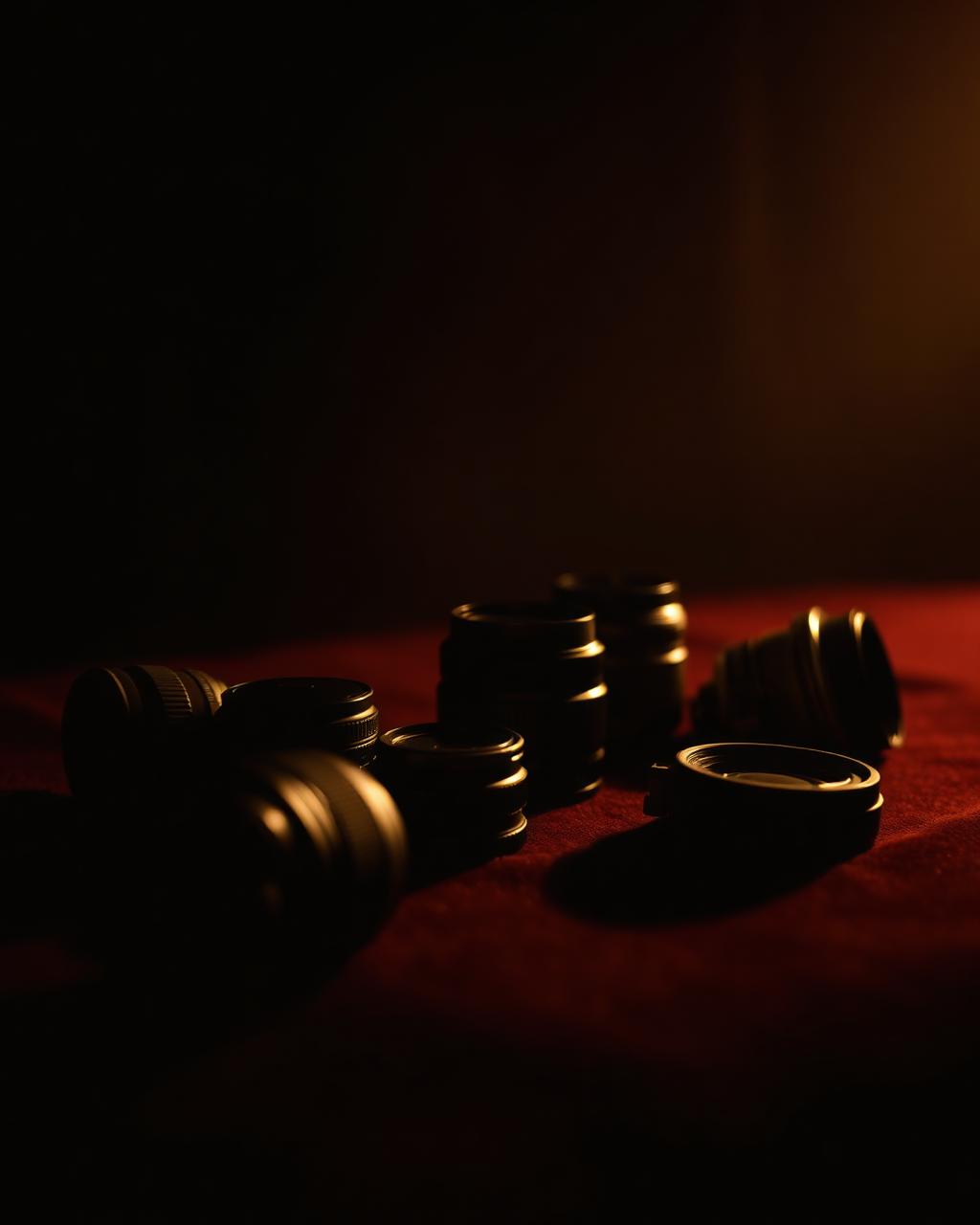
The Vintage Glass Renaissance: Why 2026's Best DPs Are Pairing 1960s Optics with Modern Sensors
The Palme d'Or race this year isn't being decided by the latest cinema lenses—it's being decided by glass that was engineered before the Vietnam War ended. Sam Levy shot Pickpocket on Super Baltars. Greta Zozula locked Josephine with Super Speeds. Karim Hussain paired an Angenieux 45-90mm—fungus-spotted, optically ancient—with a modern sensor for Forbidden Fruits. These aren't nostalgia plays. These are technical decisions made by cinematographers operating at the highest level of the craft.
The conventional wisdom has always been that old glass belongs in vintage cameras. Pair it with a 35mm film camera and you get a known quantity: the glass does what it was designed to do, the film stock colors it the way Kodak intended. But now something unexpected is happening. Digital sensors—particularly the ARRI Alexa 35, the Sony Venice 2, and now the new generation of medium-format options—have spectral sensitivity profiles so broad and so uniform that they can actually recover the intended character of 1960s optics in ways that exceed what the original film stocks could resolve.
The Optical Physics Behind the Renaissance
When Zeiss engineered the Super Speed primes and Angenieux built their rangefinder glass in the 1960s, they were optimizing for specific film stocks: Eastmancolor, Kodak Vision stocks, Fujifilm emulsions with their particular color saturation curves. Those lenses had to manage a certain amount of chromatic aberration, optical flaring, and spherical aberration within the constraints of what film could render.
Modern digital sensors, particularly the Alexa 35 with its 16+ stops of dynamic range and the Venice's ability to retain extreme highlight information, can actually capture the true optical signature of these vintage pieces. The slight off-axis aberrations, the characteristic falloff at the frame edges, the bokeh rendering—these all become aesthetic choices rather than optical limitations.
Kristofer Bonnell's work on Crash Land with Super Speeds demonstrates this perfectly. The lens rendering isn't "vintage because it's vintage." It's vintage because the optical character—the way light bends through those specific glass elements—creates a particular spatial compression and a bokeh that reads as psychologically intimate. The digital sensor captures this without the film stock's color compression destroying the subtlety.
Fungus, Coating Degradation, and Intentional Optical Shift
Karim Hussain's choice to shoot Forbidden Fruits with an Angenieux that shows visible fungus marks a philosophical shift in how DPs approach lens selection. The fungus—that white crystalline coating on internal glass elements—doesn't ruin the lens. It slightly diffuses the image in a way that's often imperceptible but emotionally significant. It creates a softening that happens inside the optical path, not in post-processing.
This is essential: that diffusion is not a soft-focus filter overlay. It's embedded in the actual light gathering of the lens. The result is a reduction in contrast and a slight warming that feels integrated into the image itself. You cannot replicate this perfectly in post-production. You can approximate it. But Hussain's choice recognizes that some of the most visually compelling cinematography comes not from pristine equipment but from equipment that has lived—equipment where the passage of time is encoded into the optical formula.
Super Baltars and Bokeh Character
Sam Levy's pairing of Super Baltars with modern sensors on Pickpocket speaks to a different optical philosophy. The Baltar line, engineered by Bausch & Lomb starting in the 1950s, has a particular bokeh character: smooth, almost creamy out-of-focus rendering with a slight circularity even when stopped down. The Super versions (1960s-era improvements) added slightly better correction for spherical aberration while maintaining that signature soft bokeh.
On modern sensors, this bokeh reads differently than it did on Eastmancolor stock. The sensor's broader spectral response means the Baltar's internal color fringing—which would have been invisible on film—becomes part of the aesthetic texture. Levy uses this not as a nostalgic reference but as a framing language. The bokeh becomes part of how the image separates foreground from background, how it communicates spatial relationships.
David McFarland's approach on Bedford Park with Moviecam primes (another 1970s-era design) takes this further. Moviecam optics were never as celebrated as Zeiss or Angenieux, but they have a particular hardness in the midtones and a slight edge enhancement that no modern coating can replicate. Paired with the Alexa 35, this hardness becomes a visual signature—it's not flattering, but it's specific. It grounds the image in a particular photographic moment.
The Sensor Paradox: Why Digital Freed Vintage Glass
The digital revolution was supposed to make equipment interchangeable. If you can store the image as data, any lens should work the same on any camera. But the opposite has proven true. The specificity of vintage glass became more pronounced on digital sensors, not less. A 1960s Super Speed on a 2024 Alexa 35 doesn't look like "old glass on new camera." It looks like a specific artistic choice made with intention.
This shift has created a secondary market for vintage cinema lenses that's driven practical prices up significantly. But more importantly, it's given DPs a new creative vocabulary. The vast majority of cinematography students trained in the last fifteen years learned on modern lenses—Cooke Anamorphics, Zeiss Ultra Primes, Angenieux Optimo zooms. All technically excellent, all computationally optimized. The DPs winning major festivals in 2026 are the ones who recognized that technical excellence doesn't equal visual specificity.
Maintaining Vintage Glass in Production
The practical side of shooting vintage glass at a festival-quality level requires meticulous planning. Lens maintenance, calibration, and backup optics are non-negotiable. You cannot use a fungus-covered Angenieux and hope for consistency across a shoot. Greta Zozula's Josephine involved Super Speeds that were optically refurbished but kept within their original era of manufacture. The production maintained a dust chamber for the lenses, had them recalibrated mid-production, and documented every focal length's precise characteristics.
This is the other reason vintage glass works in 2026: it works because DPs and their teams have learned how to maintain the craft of optical precision. It's not nostalgia. It's mastery of equipment that demands respect.
Conclusion: Intention Over Efficiency
The vintage glass renaissance isn't about retreating into the past. It's about recognizing that modern sensors have made vintage optics viable as contemporary tools. A Super Baltar in 2026 isn't a historical reference—it's an optical choice that creates a particular kind of image. The fact that it was designed before 1970 is irrelevant. What matters is that it delivers a visual specificity that modern optics, optimized for universality, cannot replicate.
The DPs winning in 2026 are the ones who understand that lenses are not neutral. They're not tools that disappear. They're the primary language of cinematographic intention. Levy, Zozula, Hussain, Bonnell, McFarland—they chose vintage glass because those particular optical formulas create images that tell their stories in ways that nothing else can.
Gear Recommendations
- ARRI Alexa 35 | Adorama, B&H Photo
- Zeiss Super Speed Primes (Vintage) | Adorama, B&H Photo
- Canon K-35 Prime Lenses | Adorama, B&H Photo
- Lens Calibration Test Chart (LensRentals Optical Bench), Amazon
- Optical Cleaning Kit (Professional Grade) | Adorama, B&H Photo
- Tiffen Vintage Lens Filter Set, Amazon
Note: Links above are affiliate links. Occupy Cinematography may earn a commission on qualifying purchases at no additional cost to you.