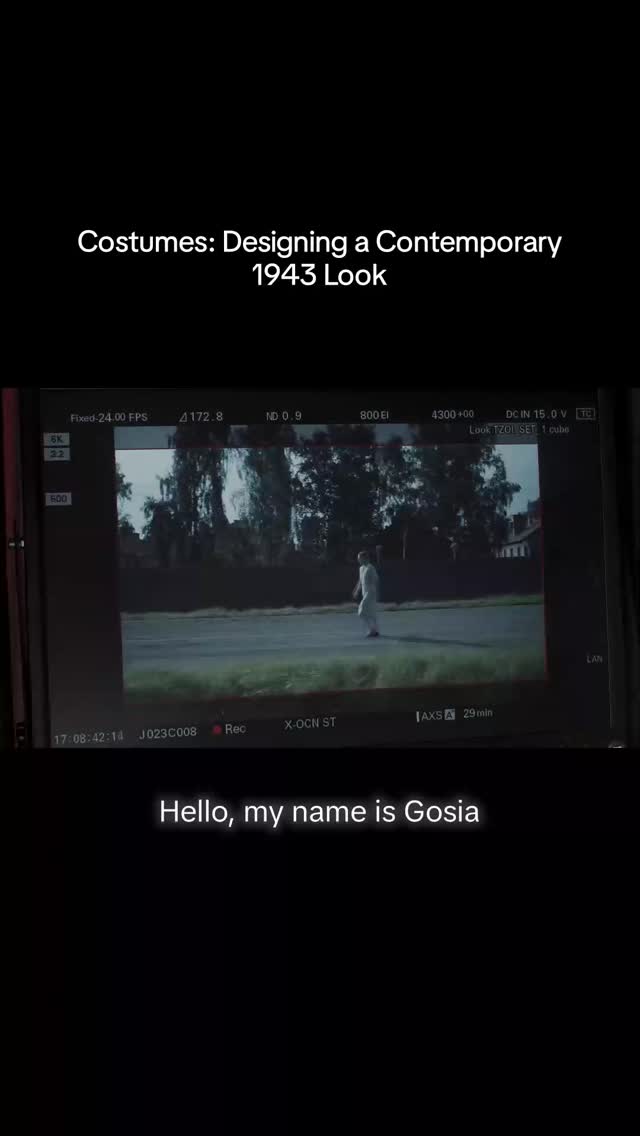
In an industry often seduced by the romanticized aesthetics of historical dramas, The Zone of Interest stands as a stark, unsettling anomaly. Jonathan Glazer's chilling examination of the Höss family, living an idyllic life next to Auschwitz, is a masterclass in cinematic restraint and deliberate discomfort. While much has been rightly lauded about Łukasz Żal's unflinching cinematography, its detached, almost surveillance-like gaze achieved through strategically placed, often hidden, cameras, it's the often-underestimated craft of costume design, led by Małgorzata Karpiuk, that quietly underpins the film's profound sense of unease and its jarringly modern sensibility. Karpiuk's approach was not to beautify, nor to meticulously recreate a picturesque 1940s, but to strip away all artifice, revealing a raw, almost mundane horror.
The challenge of designing for a period piece set during World War II, particularly one dealing with such sensitive subject matter, is immense. The temptation to lean into established visual tropes, the crisp uniforms, the elegant dresses, the nostalgic hues, is powerful. Yet, Karpiuk and Glazer actively resisted this, opting instead for a deliberate desaturation of visual splendor. The wardrobes of Hedwig and Rudolf Höss, and their children, are conspicuously ordinary. There are no sweeping gowns or impeccably tailored suits that might distract or, worse, inadvertently glamorize their existence. This isn't just an aesthetic choice; it's a profound thematic one.
The Anti-Period Drama Aesthetic
Karpiuk’s philosophy for The Zone of Interest was to eschew the 'vintage trap', the tendency for period films to lean into an idealized, almost nostalgic, vision of the past. Instead, she sought rough, raw textures and muted palettes that grounded the characters in a chillingly contemporary reality. The fabrics feel worn, the cuts are functional, and the colors are deliberately subdued, echoing the film's overall visual language of detached observation. This choice is particularly effective in contrasting the domestic banality of the Höss family with the unspeakable atrocities occurring just beyond their garden wall.
“Our goal was to strip away the desire to beautify. Instead of classic period drama aesthetics, we chased rough, raw textures to create a jarringly modern reality set in 1943.”, Małgorzata Karpiuk
This deliberate lack of visual flourish in the costumes forces the audience to confront the characters not as historical figures in a tableau, but as disturbingly relatable individuals. Hedwig's floral dresses, Rudolf's simple uniforms, and the children's play clothes are unsettling in their normalcy. They are not costumes designed to transport us to a different era; they are clothes that could, almost, be worn today, albeit with a slight anachronistic edge. This modern sensibility, achieved through careful fabric selection and a rejection of overt period styling, is a crucial element in making the film's horror feel immediate and inescapable.
Costume as Psychological Portraiture
Beyond historical accuracy, Karpiuk’s work serves as a powerful tool for psychological portraiture. The clothes worn by the Höss family speak volumes about their self-perception and their willful ignorance. Hedwig’s furs and fine garments, while still understated, hint at her desire to project an image of prosperity and status, a stark contrast to the grim reality she actively ignores. The children’s outfits, often simple and practical, underscore their innocence, yet simultaneously implicate them in the family’s complicity simply by their presence within this horrifying domestic sphere. There’s a chilling banality to evil, and the costumes perfectly encapsulate this, stripping away any potential for grandiosity or dramatic flair.
The cinematography, primarily executed by Łukasz Żal with a multi-camera setup often described as 'Big Brother' style, perfectly complements Karpiuk's costume design. Żal's preference for natural light and a slightly desaturated, almost clinical look ensures that the costumes, in their deliberate ordinariness, never clash with the visual tone. The Alexa 65, often used for its large format and ability to capture immense detail, here captures the texture of these 'unbeautiful' fabrics with an almost forensic precision, further enhancing the film's unsettling realism. The synergy between costume, production design, and cinematography creates a cohesive, immersive, and deeply disturbing experience.
In an era where many historical dramas strive for lavish spectacle, The Zone of Interest offers a masterclass in the power of understatement. Małgorzata Karpiuk’s costume design, by actively resisting the allure of vintage aesthetics and instead embracing a raw, almost modern realism, plays a pivotal role in the film's ability to challenge audience expectations and confront them with a truly unsettling vision of history. It's a testament to the idea that sometimes, the most profound visual impact comes not from what is added, but from what is courageously stripped away.
This article contains affiliate links. We may earn a small commission at no extra cost to you. Learn more.