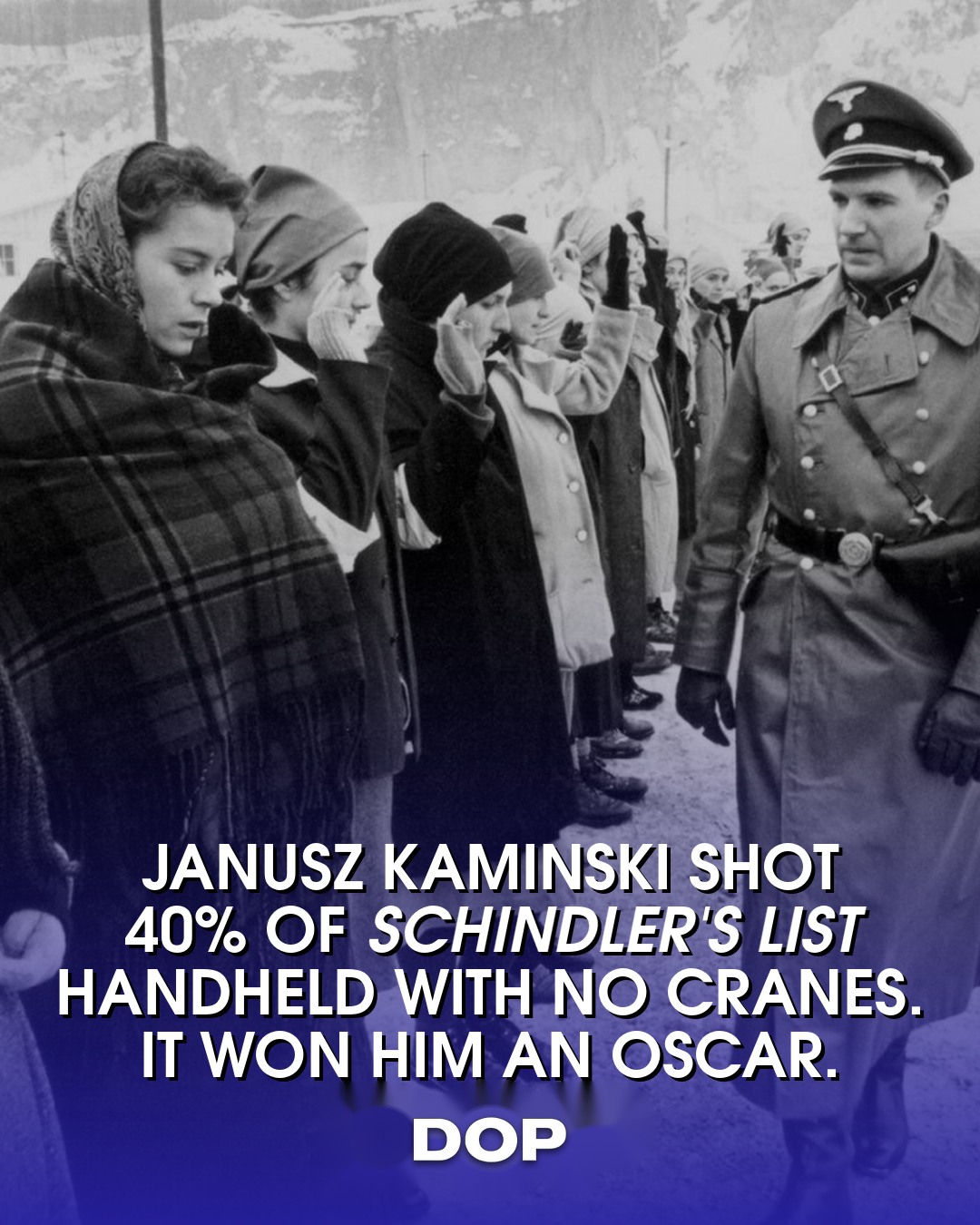
When Steven Spielberg embarked on the monumental task of bringing Schindler's List to the screen, he knew the visual language had to be as stark and unflinching as the history it depicted. The conventional grandeur of Hollywood filmmaking, with its polished compositions and sweeping crane shots, simply wouldn't suffice. What was needed was an aesthetic of raw immediacy, a sense of witnessing history unfold rather than recreating it. Enter Janusz Kaminski, then a relatively unknown cinematographer, whose audacious approach would not only define the film's indelible visual signature but also forge one of cinema's most enduring director-cinematographer partnerships.
Kaminski’s genius lay in his willingness to break from established norms. Approximately 40% of Schindler's List was shot handheld, a remarkable figure for a prestige drama of its scale. This wasn't a stylistic flourish for its own sake; it was a deeply considered choice to immerse the audience. The camera, often liberated from tripods and dollies, became a restless, breathing entity, moving through the crowded ghettos and the desolate camps with a palpable sense of urgency and intimacy. There are no crane shots in the film, a deliberate omission that grounds the perspective firmly at eye-level, refusing to offer a God's-eye view that might dilute the human tragedy unfolding.
The Power of Black and White: A Deliberate Choice
The decision to shoot in black and white was perhaps the most pivotal. While many might assume this was a purely aesthetic choice, it served a profound narrative purpose. Spielberg himself stated that shooting in color would have been exploitative, turning the horrific events into entertainment. Kaminski embraced this challenge, crafting a monochrome palette that is anything but simplistic. His black-and-white photography is rich with texture, deep shadows, and luminous highlights, creating a visual tapestry that feels both archival and intensely present. The absence of color forces the viewer to confront the stark realities, emphasizing the moral ambiguities and the unimaginable suffering without the distraction of a vibrant spectrum.
“The camera became a restless, breathing entity, moving through the crowded ghettos and the desolate camps with a palpable sense of urgency and intimacy.”
Kaminski achieved this distinctive look using Arriflex 535 and 35BL cameras, often paired with Zeiss prime lenses. The choice of film stock, typically Kodak Double-X 5222, contributed to the film's grainy, documentary-like texture, further enhancing the sense of historical authenticity. Lighting was meticulous yet appeared naturalistic, often relying on practicals and available light to create a sense of grim reality. His work here wasn't just about capturing images; it was about sculpting light and shadow to convey emotion, to articulate the unspeakable, and to bear witness.
A Partnership Forged in Light and Shadow
The success of Schindler's List, both critically and in its profound impact, was undeniably cemented by Kaminski's cinematography, earning him his first Academy Award. This triumph marked the beginning of one of Hollywood's most prolific and visually distinctive collaborations. Since then, Kaminski has been Spielberg's exclusive Director of Photography, shaping the visual language of an incredible array of films across diverse genres.
From the visceral, desaturated realism of Saving Private Ryan, which earned him a second Oscar, to the intricate period detail of Lincoln, the taut suspense of Munich, and the deeply personal, nostalgic hues of The Fabelmans, Kaminski has consistently evolved his craft while maintaining a recognizable visual signature. His ability to adapt his style to suit the narrative, always in service of Spielberg's vision, speaks volumes about his versatility and profound understanding of cinematic storytelling. He is a master of contrast, texture, and the emotional resonance of light, constantly pushing boundaries while honoring the story's core.
The partnership between Spielberg and Kaminski is a testament to the power of a shared artistic vision. Their work on Schindler's List remains a towering achievement, a masterclass in how cinematography can transcend mere aesthetics to become an integral part of historical remembrance. It taught us that sometimes, the most profound beauty can be found in the starkest of realities, rendered with an unflinching eye and a deeply human heart.
This article contains affiliate links. We may earn a small commission at no extra cost to you. Learn more.