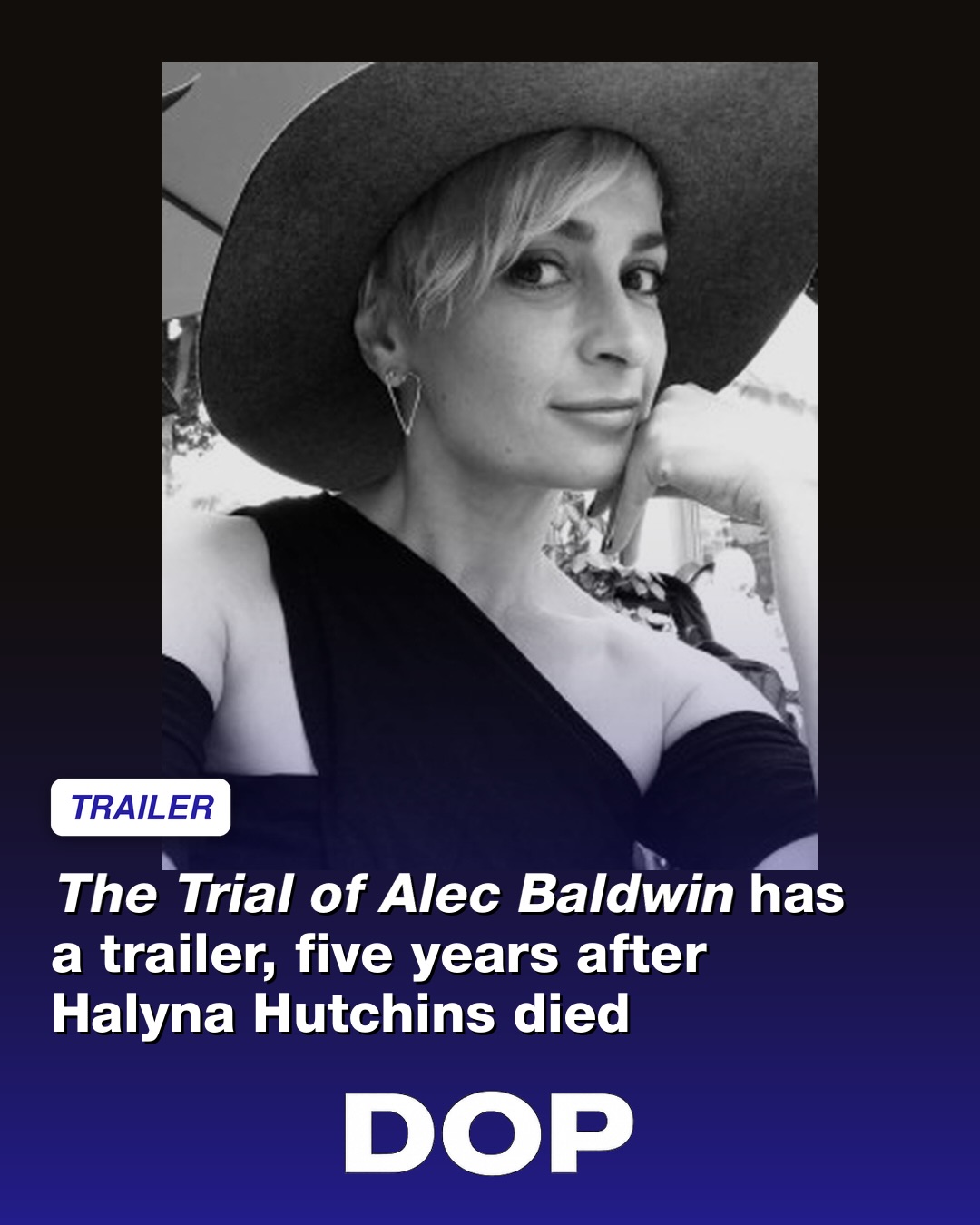
The release of the first trailer for Rory Kennedy’s documentary, The Trial of Alec Baldwin, sends a chill down the spine of every cinematographer, every gaffer, every grip, and every film enthusiast who understands the delicate balance of art and safety on a film set. This film, chronicling the devastating incident that led to the death of our colleague, cinematographer Halyna Hutchins, on the set of Rust in October 2021, is not just a legal narrative; it is a profound examination of responsibility, procedure, and the very culture of filmmaking. For those of us who live and breathe the visual medium, Halyna’s story is a constant, somber reminder of the stakes involved in bringing stories to life.
Jenna Rosher, credited as the documentary’s Director of Photography, faces a unique and weighty challenge: how to visually articulate a tragedy that struck at the heart of our community, a story where a cinematographer is both the subject and the absence. Rosher's previous work, often characterized by an intimate, observational approach, suggests a visual language tailored to human emotion and complex narratives. Her filmography, including documentaries like 12th & Delaware and God Loves Uganda, showcases a sensitivity to environment and character that will undoubtedly be crucial in navigating the raw emotions and intricate legal proceedings depicted in The Trial of Alec Baldwin.
The Visual Language of Testimony and Absence
In a documentary of this nature, the cinematography serves not just to record, but to interpret and evoke. Rosher’s lens will likely be a silent observer, often employing naturalistic lighting schemes to underscore the gravity and authenticity of testimonies. We anticipate a visual style that prioritizes clarity and emotional resonance over overt stylization. Given the sensitive subject matter, a handheld, vérité approach might be sparingly used to convey immediacy, contrasting with more stable, composed framing for interviews, allowing the subjects' words and expressions to take center stage. The choice of camera and lenses would be critical here; a system known for its robust low-light capabilities and natural rendering of skin tones, perhaps a Sony VENICE or an ARRI ALEXA Mini LF, paired with fast, clean prime lenses, would allow for flexibility in capturing candid moments without imposing an artificial aesthetic.
“The camera is not just a tool; it's an extension of our empathy. In a story like Halyna’s, it must bear witness with both precision and profound respect.”
The challenge for Rosher lies in portraying the absence of Halyna Hutchins, a presence deeply felt by those who knew her and by the industry she left behind. How does one photograph a void? It might manifest in lingering shots of empty spaces, the quiet intensity of legal documents, or the haunted expressions of those recounting the events. The color palette will likely lean towards a desaturated, somber tone, reflecting the gravity of the subject, perhaps punctuated by stark contrasts to highlight moments of tension or revelation. Color science in this context becomes less about vibrancy and more about conveying mood and authenticity, ensuring that the visual narrative supports the emotional truth of the story without exploiting it.
The Weight of Industry Scrutiny
This film is more than just a legal drama; it is an industry-wide mirror. It forces us to reflect on safety protocols, the pressures of independent filmmaking, and the chain of command on set. As cinematographers, we are constantly making decisions that impact not only the aesthetic but also the practical safety of our crew. The choice of equipment, the placement of lights, the choreography of camera movement, each decision carries inherent risks. The documentary will undoubtedly scrutinize the systemic issues that can lead to such tragedies, issues that every DP, every gaffer, every armorer must confront daily.
Rosher’s cinematography, therefore, carries an added layer of responsibility: to illuminate these complexities without sensationalism. Her lens must dissect the technical and human factors that contributed to the fatal incident, offering insight rather than judgment. This demands a meticulous approach to visual information, perhaps incorporating archival footage or evidence in a way that integrates seamlessly with new material, creating a cohesive visual tapestry that guides the audience through a painful, yet crucial, examination of our profession. The documentary’s release, opening in New York on October 1st and expanding across North America, ensures that this vital conversation will reach a broad audience, fostering reflection and, hopefully, concrete change within our industry.
This article contains affiliate links. We may earn a small commission at no extra cost to you. Learn more.