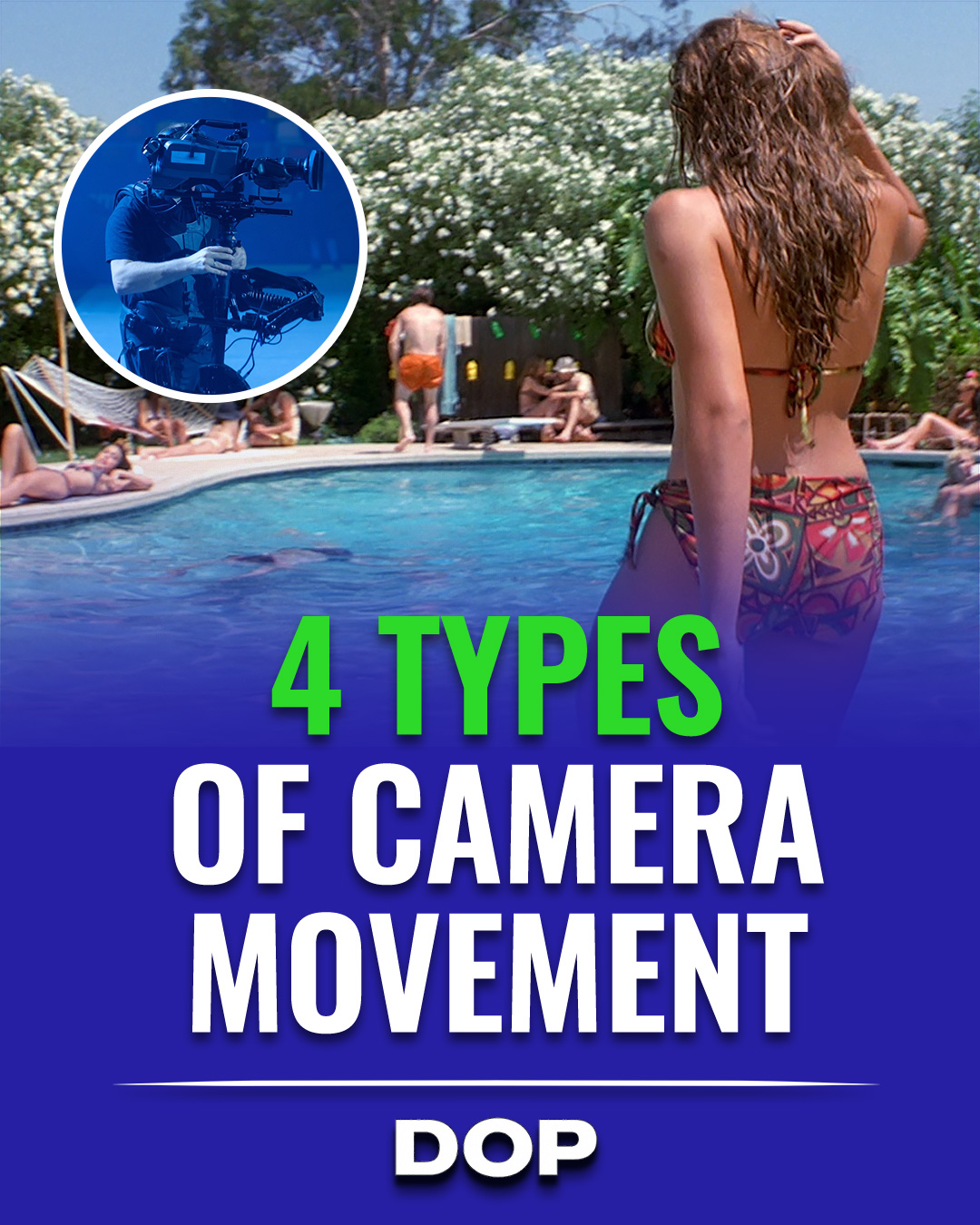
In the vast lexicon of cinematic storytelling, few elements speak as profoundly yet silently as camera movement. It's a language understood on a subconscious level, guiding the audience's emotional journey and defining their relationship to the narrative. The choice between a stately dolly, a ethereal Steadicam, a visceral handheld, or an unyielding static frame is never arbitrary; it is a meticulously calculated narrative decision, each imbued with specific psychological information that shapes our understanding of characters and events.
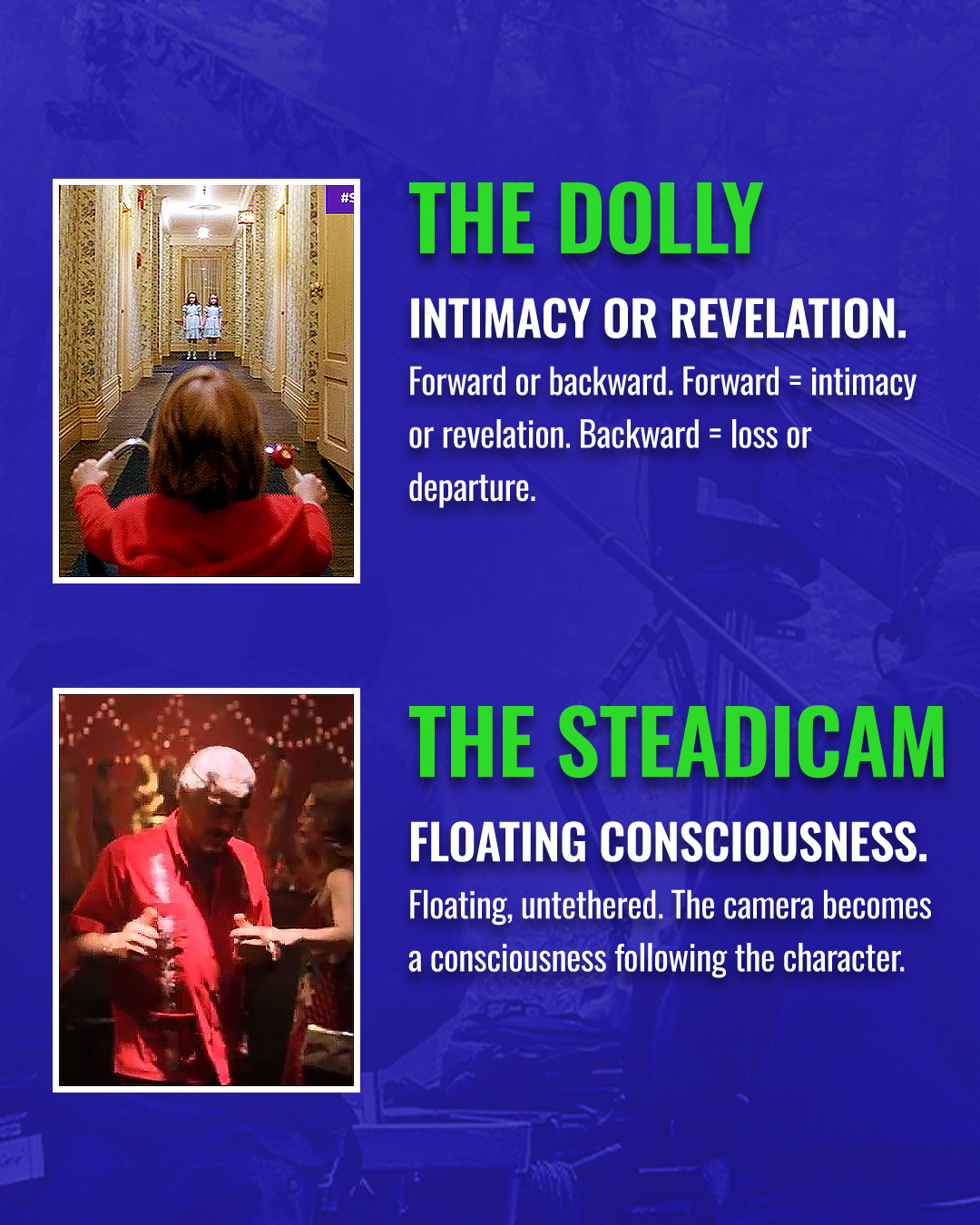
Consider the dolly shot, a cornerstone of classical filmmaking. When the camera glides forward, physically advancing towards a subject, it creates an undeniable sensation of intimacy, revelation, or an intensifying emotional connection. Think of a character's face slowly filling the frame as a crucial realization dawns, or the camera pushing into a pivotal object, highlighting its significance. Conversely, a backward dolly communicates withdrawal, loss, or emotional distancing, often leaving the subject isolated within an expanding environment. This isn't just a visual shift; it’s a direct manipulation of the viewer’s proximity to the emotional core of the scene, a masterful dance between lens and psyche.
The Floating Consciousness: Steadicam's Embrace
Then there is the Steadicam, a marvel of mechanical isolation that liberates the camera from the operator's physical instability, producing an almost ethereal, floating quality. This distinct fluidity creates the sensation of a disembodied consciousness accompanying the character through space. It's why Steadicam is the go-to for long takes that immerse us in a character's journey, for following shots that bind us to their perspective, and for dream sequences where reality itself feels untethered. Think of Emmanuel Lubezki's breathtaking, unbroken takes in Birdman or Children of Men, where the Steadicam isn't just following; it's placing us directly within the character's lived experience, a silent witness to their unfolding drama.
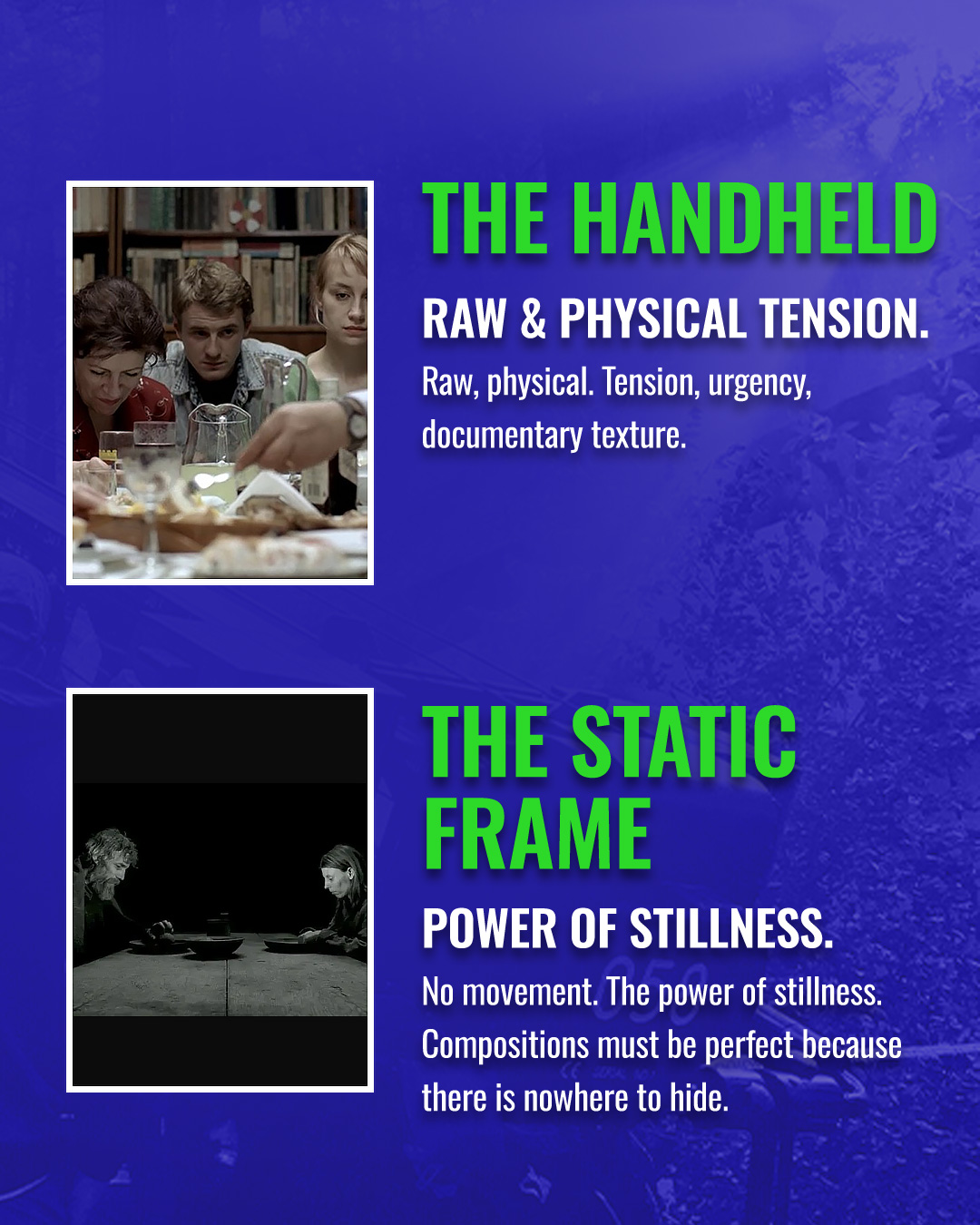
"The choice between these four types is not a stylistic preference but a narrative decision, because each communicates specific psychological information to the audience about their relationship to the characters and events being depicted."
In stark contrast, handheld cinematography introduces the raw, unvarnished texture of human instability into the frame. The subtle tremors, the reactive pans and tilts, the organic imperfections – these elements immediately evoke tension, urgency, and a documentary-like authenticity. It’s the visual shorthand for immediacy, for being thrust into the thick of the action. Phedon Papamichael's work in Ford v Ferrari, for example, expertly alternates between the visceral, handheld energy of the pit crew and the more controlled, sweeping shots of the race, each choice amplifying a different facet of the narrative. This technique eschews polished artifice for an unfiltered glimpse into chaotic reality, forging an immediate, almost visceral connection between audience and character.
The Power of Stillness: The Static Frame
Finally, we arrive at the static frame, a seemingly simple choice that, in its stillness, demands absolute precision. With no camera movement to redirect attention or compensate for compositional weaknesses, every element within the frame must be meticulously placed and weighted. The static frame forces the audience to confront what is presented, to absorb every detail, every subtle shift in expression, every nuance of mise-en-scène. It can create a sense of oppressive observation, a tableau vivant of impending drama, or a quiet intimacy where the emotional weight is carried entirely by performance and blocking. Roger Deakins, a master of composition, frequently employs static frames to allow the inherent drama of the scene to unfold without distraction, trusting the power of his carefully constructed visuals to convey meaning.
The interplay of these techniques forms the rhythmic heartbeat of a film. A DP's mastery lies not just in executing these movements flawlessly, but in understanding their profound psychological impact. Is the scene about a character's growing isolation, demanding a slow backward dolly? Or a sudden, shocking revelation, best served by a rapid push-in? Perhaps it's a moment of raw, unvarnished fear, calling for the shakiness of handheld. Or a contemplative beat, where a static frame allows the audience to truly absorb a crucial detail. The camera, in its movement or stillness, is a silent narrator, a psychologist, and a poet, guiding our eyes and hearts through the story with unparalleled eloquence.
Ultimately, the choice of camera movement is a profound statement about the film's worldview, its relationship to its characters, and the emotional contract it seeks to forge with its audience. It's a testament to the power of cinematography as a distinct art form, where technical prowess merges seamlessly with narrative intent to create an unforgettable cinematic experience.