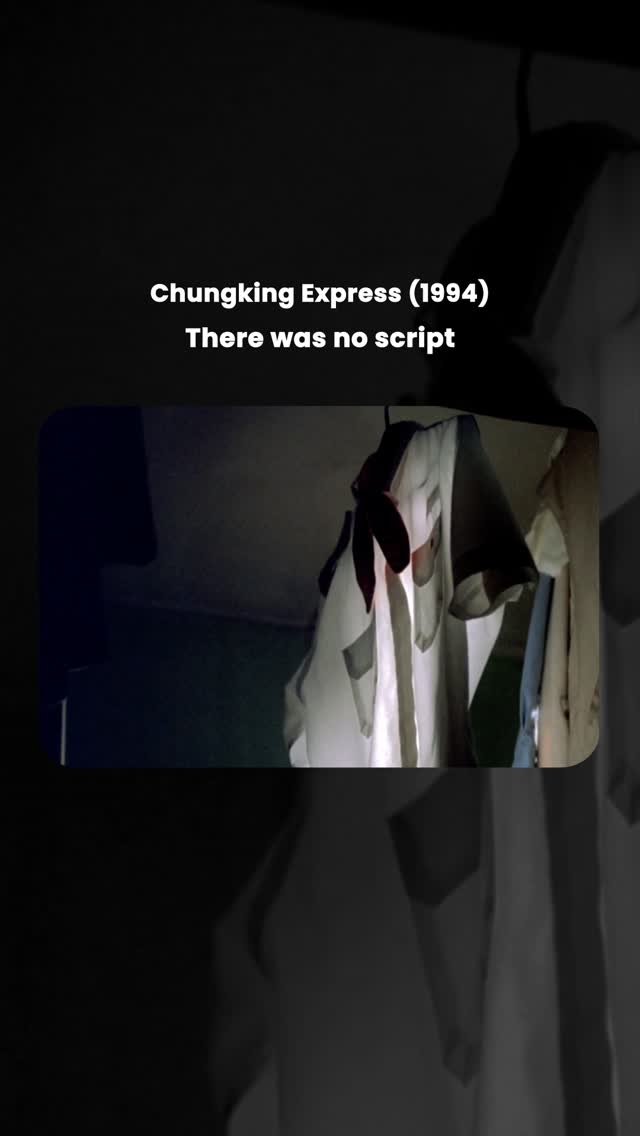
In the annals of cinematic history, few collaborations are as iconic and seemingly spontaneous as that between director Wong Kar-wai and cinematographer Christopher Doyle. Their work on 1994's Chungking Express stands as a testament to the power of intuition, improvisation, and a radical embrace of the moment. This isn't just a film; it's a living, breathing artifact of a filmmaking process that defied convention, proving that sometimes, the most profound artistry emerges from the beautiful chaos of creation rather than meticulous pre-planning.
The legend surrounding Chungking Express is almost as compelling as the film itself. Wong Kar-wai, known for his fluid, often evolving narratives, would famously write scenes the night before shooting. This approach, which might send most production managers into a cold sweat, became the very crucible in which Doyle's brilliance was forged. He didn't have storyboards, extensive shot lists, or even fully formed character arcs to guide him. What he had was an innate understanding of light, movement, and emotion, coupled with a deep trust in his director's vision, however embryonic it might be. Doyle's operating style, often handheld, became an extension of the characters' internal states, mirroring their restlessness and longing.
The Art of Controlled Chaos
The technical audacity behind Chungking Express is often overlooked in favor of its aesthetic impact, but it's precisely the technical choices that underpin its unique visual language. Doyle operated the camera himself, often adjusting exposure on the fly, a technique that would make many DPs blanch. This wasn't recklessness; it was a calibrated response to the unpredictable, dynamic environments of Hong Kong and the rapid-fire nature of the shoot. The film's signature 'step-printed' look, creating that stuttering, dreamlike motion, wasn't a post-production trick but achieved in-camera, a bold commitment to a specific visual rhythm from the outset. This technique, combined with pushing film stock, allowed for a heightened sense of reality, where the mundane became hyper-real, almost hallucinatory.
The lighting philosophy employed by Doyle was equally revolutionary. Eschewing elaborate lighting setups, he relied almost exclusively on practical lights. Neon signs, fluorescent tubes, street lamps, the existing urban glow of Hong Kong became his palette. This wasn't just a practical decision born from the film's tight 23-day shooting schedule; it was an artistic choice that imbued the film with an authentic, gritty beauty. The vibrant, often garish, colors of the city were not merely captured but celebrated, becoming an integral part of the film's emotional texture. This approach allowed for a fluidity that would have been impossible with traditional, time-consuming lighting rigs, keeping pace with Wong's improvisational directing style.
"When does over-preparing kill what you are trying to capture?"
This question, posed implicitly by the very existence of Chungking Express, resonates deeply within the craft of cinematography. While meticulous planning is often lauded as the hallmark of professionalism, Doyle and Wong demonstrated that sometimes, the most authentic moments are found when you surrender to the unforeseen. Over-preparation can, at times, stifle spontaneity, homogenize visual expression, and dilute the raw energy of a scene. The pressure to conform to a pre-visualized ideal can prevent a DP from truly seeing and reacting to the magic unfolding before the lens.
Beyond the Blueprint: Embracing Intuition
Doyle's filmography, which includes other Wong Kar-wai masterpieces like Fallen Angels and In the Mood for Love, consistently showcases a DP who is unafraid to break the mold. While In the Mood for Love presented a more refined, deliberate aesthetic, the spirit of improvisation and a deep connection to the emotional core of the story remained. His work is characterized by a visceral, almost tactile quality, where the camera doesn't just observe but participates in the narrative. The choice of film stock, the daring use of available light, and the willingness to let the 'happy accident' guide the frame are hallmarks of his genius.
For aspiring cinematographers and seasoned DPs alike, Chungking Express serves as a powerful reminder that there isn't one singular path to cinematic excellence. While technical mastery is crucial, so too is the ability to listen to one's intuition, to embrace the imperfections, and to find beauty in the unexpected. It challenges us to question whether rigid adherence to a blueprint might sometimes prevent us from capturing the truly unique and ephemeral qualities of life itself. In a world increasingly dominated by digital precision and exhaustive pre-visualization, the raw, neon-soaked brilliance of Chungking Express stands as an enduring monument to the power of creative freedom and the magic that happens when you trust the moment.
The legacy of Doyle's work on this film extends far beyond its initial release, influencing countless filmmakers and cinematographers who seek to inject their work with a similar sense of vibrant, unadulterated energy. It's a masterclass in how to capture the soul of a city and the yearning of its inhabitants, all while making a virtue out of necessity and proving that sometimes, the best way to tell a story is to simply let it unfold before your eyes, with an open heart and a ready camera.
This article contains affiliate links. We may earn a small commission at no extra cost to you. Learn more.