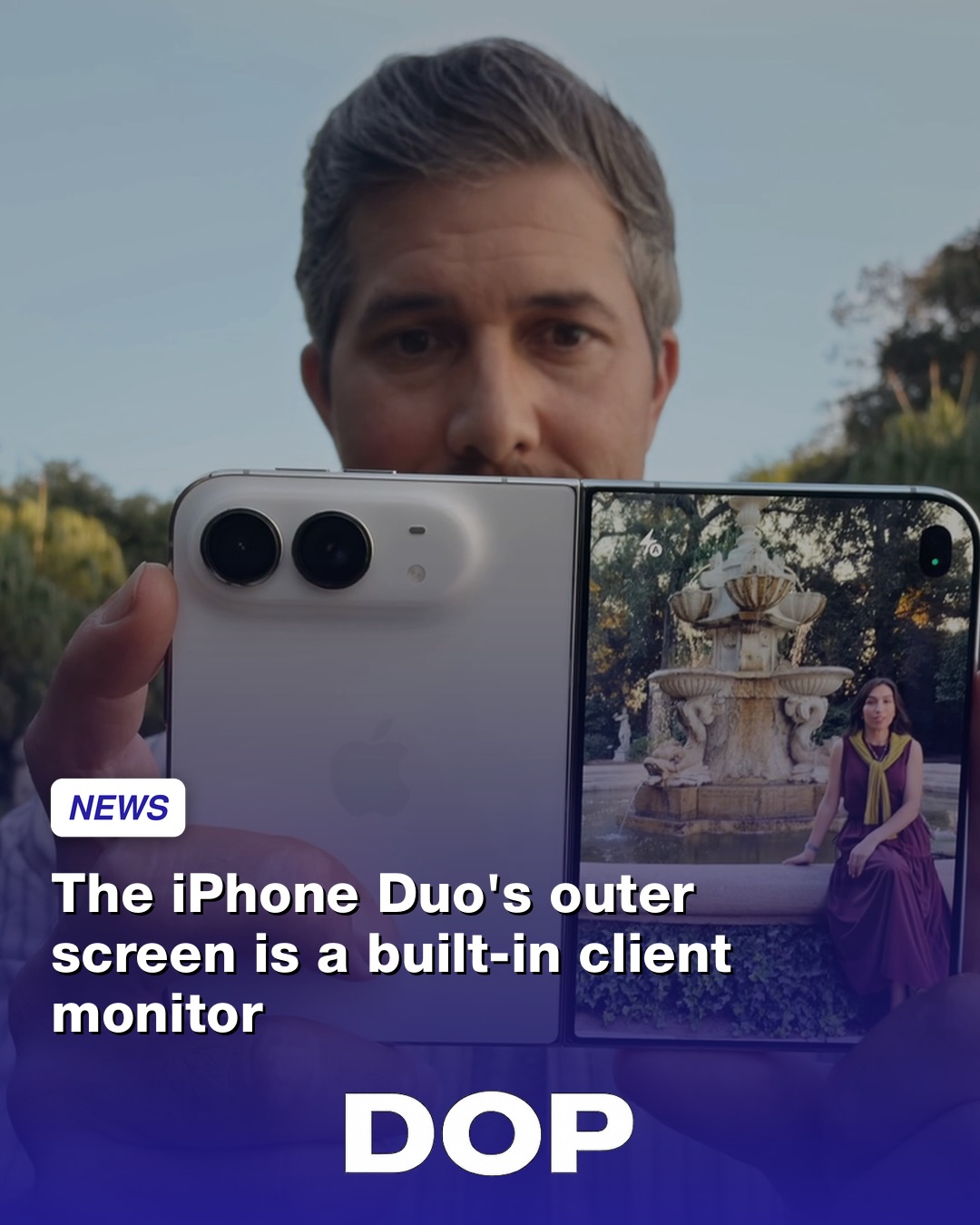
In the rapidly evolving landscape of digital image capture, the lines between consumer technology and professional tools are constantly blurring. Yet, every so often, a device emerges that starkly delineates these boundaries. The hypothetical iPhone Duo, with its intriguing 'Duo Preview' feature, presents just such a case study. The promise of a 5.4-inch outer display showing a live feed from the rear cameras, allowing subjects to perfectly frame themselves, is undeniably clever, particularly for the burgeoning world of self-shot interviews, vlogging, and remote content creation. It’s a genuine utility, addressing a common pain point for solo filmmakers and content creators who often struggle with framing without assistance.
This 'Duo Preview' speaks to Apple's uncanny ability to identify and solve specific user experience challenges with elegant, intuitive solutions. For documentary filmmakers conducting self-interviews, or even corporate video producers needing quick, reliable talking-head shots without a dedicated camera operator, this feature streamlines a critical aspect of production. It minimizes takes, reduces guesswork, and empowers the subject, potentially leading to more natural and confident performances. In a world increasingly reliant on remote collaboration and self-produced media, such a feature could indeed carve out a niche for the iPhone Duo.
The Chasm of Professional Expectation
However, the conversation quickly shifts when we consider the device through the lens of professional cinematography. The Instagram caption’s subsequent enumeration of absent features paints a stark picture: “No variable aperture, no Pro controls, no ProRes, no ProRes RAW, no Apple Log 2, no ACES, no genlock.” This isn't merely a list of missing bells and whistles; it's a catalogue of fundamental tools that define a professional camera system. The absence of a variable aperture alone restricts creative control over depth of field and exposure, forcing reliance on ND filters or digital manipulation, neither of which offers the organic flexibility of an optical iris.
The lack of granular 'Pro controls' speaks to a larger philosophical divide. Professional cinematographers demand direct, tactile command over every parameter, ISO, shutter angle, white balance, focus pulling mechanisms, not just automated approximations. These controls are not luxuries; they are essential for precise image acquisition, especially under challenging or dynamic lighting conditions. Without them, the DP is merely a sophisticated operator of an automated system, rather than an artist meticulously crafting an image.
“The true test of a 'pro' device isn't just what it can do, but what it allows the artist to control. When fundamental parameters are locked away, the camera ceases to be a tool for creation and becomes merely a sophisticated recorder.”
The Uncompromised Power of the iPhone 18 Pro
In stark contrast, the hypothetical iPhone 18 Pro, as described, embodies the professional aspiration Apple has been cultivating. “iPhone 18 Pro keeps all of it, including ProRes to 4K120 on an external drive.” This is where the serious work happens. ProRes and ProRes RAW are industry-standard codecs, offering vastly superior data rates and color fidelity compared to highly compressed consumer formats. They provide the latitude necessary for extensive color grading in post-production, preserving detail in shadows and highlights, and enabling seamless integration into professional workflows.
The inclusion of Apple Log 2 signifies a commitment to dynamic range and color science that aligns with high-end cinema cameras. Shooting in a log profile maximizes the sensor's capture capabilities, providing a flat image that acts as a canvas for the colorist. ACES (Academy Color Encoding System) integration, if truly implemented, would be a game-changer, offering a robust, industry-standard framework for color management across different cameras, displays, and post-production pipelines. And genlock, while seemingly esoteric to the casual user, is absolutely critical for multi-camera setups, ensuring perfect synchronization between devices, a non-negotiable for broadcast, live events, and complex VFX work.
Furthermore, the ability to record ProRes to 4K120 on an external drive addresses practical limitations of internal storage and processing power. High frame rate, high-resolution ProRes files are enormous, and offloading them directly to external media is a professional necessity, bypassing the bottlenecks of internal storage and ensuring sustained high-quality capture. This isn't just about convenience; it's about enabling extended takes and uninterrupted shooting without compromising quality.
Defining the 'Pro' in Mobile Cinematography
The comparison between the iPhone Duo and the iPhone 18 Pro, as outlined, serves as a powerful illustration of what truly constitutes a 'professional' tool in the context of mobile cinematography. While the Duo offers an innovative user-facing feature, its fundamental architectural limitations firmly place it in the realm of advanced consumer tech. It's a fantastic solution for content creators who prioritize ease of use and specific utility over comprehensive creative control and technical robustness.
The iPhone 18 Pro, however, with its full suite of codecs, color science, and professional-grade controls, positions itself as a legitimate contender for certain professional applications. It’s a device that respects the demands of cinematographers, offering the raw material and the technical flexibility required to craft nuanced, high-quality cinematic images. For the DPs, camera operators, and serious film enthusiasts reading this, the message is clear: innovation for convenience is valuable, but true professional utility lies in uncompromised control and adherence to industry standards. The future of mobile filmmaking isn't just about what a phone can do, but how deeply it integrates into and elevates the established craft of cinematography.