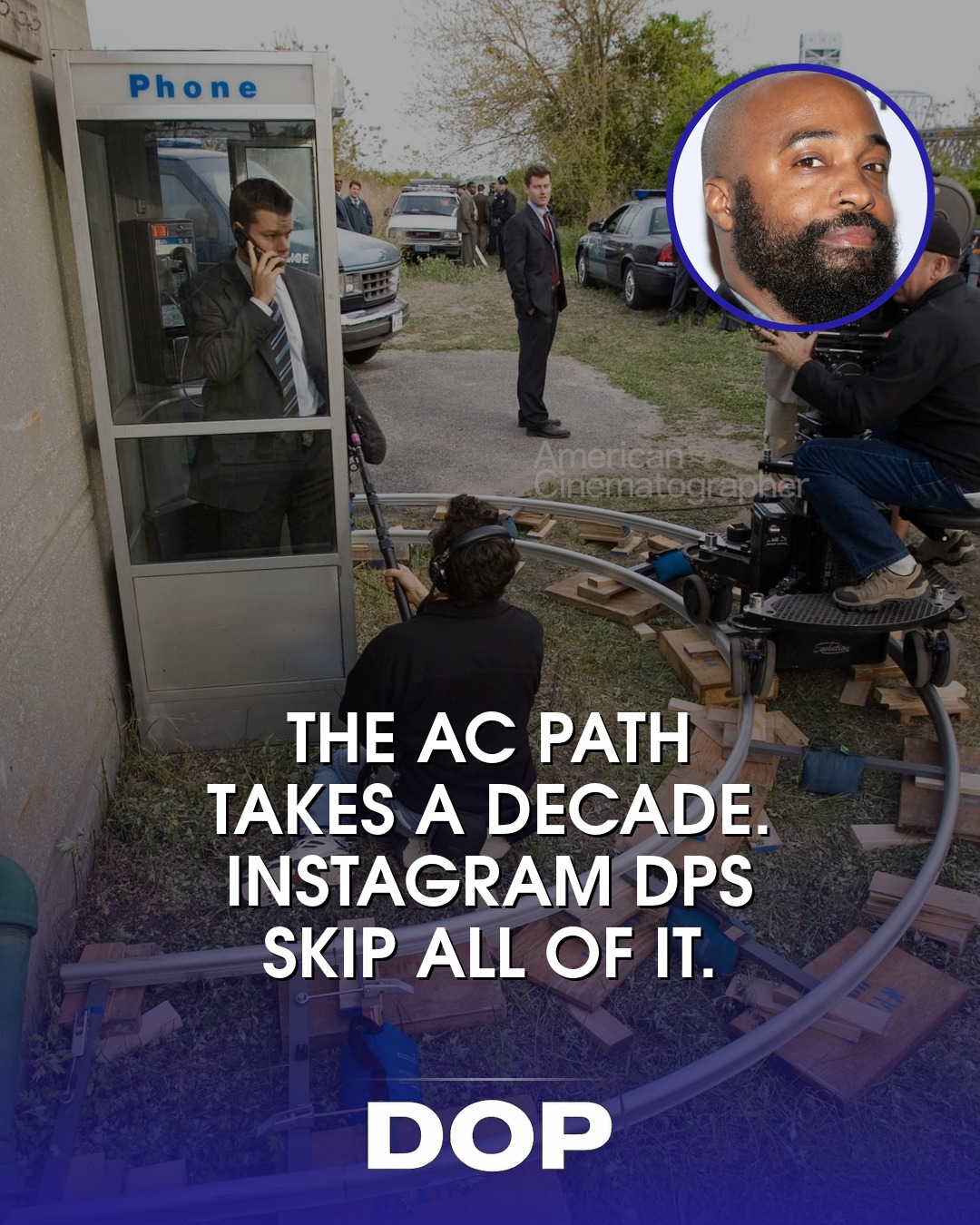
The landscape of cinematography is in constant flux, shaped by technological innovation, shifting production paradigms, and the ever-present tension between traditional craft and independent artistry. For decades, the well-trodden path to becoming a Director of Photography within the union system has been a rigorous apprenticeship: beginning as a loader, progressing to 2nd AC, then 1st AC, camera operator, and finally, earning the coveted DP credit. This hierarchical ascent, steeped in on-set discipline and technical mastery, has long been considered the crucible for forging a truly skilled cinematographer.
Yet, concurrent with this enduring system, a new generation has emerged, untethered by the constraints of the traditional camera department. The rise of accessible digital cameras and the democratizing power of social media have fostered a cohort of self-shooting directors and cinematographers who bypass the assistant roles entirely. These creators, often honing their visual language through online content and independent projects, prove that a compelling aesthetic can be cultivated outside the formal apprenticeship. While some DPs have successfully transitioned from this self-taught, creator-driven model to larger productions, the industry grapples with the implications of such divergent career trajectories.
The Craft of Precision vs. The Art of Intuition
The core of the debate often centers on the sheer technical precision demanded by high-end cinema. Can the nuanced understanding required for IMAX photography, the exacting focus pulls on large-format anamorphic lenses, or the intricate balancing act of a complex gimbal rig truly be self-taught? Proponents of the traditional path argue that the invaluable “muscle memory” and problem-solving skills acquired as an assistant are irreplaceable. Learning to anticipate a dolly grip's movement, understanding the subtle art of lens mapping, or troubleshooting a finicky camera system under pressure – these are lessons often best learned through years of direct, hands-on experience within a seasoned crew.
“The debate within the industry centers on whether the extreme technical precision required for IMAX, large-format anamorphic, or complex gimbal rigs can be entirely self-taught or requires the 'on-the-job' training of the assistant roles.”
Conversely, the independent route often champions a more intuitive, experimental approach to image-making. Cinematographers like Bradford Young, ASC, have carved out distinctive visual styles by primarily shooting independent features, such as Pariah and Ain't Them Bodies Saints, rather than dedicating years to AC work on studio sets. Young's work is characterized by a profound understanding of natural light, often pushing the boundaries of exposure to craft painterly, deeply atmospheric images. His choice of vintage glass and a meticulous approach to color science, often favoring a more organic, less polished aesthetic, speaks to a visual philosophy shaped by artistic exploration rather than rigid technical protocols. His induction into the ASC in 2015 underscores the Society's recognition of diverse paths to excellence.
Hybrid Journeys and Evolving Recognition
The American Society of Cinematographers, the pinnacle of recognition for DPs, continues to evolve its criteria, acknowledging that excellence can manifest through various career trajectories. Recent inductions highlight this flexibility. Jomo Fray, slated for induction in 2026 for his evocative work on Nickel Boys, represents a newer wave of DPs whose careers may not fit the classic mold. His cinematography often favors a raw, immersive quality, utilizing available light and intimate framing to amplify narrative impact.
Erik Messerschmidt, ASC, offers yet another compelling example of a hybrid path. Before becoming a celebrated DP, earning an Academy Award for Mank, Messerschmidt was a prolific and highly respected gaffer, notably for David Fincher on films like Gone Girl. His extensive background in lighting undoubtedly informs his meticulous approach to cinematography, where light shaping and control are paramount. His work often features stark contrasts, precise key-to-fill ratios, and a masterful understanding of how light sculpts space and emotion. This trajectory demonstrates that a deep understanding of one craft within the camera and lighting department can be a powerful springboard to cinematography, offering a unique perspective that enriches the visual storytelling.
The Future of Cinematography: A Broader Canvas
Ultimately, the conversation isn't about one path being inherently superior to another, but rather about the evolving definition of what it means to be a Director of Photography. The industry benefits from both the rigorously trained technician who can execute complex sequences with flawless precision and the self-taught artist who brings a fresh, unconventional eye to the medium. As camera technology becomes more sophisticated yet simultaneously more accessible, the lines will continue to blur. What remains constant, however, is the fundamental pursuit of compelling visual storytelling. Whether through years of pulling focus on set or countless hours experimenting with a mirrorless camera, the dedication to craft, the understanding of light, and the ability to translate emotion into imagery are the true hallmarks of a great cinematographer, regardless of their journey.