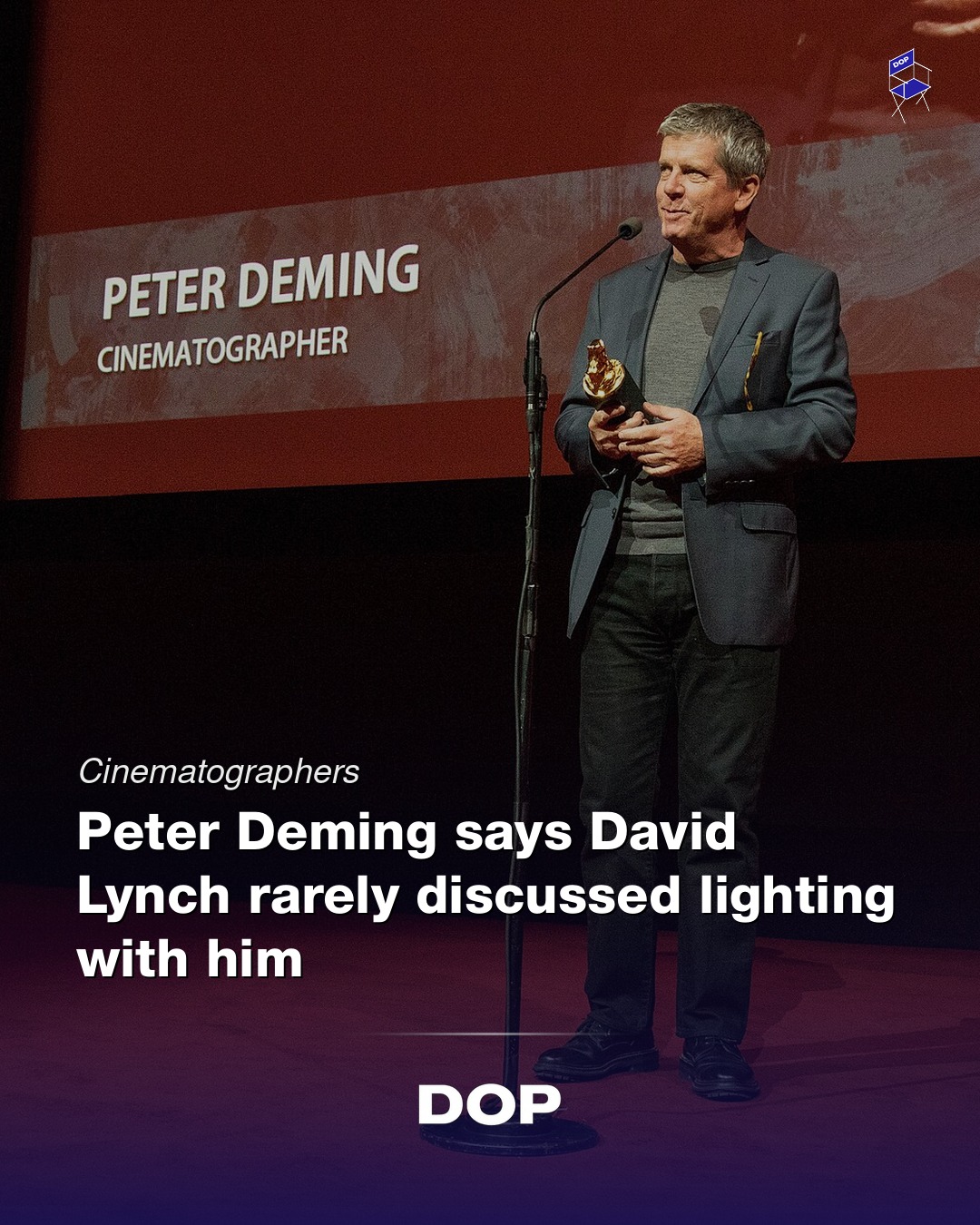
When one considers the cinematic universe of David Lynch, images of meticulously crafted, unsettling beauty immediately spring to mind. His films are renowned for their singular, often surreal, visual language, a tapestry woven with shadows, enigmatic compositions, and a pervasive sense of disquiet. The prevailing assumption among cinephiles and industry professionals alike is that such a distinctive aesthetic must be the product of intense, almost obsessive, pre-planning and detailed visual discussions between director and cinematographer. Yet, the esteemed Peter Deming, ASC, Lynch’s frequent collaborator on projects as iconic as Mulholland Drive, Lost Highway, and the monumental Twin Peaks: The Return, offers a startling counter-narrative that challenges these preconceptions.
Deming's revelation, shared in anticipation of his well-deserved honor at Camerimage 2025 alongside a Lynch tribute, shatters the myth of exhaustive visual pre-discussions. Instead, he describes a process that, while rigorously structured in one aspect, was remarkably fluid in another. The duo would indeed meticulously construct a shot list, a blueprint for the narrative's progression, framing by framing. This fundamental agreement on spatial relationships and character blocking provided the essential framework. However, the crucial element often attributed to Lynch's visual genius, the 'look' of a scene, particularly its lighting, was, by Deming's account, largely left to intuitive execution rather than explicit prior discussion.
The Lynchian Paradox: Precision in Shot Listing, Freedom in Lighting
This approach presents a fascinating paradox. How can films so visually distinctive emerge from a process where the visual aesthetic itself isn't extensively pre-negotiated? The answer, as Deming hints, lies in the unique dynamic of their collaboration and Lynch's directing style. For Deming, the true 'prep' for the look of a scene wasn't in storyboards or mood boards, but in observing Lynch's rehearsals with the actors. It was in these moments, witnessing the nuances of performance, the emotional contours Lynch was sculpting, that Deming gleaned the necessary information to translate the scene's intent into light and shadow.
"The assumption about Lynch is total control of mood and image. Deming reverses it: they built a precise shot list, then largely left the lighting alone. Watching Lynch rehearse the actors was the prep."
Consider the stark, often high-contrast lighting of Lost Highway, or the dreamlike, ethereal glow that permeates parts of Mulholland Drive. These are not accidental. While the specifics might not have been verbally dictated, Lynch's singular vision, his deep understanding of mood and psychological states, undoubtedly informed every aspect of the production. Deming, a master of his craft, possessed the sensitivity and technical acumen to interpret these unspoken cues. His filmography, spanning from the visceral horror of Evil Dead II to the nuanced tension of the Scream franchise, demonstrates an incredible versatility and an innate understanding of how light can sculpt narrative and emotion.
Translating Emotion into Illumination
Deming’s work with Lynch is a testament to the power of a cinematographer's intuition and the profound trust built between a director and their DP. It suggests that for certain auteurs, the 'look' isn't a separate entity to be designed in isolation, but an organic outgrowth of the performance and the narrative's emotional core. This isn't to say Deming wasn't employing sophisticated techniques. For Twin Peaks: The Return, for instance, the blend of digital and filmic textures, the carefully chosen lenses (often favoring older glass for its character), and the precise color science were all in service of Lynch's peculiar vision. The Alexa's dynamic range and color fidelity would have been harnessed to capture the subtle shifts in mood, while specific lighting instruments would have been used to create those iconic pools of light and cavernous shadows.
This collaborative dance, where a meticulous shot list provides the structure and a deep understanding of the director's intent guides the lighting, speaks volumes about the art of cinematography. It underscores that while technical proficiency is paramount, the ability to listen, observe, and interpret the unspoken language of a film is equally, if not more, critical. Peter Deming, ASC, through his work with David Lynch, has shown us that sometimes, the most profound visual statements emerge not from explicit commands, but from a shared artistic sensibility and an almost telepathic understanding of the story's soul. His recognition at Camerimage is not just for his technical prowess, but for his profound contribution to the visual lexicon of modern cinema.
The lessons from Deming's collaboration with Lynch extend beyond the esoteric world of auteur filmmaking. They remind all cinematographers that while planning is essential, maintaining an openness to the moment, and allowing the performance to dictate the final touches of light and shadow, can unlock a deeper, more organic visual truth. It's a philosophy that champions intuition alongside intellect, and in the hands of masters like Deming and Lynch, it yields cinematic magic.
This article contains affiliate links. We may earn a small commission at no extra cost to you. Learn more.