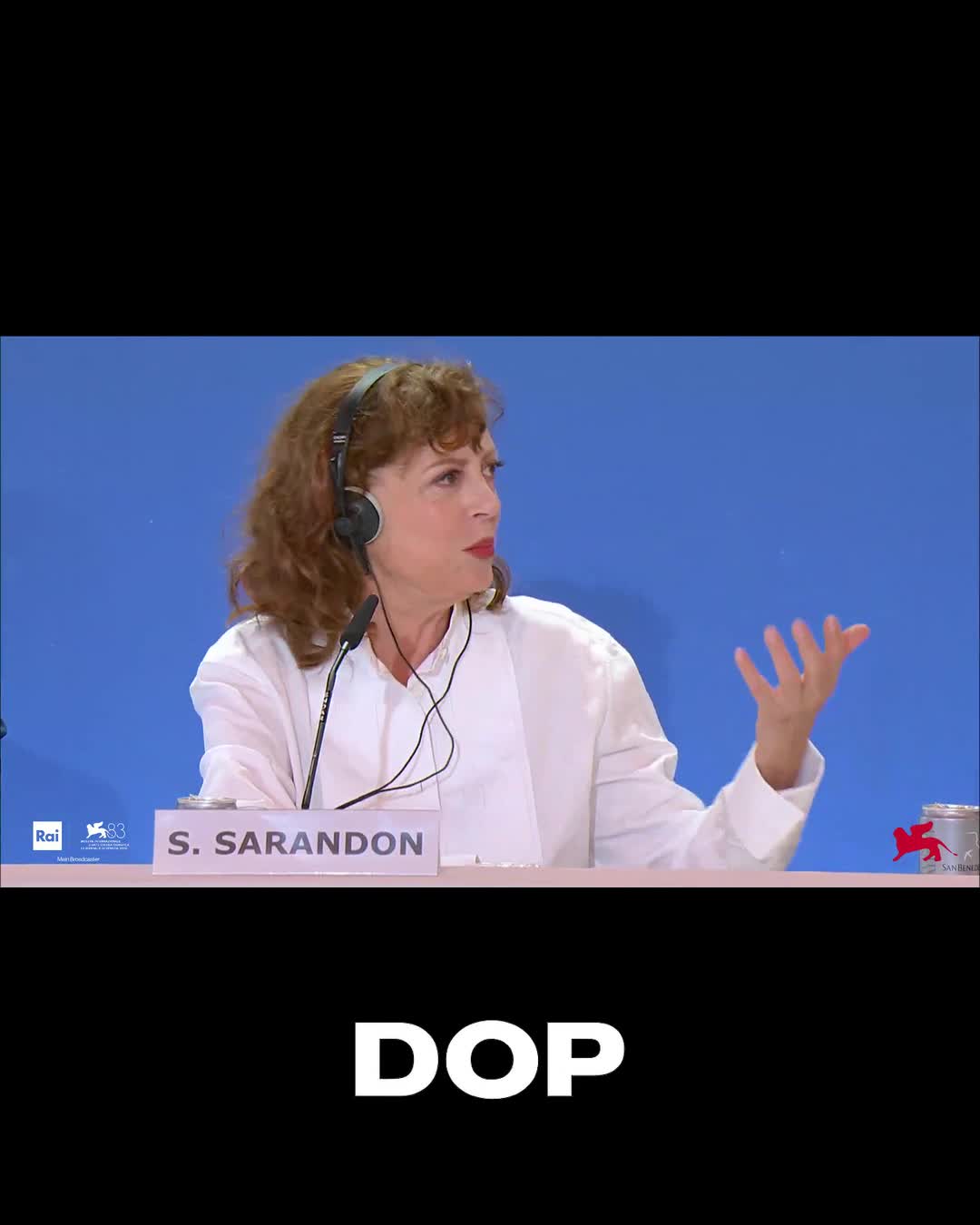
In an industry often dominated by spectacle and overt narrative exposition, a film like Andrea Pallaoro's The Echo Chamber emerges as a refreshing, albeit challenging, counter-narrative. Susan Sarandon, reflecting on her experience, offered a glimpse into its unique visual philosophy, describing a film shot entirely within the confines of a single apartment that "became its own world, with no trailers and no escape." This deliberate spatial constriction, far from limiting, appears to have amplified the creative focus on atmosphere and internal states, a hallmark of what Sarandon eloquently termed a "very European, very Italian sensibility: atmosphere first, the story told in images."
Her observation about the cinematographer, whom she "kept catching herself looking for the lights around", speaks volumes. It suggests a lighting strategy so integrated, so naturalistic, that the sources themselves became invisible, dissolving into the fabric of the scene. This isn't merely about good lighting; it's about a philosophical commitment to verisimilitude, where illumination serves not to highlight but to inhabit. It suggests a DP who understands the power of motivated light, often derived from practicals or carefully sculpted ambient sources, rather than the more overt, key-fill-back approach sometimes favored in American productions. The implied mastery here lies in making the artificial feel utterly organic, a subtle dance between control and naturalism.
Crafting Atmosphere: Beyond the Visible
The concept of "atmosphere first" is not a novel one, but its execution in The Echo Chamber, particularly within such a confined setting, demands a deep understanding of visual language. This isn't about grand vistas or elaborate set pieces; it's about the texture of light on skin, the subtle interplay of shadow and form, the way a room breathes. The cinematographer's task here transcends mere image capture; it becomes an act of psychological portraiture. Each frame must convey not just information, but emotion, memory, and the unspoken weight of the past. Consider how a specific lens choice, perhaps a slightly wider, anamorphically-tinged prime, could distort perception just enough to evoke a dreamlike state, or how a cooler color temperature might subtly underscore a character's isolation.
"The director and DP understood that the true drama unfolds not just in dialogue, but in the silent spaces between, in the way light falls, and how a character occupies their constrained world."
Sarandon’s bold assertion that "no typical American cinematographer could have handled that" is provocative, yet understandable. It points to a perceived difference in pedagogical and practical approaches. While American cinematography often excels in clarity, efficiency, and dynamic camera movement to propel narrative, the European tradition, particularly from Italy, frequently embraces a more contemplative, painterly style. Think of Vittorio Storaro's profound use of color and light as a narrative device, or Giuseppe Rotunno's ability to imbue interiors with psychological depth. This isn't to diminish American talent, but to acknowledge a distinct lineage of visual storytelling that prioritizes mood, metaphor, and an almost tactile sense of presence over explicit plot points.
Visualizing the Unspoken: Memory and Dream
The film's navigation "between past, present, memory and dream without explaining itself" places immense pressure on the visual team. How does one visually differentiate these temporal and psychological states without resorting to overt cinematic cues like dissolves or title cards? This is where a cinematographer's true artistry shines. It could be through subtle shifts in lens character, a softer, vintage lens for memories, a sharper, more contemporary one for the present. Or perhaps through color science: a muted, desaturated palette for the weight of the past, vibrant but fleeting hues for dream sequences. The lighting could become more abstract, less motivated, in dream states, creating an ethereal quality that defies reality.
The camera itself, in such an intimate setting, becomes another character. Is it mostly static, observing with a voyeuristic intensity, or does it move with an almost imperceptible fluidity, mirroring the character's internal shifts? The choice of camera system, a large format sensor for shallow depth of field and intimate detail, or a Super 35 for a more classic, textural feel, would profoundly impact this. Coupled with a careful selection of prime lenses, each with its own unique optical signature, the DP could sculpt the emotional landscape of the apartment. This approach demands a deep collaboration between director and cinematographer, where the visual plan is not merely an interpretation of the script, but an active co-authoring of the film's emotional core.
The Echo Chamber, even before its wider release, promises to be a masterclass in atmospheric cinematography. It's a reminder that the most profound stories are often told not through grand gestures, but through the meticulous crafting of light, shadow, and space. It celebrates the cinematographer as a visual poet, capable of transforming a single apartment into a universe of human experience, where every flicker of light and every subtle texture contributes to a narrative far deeper than words alone can convey.