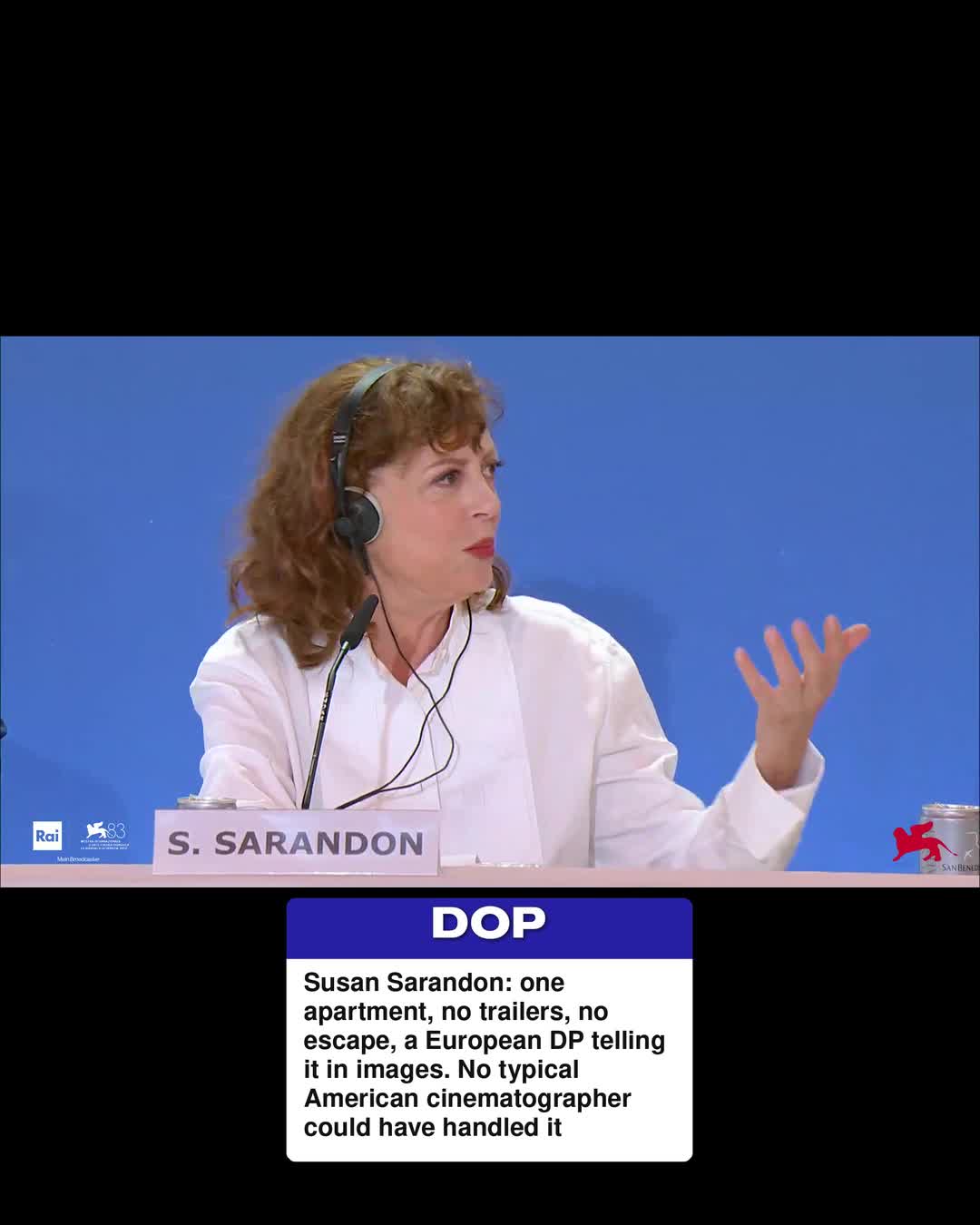
When Susan Sarandon speaks about a film's visual language, cinematographers and film enthusiasts alike ought to lean in. Her recent reflections on the shooting of The Echo Chamber paint a vivid picture of a production where the lines between set and reality blurred, and where the director of photography’s vision was not merely a technical execution but a philosophical anchor. Sarandon’s observation that the cast and crew lived within the film’s singular apartment location, eating, sleeping, and existing without the usual industry partitions like trailers or escape routes, points to an environment designed for ultimate immersion, both for the performers and, crucially, for the camera.
Her statement, “She kept looking for the lights and could not find them,” is perhaps the highest praise a cinematographer could receive. It speaks to a level of integrated lighting design so seamless, so organic, that it ceases to be an artificial imposition and becomes an inherent part of the environment. This isn't just about hiding practicals; it's about shaping light that feels motivated by the narrative space, whether it's soft, diffused daylight pouring through a window or the subtle glow of an unseen lamp. It suggests a DP who understands how to sculpt reality rather than merely illuminate it, employing techniques that prioritize naturalism and emotional resonance over overt theatricality.
The European Gaze: Storytelling Beyond Words
Sarandon explicitly attributes this unique aesthetic to a “very European, very Italian sensibility that tells the story in images rather than words.” This distinction is critical. American cinematography, while often brilliant, can sometimes lean towards a more explicit, expository visual style, ensuring clarity and narrative progression. The European tradition, particularly the Italian masters, frequently embraces ambiguity, symbolism, and a more poetic, impressionistic approach to visual storytelling. Think of Vittorio Storaro’s dreamlike palettes in Bertolucci’s films, or Giuseppe Rotunno’s evocative textures for Fellini. This approach values mood, atmosphere, and the unspoken emotional landscape as primary narrative drivers, allowing the audience to interpret and feel rather than simply observe.
“No typical American cinematographer could have handled it,” Sarandon declared, a bold statement that underscores the profound difference in visual philosophy at play. It implies a demand for a DP who can transcend conventional framing and lighting, one who is comfortable with blurring the edges of reality, memory, and dream states. This requires not just technical prowess, but a profound artistic empathy for the script’s psychological depths.
Such a cinematographer would likely employ techniques that prioritize depth and texture over pristine clarity. Perhaps using vintage or de-tuned lenses to introduce subtle aberrations, flaring, or a softer fall-off, thereby mimicking the imperfections of memory or the haziness of dreams. The choice of sensor might lean towards those known for exceptional low-light performance and dynamic range, allowing for deeply shadowed areas that hint at unseen narratives, or blown-out highlights that evoke overwhelming emotion without losing crucial detail. The color science would likely be less about vibrant realism and more about a carefully curated palette that supports the film’s emotional temperature, perhaps desaturated tones for memory, or warmer, more saturated hues for moments of intense feeling.
Crafting a World: Technical Mastery and Poetic Vision
The challenge of shooting an entire film within a single apartment is immense. It demands a cinematographer who can endlessly re-invent the space, finding new angles, new light sources, and new emotional textures within the same four walls. This is where the “European sensibility” truly shines. Instead of relying on cuts to new locations, the camera becomes a character itself, exploring the nuances of the environment, lingering on details, and using composition to reflect the characters’ inner states. Imagine the use of long takes that slowly reveal the emotional decay or growth within the confined space, or intimate close-ups that feel almost voyeuristic, drawing the audience into the psychological drama.
The lighting philosophy, as hinted by Sarandon, would have to be incredibly sophisticated yet subtle. Instead of large, obvious lighting units, one might envision an extensive use of practical lights modified with gels and diffusion, augmented by small, controllable LED panels hidden within the set, or carefully placed bounce cards to shape natural window light. The goal isn't to illuminate, but to sculpt, to create pockets of light and shadow that guide the eye and evoke specific feelings. The blurring of time, past, present, memory, and dream, would be achieved not just through editing, but through shifts in lighting quality, color temperature, and lens characteristics, perhaps transitioning from sharper, cooler tones for present reality to softer, warmer, or more diffused looks for flashbacks or internal monologues.
Ultimately, Sarandon's commentary on The Echo Chamber highlights a profound truth about cinematography: it is not merely about recording images, but about crafting a visual language that speaks volumes beyond dialogue. It underscores the power of a DP who possesses not only technical mastery but also a deep artistic sensitivity, capable of transforming a single apartment into a boundless world of human experience, and doing so with such seamless artistry that even the lights themselves become invisible, leaving only the story to emerge from the shadows.