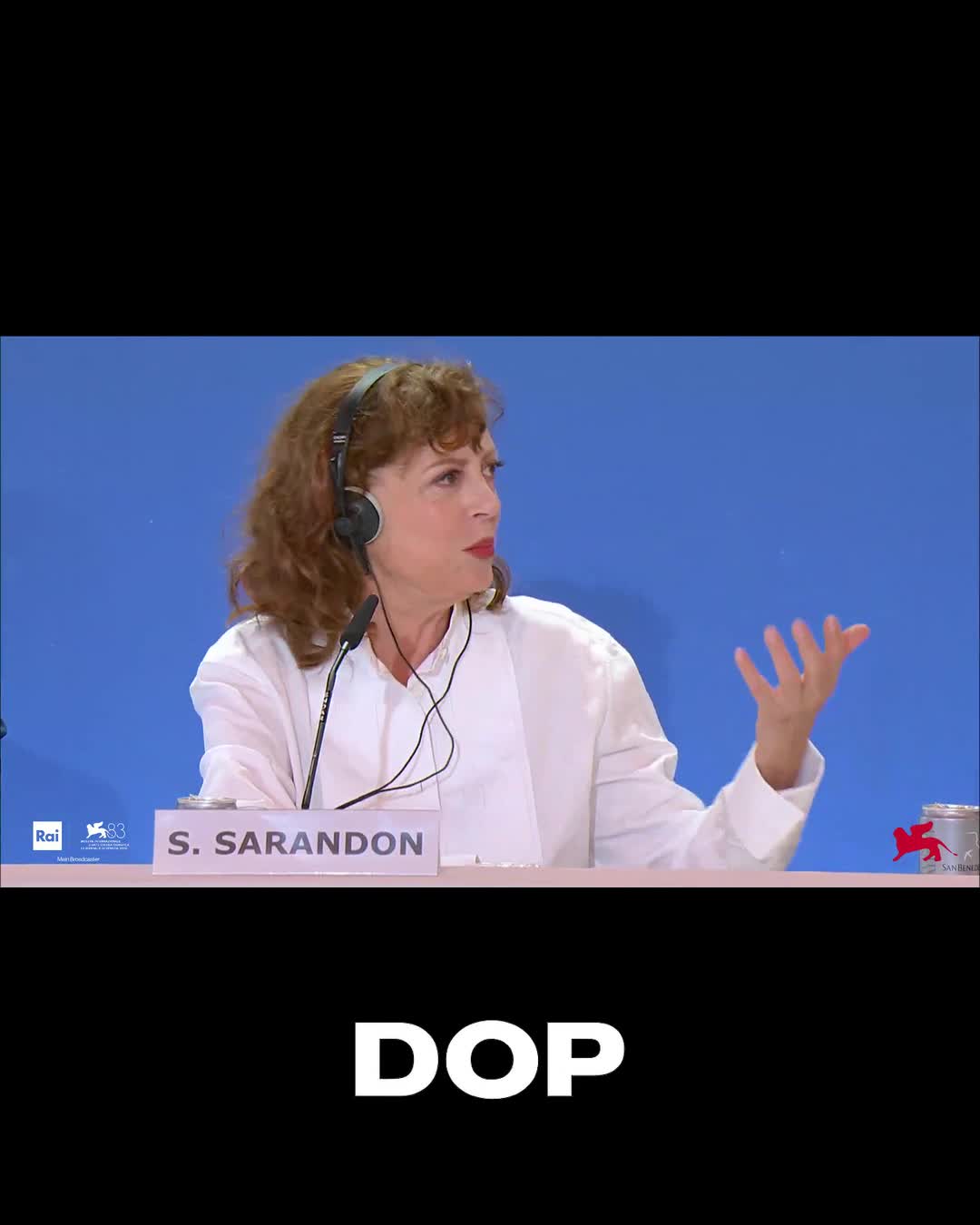
In the hallowed halls of the Venice Film Festival, amidst the usual buzz of premieres and press conferences, a particular sentiment resonated from the legendary Susan Sarandon regarding Andrea Pallaoro's latest, The Echo Chamber. Her observations, delivered with characteristic candor, cut right to the core of what makes truly compelling cinematography: a deep understanding of atmosphere, space, and the unspoken language of light. The film, born from Bernardo Bertolucci's final screenplay, is not just a narrative; it's an immersive experience, a masterclass in how a confined setting can become an expansive universe under the right lens.
Sarandon's comment about constantly "looking for the lights around" speaks volumes about the cinematographer's approach. It suggests a lighting strategy so integrated, so naturalistic, that the sources themselves become invisible, subsumed by the mood they create. This isn't about flashy setups or overt declarations of technical prowess; it's about a profound commitment to the film's internal logic, allowing light to sculpt emotion and guide perception rather than merely illuminate a scene. This "very European, very Italian sensibility," as Sarandon termed it, prioritizes atmosphere above all else, where the story is told not just through dialogue, but through the very fabric of the images themselves.
Crafting Worlds Within Walls: The Apartment as Universe
The decision to shoot The Echo Chamber almost entirely within a single apartment is not merely a logistical choice; it's a profound artistic statement. Sarandon's description of it becoming "its own world, with no trailers and no escape," perfectly encapsulates the psychological intensity this choice engenders. For the cinematographer, this presents a unique challenge and opportunity. Without the luxury of diverse locations, every frame, every angle, every sliver of light within that apartment must be meticulously considered to prevent visual monotony and instead foster a sense of evolving psychological space. We are forced to confront the characters within their immediate environment, stripped of external distractions, mirroring their internal confinement.
This demands a cinematographer capable of extraordinary spatial intelligence and a nuanced understanding of how light interacts with limited architecture. It's likely we'll see a sophisticated use of practical lighting, lamps, windows, reflections, elevated to cinematic significance. Perhaps a reliance on longer focal lengths to compress the space and emphasize the characters' proximity, or conversely, wider lenses used sparingly to highlight the apartment's oppressive scale. The choice of camera sensor, too, becomes critical; a sensor with exceptional low-light capabilities might have been preferred to harness the subtle nuances of available light, creating deep, rich blacks and delicate highlights that breathe life into the shadows of memory and dream.
"No typical American cinematographer could have handled that," Sarandon declared, highlighting a perceived cultural difference in approach to visual storytelling, where European sensibilities often privilege mood and subtext over explicit narrative.
The Language of Light: Memory, Dream, and the Unspoken
The film's fluid movement between past, present, memory, and dream without explicit explanation places an enormous burden and privilege upon the cinematographer. It is through the visual language, shifts in color temperature, changes in focus depth, the intensity and direction of light, that these transitions must be conveyed. A warm, diffused glow might signify a cherished memory, while a cooler, starker palette could plunge us into a disorienting dream state. The texture of light might become softer, more ethereal for reminiscence, or sharper and more aggressive for moments of psychological tension.
This requires a DP who is not just technically proficient, but deeply empathetic to the narrative's emotional currents. It's a dance between precision and intuition, where the cinematic tools, whether it's a vintage anamorphic lens adding painterly flares and organic fall-off, or a modern spherical lens offering clinical clarity, are wielded to articulate the unspoken. The absence of a typical American narrative structure, which often favors explicit exposition, means the cinematography must carry a heavier load of storytelling, inviting the audience to interpret and feel rather than simply observe. This is where the "atmosphere first" philosophy truly shines, transforming the apartment not just into a setting, but into a character itself, breathing with the characters' internal lives.
The collaboration between Pallaoro and his cinematographer, whoever they may be, is clearly one built on trust and a shared vision of cinema as an art form that transcends dialogue. Sarandon’s praise hints at a DP whose work is so seamlessly integrated into the film’s fabric that it becomes indistinguishable from the story itself. This is the mark of true mastery, a testament to a visual artist who understands that sometimes, the most profound statements are made in the quietest, most atmospheric corners of the frame. The Echo Chamber promises to be a film that demands our visual attention, a masterclass in cinematic confinement and the expressive power of light.