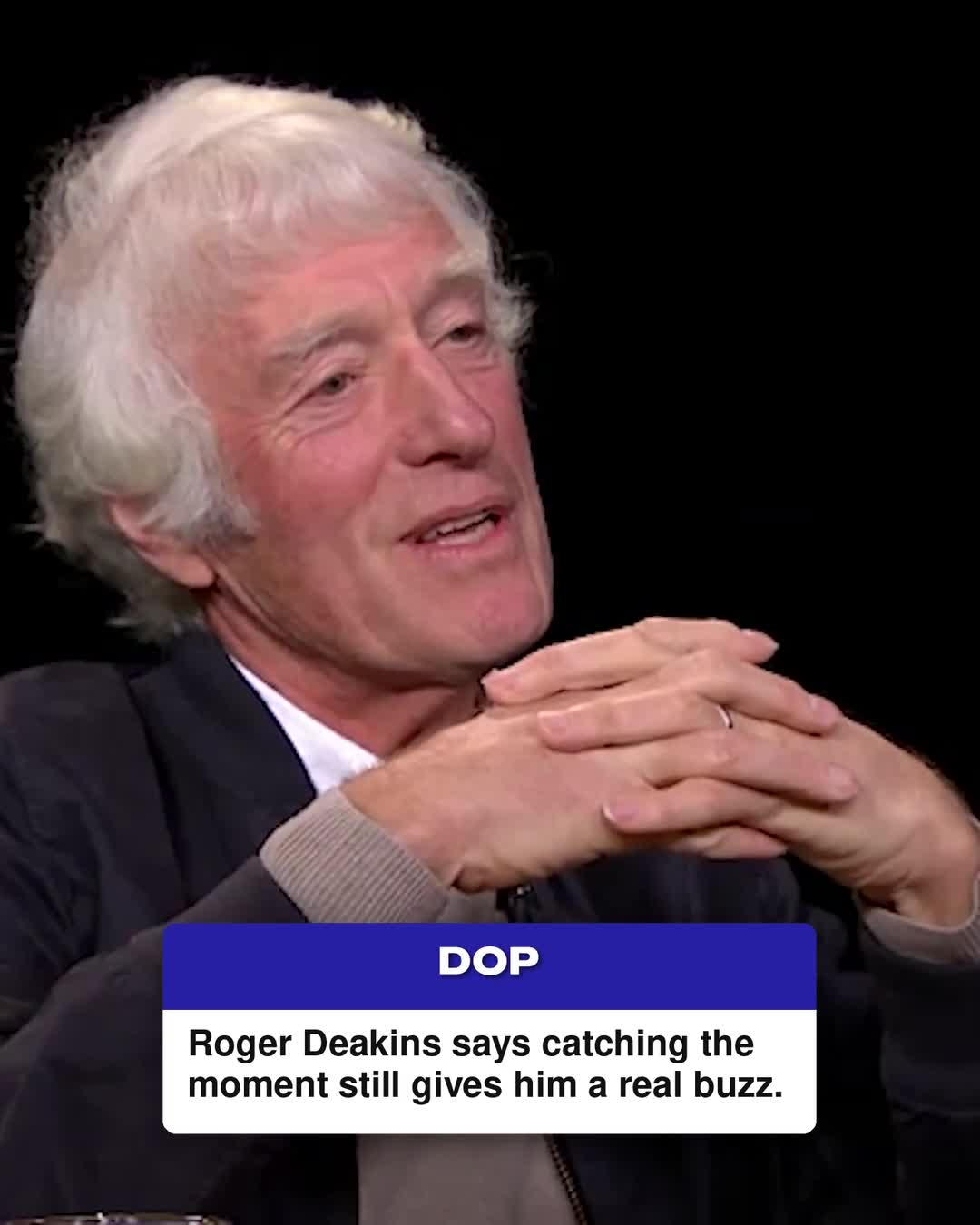
In an industry increasingly specialized, where the roles of Director of Photography and camera operator are often distinct, Roger Deakins ASC, BSC stands as a powerful testament to the enduring value of a DP operating their own camera. The Instagram caption offered a simple yet profound insight: Deakins is often the first person to witness a performance unfold, and that direct, unmediated experience, he says, still gives him a 'real buzz,' a sense that 'something special was just caught.' This isn't just a charming anecdote; it's a window into the soul of his craft and a key to understanding the unparalleled intimacy and precision of his images.
For Deakins, operating the camera himself is not merely a preference; it's an extension of his creative vision. He's not just framing a shot; he's breathing with the actors, feeling the rhythm of the scene, and intuitively adjusting to the nuances of their performance. This immediate feedback loop, seeing the performance, feeling the light, and framing it in real-time, allows for an organic responsiveness that a DP communicating through an operator simply cannot replicate. Think of the subtle push-ins in Prisoners as Hugh Jackman's character descends further into moral ambiguity, or the delicate dance of the camera around Jake Gyllenhaal in Jarhead, always feeling present, never intrusive. These are not just technical decisions; they are emotional responses captured through the lens.
The Intimacy of the Eyepiece: A Direct Connection
The act of looking through the viewfinder, rather than a monitor, places the DP directly into the scene's spatial and emotional landscape. Deakins has often spoken about the importance of 'seeing' the light with his own eyes, not just relying on meters or waveforms. This extends to performance. When he's operating, he's not just evaluating exposure and composition; he's absorbing the actor's energy, their micro-expressions, the subtle shifts in their posture. This direct, unmediated experience allows for a profound connection between the lens, the performance, and the DP's interpretive vision. It's a dialogue between artist and subject, where the camera becomes an active participant rather than a passive recorder.
“When you operate yourself, you’re connected to the scene in a way that you just can’t be if you’re standing behind a monitor.”
This approach has been a hallmark of his career, from the stark landscapes of No Country for Old Men to the meticulously choreographed single-take illusion of 1917. In 1917, his operating skill was paramount. The camera had to be an invisible guide, navigating trenches and battlefields, always perfectly positioned to capture the unfolding drama while maintaining the illusion of continuous time. This level of complex blocking and seamless execution demands an operator who understands the emotional beats of the story as intimately as the director.
Technical Precision Meets Artistic Intuition
Deakins is renowned for his technical mastery, often favoring cameras like the ARRI Alexa (Mini LF, XT, 65) for their exceptional dynamic range and naturalistic color science. His lens choices, often ARRI/Zeiss Master Primes or Signature Primes, are selected for their pristine clarity and subtle character, allowing the light and performance to speak for themselves. Yet, these technical decisions are always in service of the story. His operating style, while technically precise, is imbued with an artistic intuition that transcends mere mechanics.
Consider his lighting philosophy: often naturalistic, soft, and motivated. When operating, he can feel how the light plays on an actor's face in real-time, making minute adjustments to the camera's position or the actor's blocking to maximize its impact. This fluid interaction between light, performance, and camera movement is the essence of his artistry. He's not just capturing an image; he's sculpting it, moment by moment, with his own hands.
In an era where remote operating, virtual production, and elaborate pre-visualization are becoming standard, Deakins' dedication to operating his own camera serves as a powerful reminder of the irreplaceable value of human touch and immediate presence on set. It underscores the idea that cinematography is not just about technical execution, but about a deeply personal, intuitive connection to the story and the people telling it. His 'buzz' from catching something special isn't just about a great shot; it's about the magic that happens when a master craftsman is fully immersed in the art of seeing.