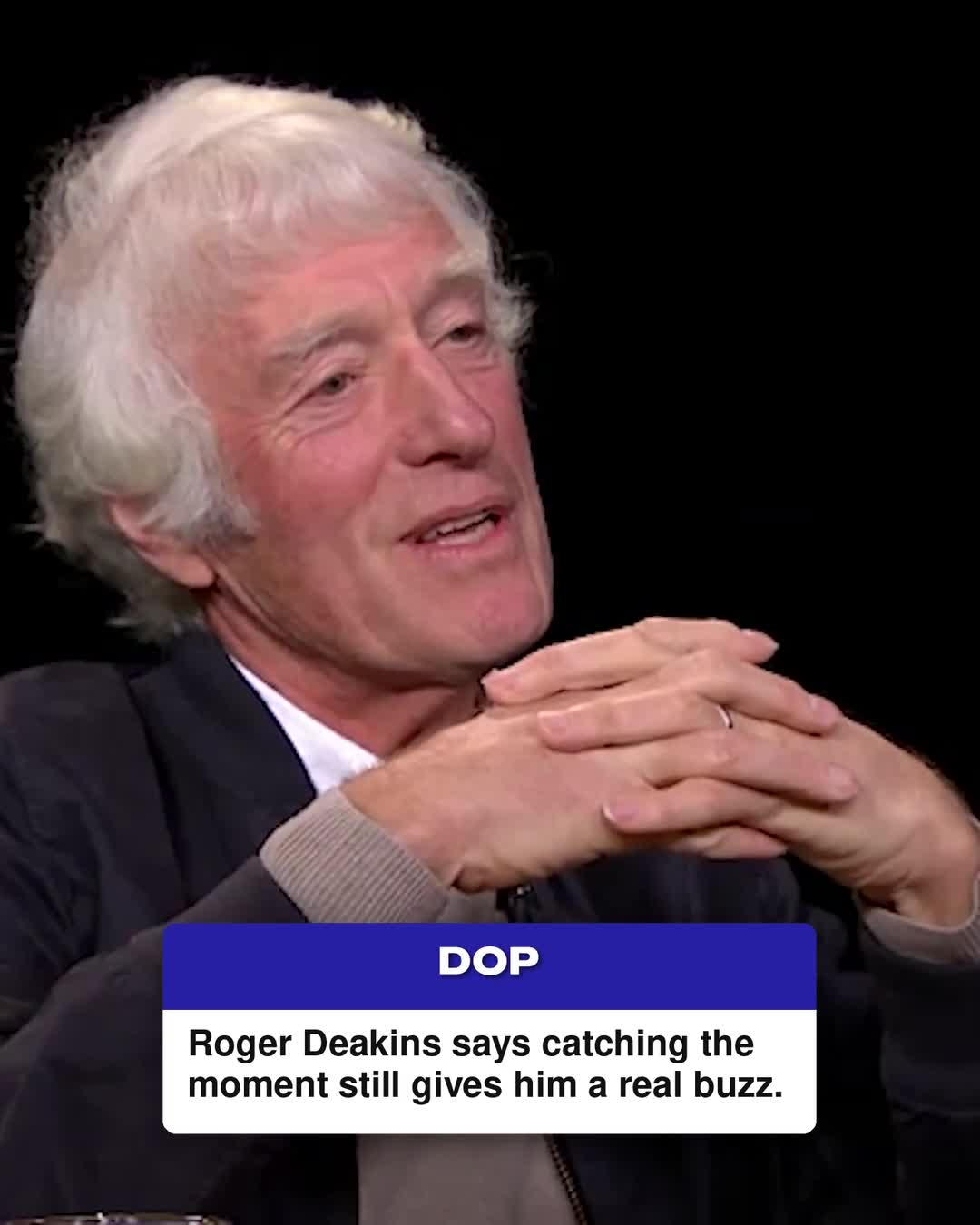
In an industry increasingly specialized, where the roles of Director of Photography and camera operator often diverge, Roger Deakins stands as a powerful testament to the enduring value of the DP operating their own camera. The Instagram caption succinctly captures a profound truth about his process: he is often the first person to witness a performance unfold through the lens, a direct conduit to the raw emotion and nuance of the actors. This isn't merely a preference; it's a foundational element of his cinematic philosophy, a practice that elevates his work from technically proficient to truly transcendent.
Deakins' statement about still getting a "real buzz" and the thought that "something special was just caught" speaks volumes. It underscores the intimate, almost symbiotic relationship between the camera and the performance. For a cinematographer of his caliber, known for his meticulous planning and precise execution, this immediate, visceral feedback loop is invaluable. It allows for instantaneous micro-adjustments, a subtle shift in framing, a fractional change in focus, an intuitive sway, that are impossible to convey through a monitor or a verbal cue to another operator. This direct physical connection to the capture device transforms the camera from a mere tool into an extension of his artistic eye and emotional intelligence.
The Intimacy of the Frame: Connecting DP, Actor, and Audience
Consider the delicate dance between actor and camera in films like Blade Runner 2049 or Prisoners. Deakins’ operating style brings an unparalleled intimacy to these scenes. When he is physically behind the camera, his breathing, his subtle movements, his understanding of the scene's emotional rhythm directly influence the framing. This isn't about being a static observer; it's about being an active participant in the performance, guiding the audience's eye with an invisible hand. The result is a fluidity and organic quality to his camera work that feels less like a composed shot and more like a shared experience, drawing the viewer deeper into the narrative.
This direct engagement also fosters a unique trust with the actors. Knowing that the DP, the architect of the film's visual language, is personally framing their performance can be incredibly empowering. It suggests a shared commitment to the moment. Deakins has often spoken about the importance of being present on set, not just as a technical supervisor, but as a creative partner. Operating the camera solidifies this partnership, allowing for a seamless collaboration that can unlock unexpected moments of brilliance. The "buzz" he describes is likely the thrill of this collaborative alchemy, the convergence of performance, light, and lens into something truly cinematic.
"When Roger is operating, the camera becomes a living, breathing entity, responding to the subtle shifts in performance with an almost telepathic precision. It’s an extension of his vision, not just a recording device."
Technical Mastery and Intuitive Operation
Deakins' choice to operate is also deeply rooted in his technical mastery. Whether it's the large format Alexa 65 used in 1917, demanding precise focus and movement on a grand scale, or the more agile cameras for intimate dramas, his deep understanding of optics, sensor characteristics, and camera mechanics informs every decision. He knows exactly how a particular lens will render a face, how the depth of field will play out at a certain aperture, or how a subtle rack focus can punctuate a line of dialogue. This knowledge allows for an intuitive operation that transcends mere technical execution.
His lighting philosophy, often characterized by its naturalism and motivated sources, benefits immensely from this hands-on approach. As he operates, he's not just framing; he's constantly evaluating how the light is falling on the subject, how shadows are shaping the environment, and whether the emotional intent of the scene is being served. This real-time assessment allows him to make subtle adjustments to lighting or camera position, sometimes even mid-take, that would be difficult to communicate through an intermediary. It's a continuous, dynamic conversation between light, performance, and lens, all orchestrated by one master craftsman.
The impact of Deakins' operating style extends beyond the immediate shot. It influences the entire visual rhythm and pacing of his films. His camera movements, whether tracking, panning, or static, are never gratuitous. They are always motivated by character or narrative, serving the story with an understated elegance. This deliberate approach, honed through decades of personal operation, is a hallmark of his filmography. From the stark landscapes of No Country for Old Men to the intricate choreography of Skyfall, the camera feels like a conscious observer, guided by a singular, unwavering vision.
In an era where technology often distances creators from their craft, Roger Deakins reminds us that the most profound cinematic moments often arise from the most direct human connection. His decision to operate his own camera isn't just about control; it's about preserving the magic of catching something special, of being intimately present at the birth of a performance, and translating that raw energy directly onto the screen. It's a practice that ensures his films don't just look beautiful; they feel authentic, alive, and profoundly human.