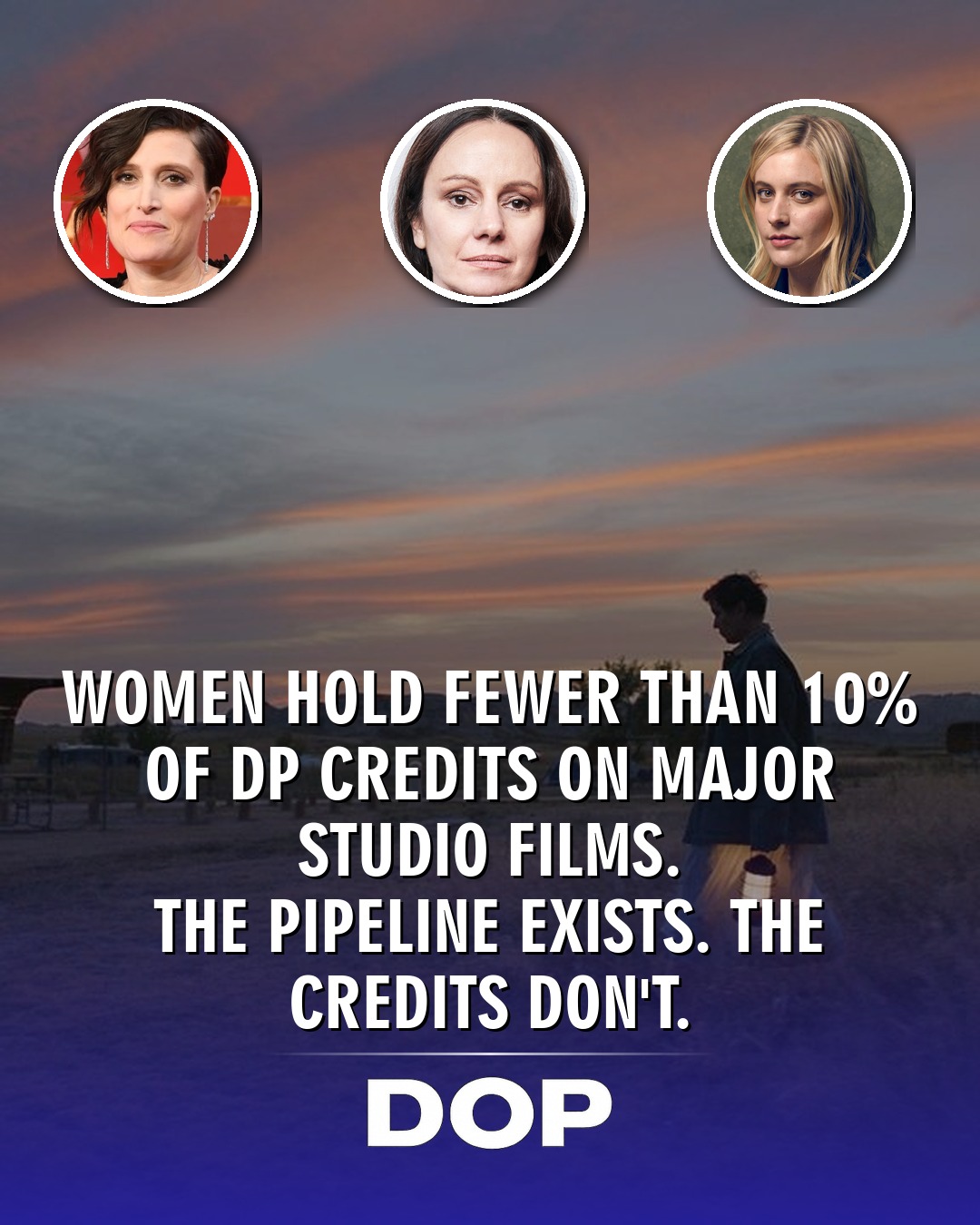
The annual reports land with a familiar, disheartening thud. For over a decade, industry analyses, including the most recent findings from 2025, consistently paint a stark picture: women comprise less than 10 percent of director of photography credits on major studio film and television productions. The 2025 data, showing a precipitous drop to a mere 7% of cinematographers on the top 250 grossing films—a sharp decline from 12% in 2024—isn't just a stagnation; it's a regression that demands our urgent attention and a re-evaluation of our collective efforts.
It’s not for lack of trying, at least on paper. For more than a decade, a constellation of studios, guilds, and industry organizations have poured resources into camera department pipeline programs. These initiatives, designed to foster diversity and inclusion, have undoubtedly made an impact at the foundational levels. We see more women entering the camera department as assistants, learning the intricacies of light, composition, and the demanding pace of set life. The pipeline, in this sense, is indeed built and flowing. Yet, a fundamental question persists: if the pipeline is robust at its origin, why is the flow so constricted at its destination?
The Conversion Conundrum
The core issue isn't the absence of talent entering the field; it's the alarming conversion rate from camera assistant to credited Director of Photography. The data speaks volumes: while female cinematographers occupied a more encouraging 22% of crew roles on films with at least one woman director, this figure plummeted to a mere 5% on productions helmed by male directors. This disparity isn't incidental; it highlights a systemic bias in hiring practices and network building that disproportionately affects women as they attempt to ascend the ranks.
“The pipeline exists. The credits at the DP level have not yet reflected it. This isn't just about 'getting a foot in the door'; it's about the industry's willingness to open the subsequent doors to leadership and creative autonomy.”
Consider the career trajectory of a DP. It’s not simply about mastering the technical aspects—knowing the difference between an ARRI Alexa 35's dynamic range and a Sony VENICE 2's dual base ISO, or finessing the nuanced falloff of an ARRI Skypanel S60-C versus a Creamsource Vortex8. It's also about building a network of trust, demonstrating leadership under pressure, and developing a distinctive visual voice. The path to becoming a sought-after DP involves a delicate dance of opportunity, mentorship, and the crucial leap from operating or gaffing to the ultimate creative seat. It seems that for women, this leap is often met with invisible barriers.
Beyond the Technical: Culture and Opportunity
The conversation needs to move beyond simply increasing the number of women in entry-level positions. We must critically examine the culture within the industry that either propels or impedes their progress. Are women being given the same opportunities to gaffer, to operate B-camera on challenging sequences, to light complex scenes under the watchful eye of a seasoned DP? Are they being considered for smaller projects that allow them to build their reels and refine their visual style, much like their male counterparts? The gendered disparity in projects with male versus female directors suggests that unconscious bias, or perhaps even conscious gatekeeping, is at play in the decision-making processes of producers and directors.
Take, for instance, the work of a DP like Rachel Morrison, ASC, whose stunning work on Mudbound (shot on the ARRI Alexa XT with Panavision anamorphic lenses, evoking a raw, painterly aesthetic) earned her an Oscar nomination, shattering a significant glass ceiling. Or Mandy Walker, ASC, ACS, whose masterful control of light and color in Elvis (captured on the ARRI Alexa 65 and LF, often with vintage Panavision lenses, contributing to its vibrant, period-specific texture) garnered widespread acclaim. These are not isolated talents; they are exemplars of a larger pool of skilled women cinematographers. Yet, for every Morrison or Walker, there are countless others struggling to break through to major studio features.
Reimagining the Path Forward
So, what's next? The pipeline is not enough if the conversion mechanism is faulty. We need to shift our focus from merely populating the entry points to actively dismantling the obstacles further up the chain. This means more intentional mentorship programs that pair aspiring women DPs with established figures, not just for technical guidance but for career navigation and networking. It requires producers and directors to actively broaden their search, challenging their own biases and giving opportunities to diverse talent. It also necessitates a deeper examination of the industry's inherent power structures and how they perpetuate a homogeneous leadership landscape.
The decline from 12% to 7% in a single year is not just a statistical blip; it's a flashing red light. It indicates that despite a decade of earnest efforts, the industry is still failing to translate potential into progress at the highest levels of cinematography. For Occupy Cinematography, this isn't just about fairness; it's about the richness and diversity of visual storytelling. A more inclusive set of voices behind the camera means a richer, more varied cinematic landscape for all of us. The work continues, and the lens must be refocused.
This article contains affiliate links. We may earn a small commission at no extra cost to you. Learn more.