In an era where modern digital cinema cameras like the ARRI Alexa 35 and Sony Venice 2 achieve pristine dynamic range and hyper-clean resolution, a quiet counter-revolution has taken root. A growing cohort of cinematographers is turning backward, purposefully adopting obsolete, finicky, and forgotten formats. This isn't merely stylistic nostalgia; it is a tactical search for visual texture, physical limitation, and an organic soul that clean sensors simply cannot replicate.
Consider Director of Photography Matthias Grunsky’s work on Andrew Bujalski’s Computer Chess (2013). To capture the uncanny, insular aura of a 1980s chess tournament, Grunsky hunted down three working 1968 Sony black-and-white tube video cameras (AVC-3200). The analog signals were so unstable they required a time-base corrector just to be recorded. The hardware was literally alive with artifacts: touching the metal housing induced electrostatic noise straight into the raster, creating an organic jitter that felt less like traditional cinema and more like archeological video surveillance.
Across the Atlantic, British filmmaker Mark Jenkin took physical medium limitation even further for his BAFTA-winning feature Bait (2019). Shooting on a clockwork-wound 1970s Bolex H16 camera, Jenkin was restricted to 28-second takes per wind. He hand-developed all 129 rolls of 16mm black-and-white stock himself in a kitchen sink using rewound processing tanks. The resulting scratches, chemistry stains, and light leaks were not post-production overlay effects; they were the physical, tactile fingerprints of a filmmaker wrestling light onto celluloid.
The Epic Canvas: Resurrecting Giant Gauges
While low-fi digital and 16mm satisfy intimacies, large-format cinema has seen its own audacious resurrective surgery. For Quentin Tarantino’s The Hateful Eight (2015), DP Robert Richardson, ASC, convinced Panavision to unearth and rehabilitate vintage Ultra Panavision 70 lenses, optics that hadn't seen a movie set since Charlton Heston rode chariots in Khartoum (1966). Paired with 65mm negative running through System 65 camera bodies, the 1.25x anamorphic squeeze yielded an ultra-wide 2.76:1 aspect ratio with astounding resolving power and buttery depth fall-off.
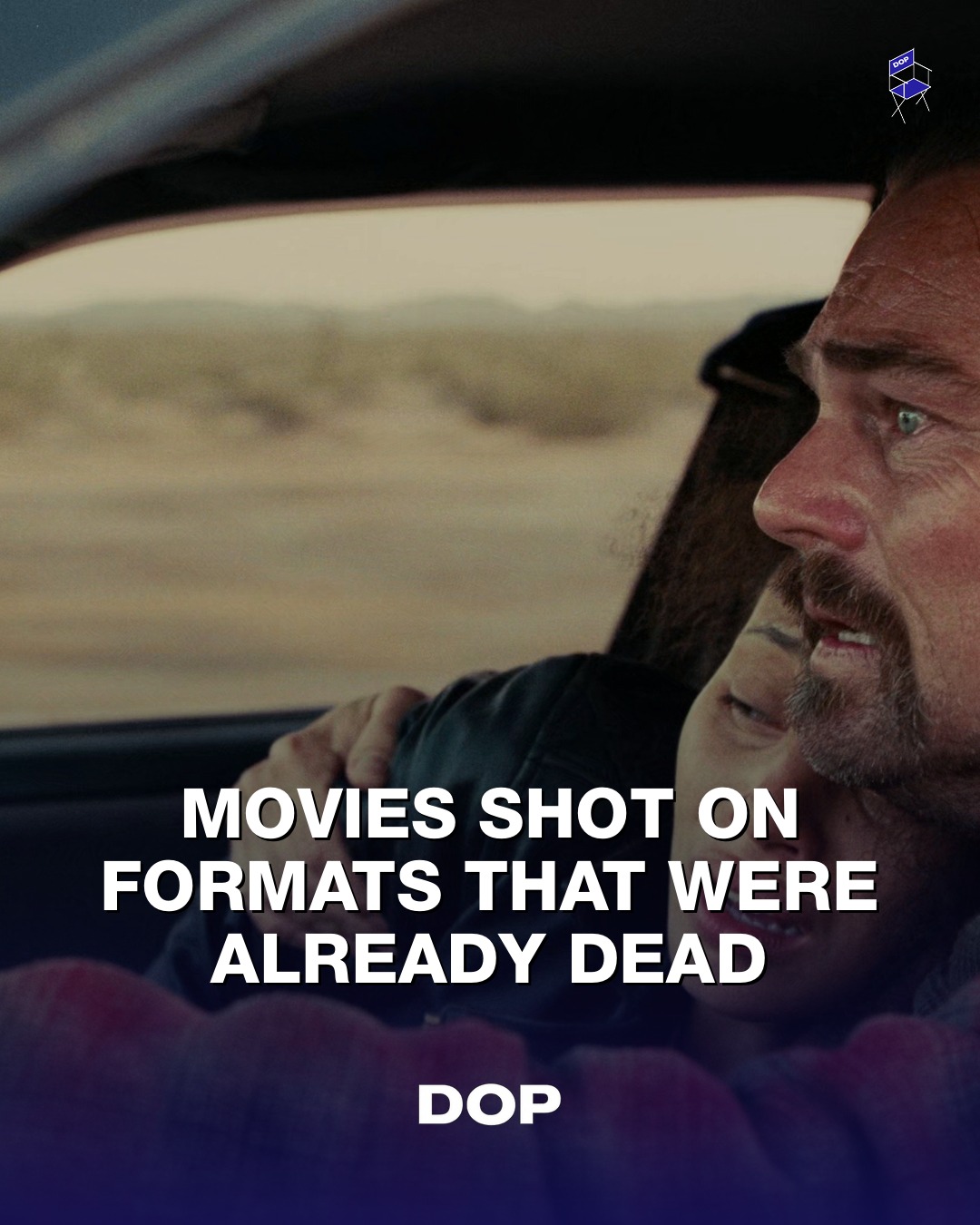
Similarly, Paul Thomas Anderson’s relentless commitment to photochemical purity led him to utilize VistaVision for One Battle After Another. Originally developed by Paramount in 1954, VistaVision runs 35mm film horizontally through the camera gate across eight perforations rather than four. The result is a massive negative area that offers large-format clarity without the extreme shallow depth of field associated with 65mm glass, allowing intricate staging and razor-sharp background detail.
"When you embrace an obsolete format, you aren't fighting its limitations, you are turning its physical quirks into the core narrative vocabulary of your film."
What makes these resurrection projects compelling is the optical friction they create. High-resolution modern workflows strive to eliminate optical artifacts, yet those very flaws, halation, tube streak, grain structure, and edge softness, are precisely what build emotional texture. When an image contains physical evidence of its creation, the audience subconsciously senses a tangible human presence behind the lens.
What Dead Format Deserves the Next Revival?
As the industry pushes toward virtual production and AI-generated plates, the appetite for visceral, format-driven cinematography will only expand. The question for contemporary DPs becomes: what forgotten medium should we drag back into the light next? Super 8 reversal stock like Ektachrome offers an intoxicating, saturated home-movie feel, while Technirama, an 8-perf 35mm horizontal format with a 1.5x anamorphic squeeze, remains one of the most stunning, underutilized widescreen systems in cinema history.
Even early digital forms, such as 3-CCD broadcast cameras with optical prism blocks or early 1990s high-definition video tape systems, carry an eerie, dreamlike aesthetic waiting for the right psychological thriller or period piece. Formats don't truly die when manufacturing stops; they merely wait for a DP with the vision and patience to turn their inherent flaws into unforgettable cinema.
This article contains affiliate links. We may earn a small commission at no extra cost to you. Learn more.