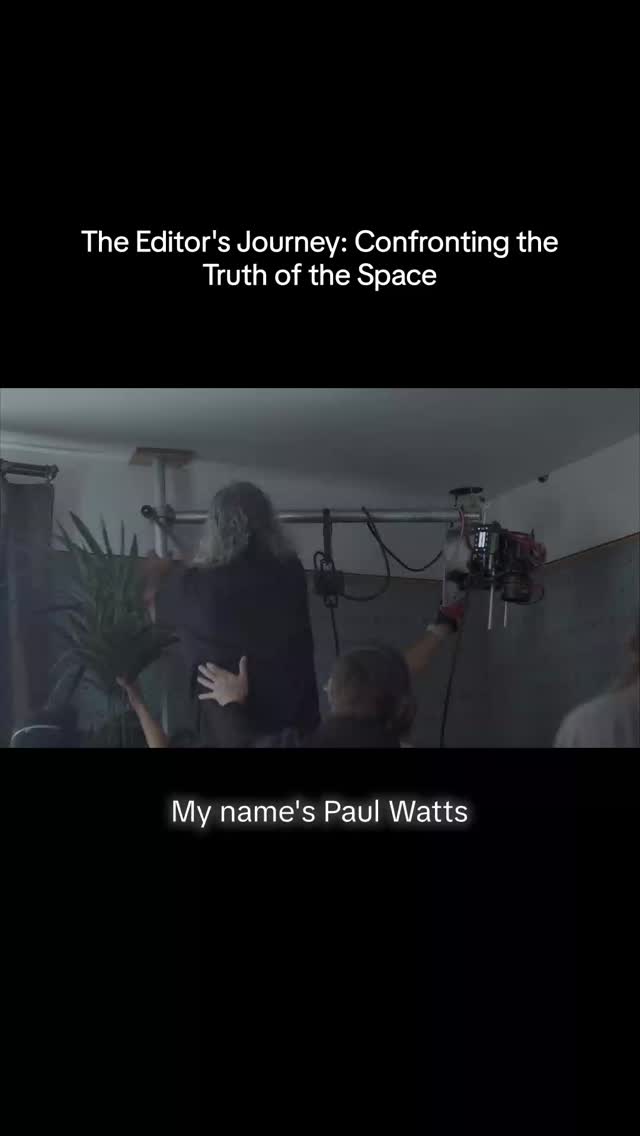
When we talk about the craft of cinematography, our focus often gravitates to the DP, the camera, the lens, the light. And rightly so. But a film's ultimate impact, its rhythm, its very breath, is shaped in the edit suite. Paul Watts' work on Jonathan Glazer's The Zone of Interest is a stark, powerful reminder of this truth. The Instagram caption hints at a profound journey, one that involved sifting through 'hundreds of hours of footage' to distill a chilling reality. For cinematographers, understanding this symbiotic relationship between image capture and post-production is crucial. The choices made on set, the deliberate framing, the often static compositions, all find their ultimate purpose and potency under the editor's hand, especially in a film as deliberately unsettling as this.
Glazer and his Director of Photography, Łukasz Żal, ACS, PSC, crafted a visual language for The Zone of Interest that was revolutionary in its approach: an almost voyeuristic, observational style, achieved through the use of an array of hidden cameras – often up to ten at a time – strategically placed throughout the set. This wasn't about conventional coverage; it was about creating a surveillance-like gaze, allowing the horror to unfold organically, often in the periphery. Watts’ challenge, then, wasn't just about assembling scenes; it was about sculpting tension, creating a narrative pace that mirrored the insidious, almost mundane nature of evil. He had to find the moments within this vast ocean of footage that spoke to the film's core theme: the chilling juxtaposition of domestic bliss against unimaginable atrocities.
The Invisible Hand of Dread
Watts' editorial choices amplify the film's central conceit: the 'mintness of the house versus the horror just over the wall.' He doesn't rely on jump scares or overt visual cues of violence. Instead, the horror is implied, heard, and deeply felt. The sound design, meticulously woven into the fabric of the edit, becomes a character unto itself. Watts, in collaboration with sound designer Johnnie Burn, crafts a soundscape where the distant hum of the ovens, the muffled screams, the train whistles, and the constant, underlying dread become as potent as any visual. This aural tapestry is precisely timed and placed within the edit, creating an almost unbearable psychological pressure. It’s a masterclass in how an editor can manipulate perception, turning the absence of explicit imagery into a more terrifying presence.
“The editor's true artistry lies not just in what they include, but in what they bravely omit, allowing the audience's imagination to fill the void with their deepest fears.”
The pacing is deliberate, often slow, forcing the audience to sit with the discomfort. Long takes, common in Żal's cinematography, are preserved, allowing the mundane actions of the Höss family to play out in stark contrast to the unseen atrocities. Watts has to find the rhythm in these extended sequences, knowing precisely when to cut, when to hold, and when to let the scene breathe, allowing the oppressive atmosphere to permeate. This is not the rapid-fire editing of a thriller; it is the surgical precision of an artist who understands that true horror often resides in the quiet, the unspoken, the implied.
A Transformative Journey in the Edit Suite
Working with such raw, unvarnished footage, captured with an almost documentary-like detachment, must have been an immense emotional and technical undertaking for Watts. The 'getting lost in hundreds of hours of footage while confronting such a chilling space' speaks volumes about the immersive, almost overwhelming nature of the task. It wasn't just about technical proficiency; it was about emotional resilience. An editor, in many ways, becomes the first audience member, absorbing the film's impact directly. Watts had to confront the profound implications of the narrative day in and day out, shaping the raw material into a coherent, devastating whole.
For cinematographers, studying Watts' work on The Zone of Interest offers invaluable insights. It underscores the importance of coverage that allows for editorial flexibility, even within a highly stylized, minimalist approach. It highlights how visual information, even when subtle or in the background, can be amplified or recontextualized in the edit. The static framing, the carefully chosen lenses (often wider primes to capture the environment), and the naturalistic lighting all provided Watts with a rich, yet challenging, canvas. His ability to craft such a powerful narrative from this material is a testament to the editor's profound influence on the final cinematic experience, transforming raw footage into a 'masterpiece' that lingers long after the credits roll.