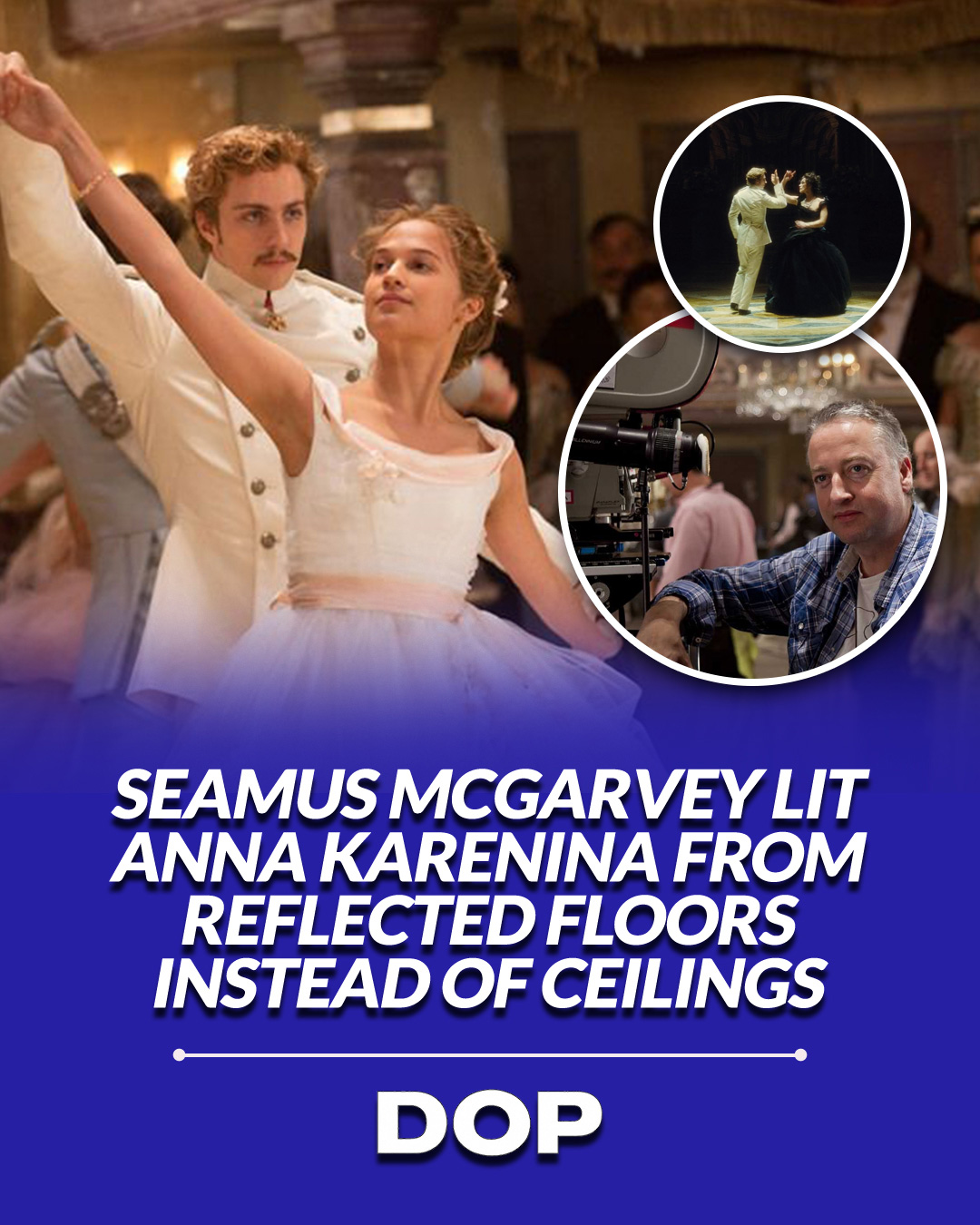
When director Joe Wright and cinematographer Seamus McGarvey, ASC, BSC chose to stage their 2012 adaptation of Anna Karenina inside a stylized, crumbling theater, they confronted a unique visual puzzle. Rather than disguising the stage, the film aggressively leaned into its artificiality. Set pieces shifted mid-scene, backdrops descended on visible ropes, and characters moved between ornate ballroom floors and literal rafters. For McGarvey, this theatrical framing required a lighting philosophy that bridged 19th-century stage conventions with high-end cinematic realism.
Shot on 35mm motion picture film using Arricam ST and LT cameras paired with Panavision C-Series and G-Series anamorphic lenses, Anna Karenina possesses an inherently tactile, organic texture. The optical vintage character of the C-Series glass, with its gentle focus falloff and delicate flares, worked in tandem with McGarvey's lighting to transform a potentially cold exercise in formalism into a lush, emotionally resonant tragedy.
Embracing the Mechanics of Footlighting
In traditional 19th-century theater, footlights placed at the edge of the stage floor provided crucial illumination, casting a distinct upward luminance that defined performers' features against dark auditoriums. McGarvey adapted this historic technique into a sophisticated cinematic lighting strategy. Rather than relying predominantly on conventional overhead keys or large softboxes suspended from rigs, he directed light downward onto polished wooden floors, strategically hidden mirrors, and low-positioned bounce cards.
This low-angle reflected light bounced back upward, mimicking the spill of footlights and grand crystal chandeliers. By elevating light from below, McGarvey filled in the harsh downward shadows cast by period-accurate wardrobe elements like wide-brimmed hats, veils, and elaborate coiled hairstyles. The result was a constant, shimmering glow across the actors' faces, specifically illuminating the eyes and sculpting the cheekbones of Keira Knightley and Aaron Taylor-Johnson without breaking the period illusion.
Lifting light from below rather than hanging keys overhead turns the physical set into an active lighting instrument. Floors, tabletops, and props become essential tools for sculpting human facial geometry.
Constructing Three-Dimensional Luminance
McGarvey’s technique offers a vital lesson in spatial lighting design: thinking in three dimensions means treating every surface in the frame as a potential reflector. In modern digital and film production alike, there is a common tendency to overhead-rig soft sources to keep floor spaces clear for camera movement. However, overhead-heavy setups can flatten facial structure or create unflattering eye sockets when actors wear structured period clothing.
To execute this look, McGarvey and his gaffer, Lee Walters, deployed compact tungsten units, warm Dedolights, and small specular bounce materials close to set level. By carefully balancing these low bounce sources with delicate top-light spill, they created an impressive sense of dimensionality. The specular reflections off polished dance floors and mirrored walls didn't just illuminate the talent; they introduced a shimmering, dreamlike atmosphere that mirrored Anna’s psychological drift.
The Legacy of McGarvey’s Visual Grammar
Throughout his celebrated filmography, ranging from the iconic long take in Atonement to the grounded, visceral frames of We Need to Talk About Kevin and Nocturnal Animals, McGarvey has consistently demonstrated a mastery of light as an emotional narrative driver. In Anna Karenina, his willingness to embrace stage-derived artificiality produced a masterclass in period glamour that feels both classic and daringly modern.
For contemporary directors of photography, McGarvey’s work on Anna Karenina serves as an inspiring proof of concept. It proves that embracing non-traditional light angles and treating architecture as an active element of the lighting package can solve complex shadow problems while elevating the visual poetry of the story.