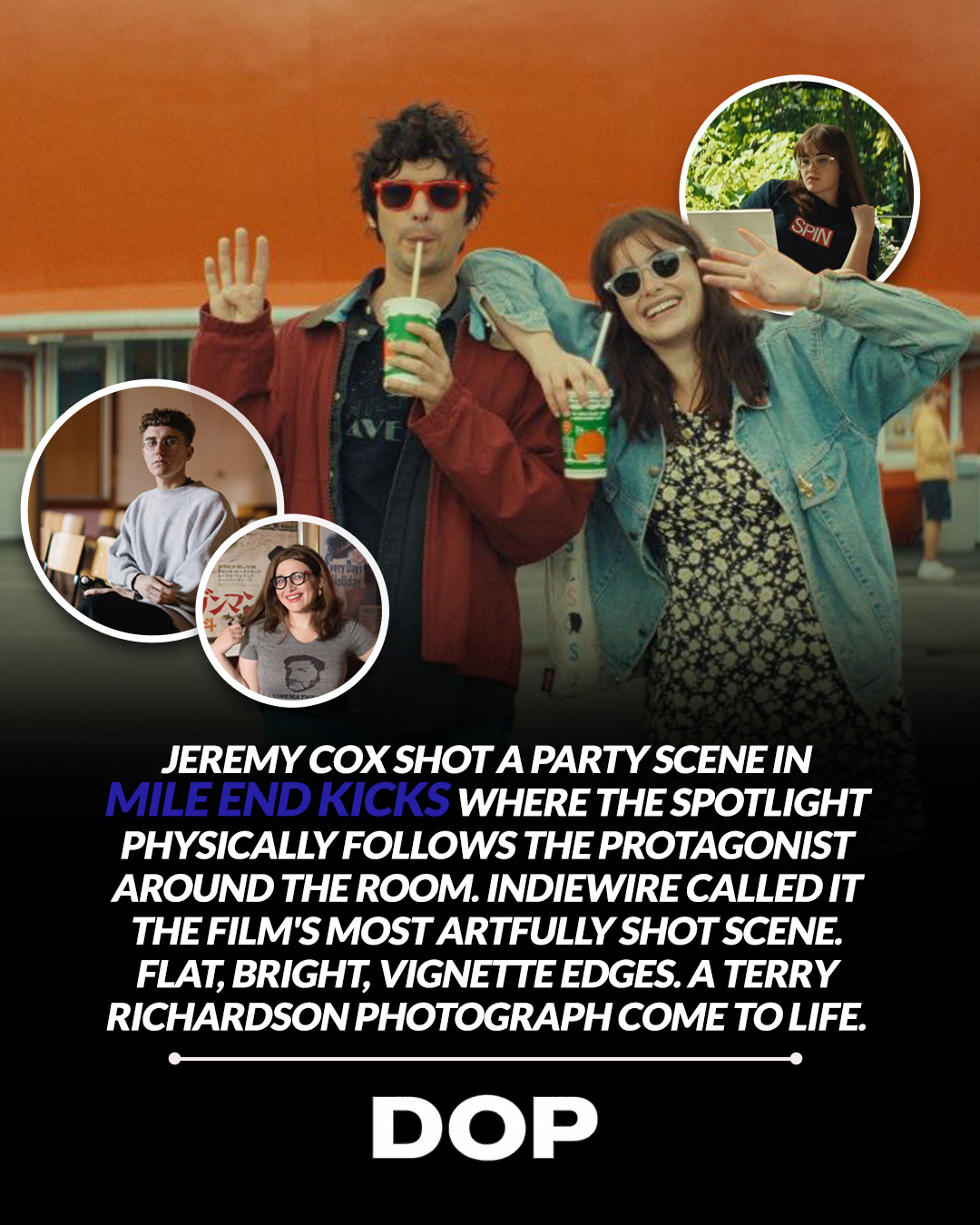
In an era saturated with digital nostalgia, where period pieces often rely on elaborate set dressing and post-production trickery to evoke a bygone era, the work of cinematographer Jeremy Cox on Chandler Levack’s Mile End Kicks stands as a masterclass in subtle, evocative visual storytelling. Premiering at TIFF 2025 and opening theatrically in April 2026, the film has garnered significant attention, not least for its 'beautifully photographed' portrayal of Montreal's indie rock scene in 2011. IndieWire specifically lauded a particular party scene as the film's most artfully shot, a testament to Cox’s ingenious approach to lighting and character.
Cox, no stranger to critical acclaim (his work on Until Branches Bend earned him a CSC Award in 2022), faced a formidable challenge with Mile End Kicks: how to imbue a relatively recent past with a sense of authenticity and lived-in vitality, rather than a sterile period reconstruction. The key, as the Instagram caption hints, lay not in what was physically present in the frame, but in the ethereal quality of light shaping it. This philosophy is most acutely felt in the aforementioned party sequence, a pivotal moment where the protagonist navigates a crowded room under the singular, almost voyeuristic gaze of a tracking spotlight.
The Spotlight as Protagonist
The description of the party scene – 'flat light, vignette edges, a spotlight that tracks the protagonist like a Terry Richardson photograph' – immediately conjures a specific aesthetic. Terry Richardson's work, often characterized by its raw, unfiltered energy and harsh, direct flash, carries a certain documentary-like immediacy. Cox, however, seems to have taken inspiration from this stylistic boldness and transmuted it into something more narratively integrated. The 'flat light' suggests a deliberate avoidance of dramatic modeling or chiaroscuro, perhaps mirroring the unglamorous reality of indie rock spaces. The 'vignette edges' further isolate the central action, drawing the viewer's eye inward, mimicking the protagonist's own focus or perhaps their sense of alienation within the bustling environment.
"Cox put 2011 into how things were lit, not what was in the room."
But it's the tracking spotlight that truly elevates this sequence. This isn't merely a piece of set decoration; it's a dynamic, narrative element. It physically follows the protagonist, suggesting a sense of internal spotlight – perhaps their own anxiety, their burgeoning self-awareness, or the weight of external scrutiny. This technique transforms a simple lighting instrument into a character beat, deepening our understanding of the protagonist's emotional state without a single line of dialogue. It’s a masterclass in visual subtext, showcasing Cox’s ability to employ light not just for illumination, but for psychological resonance.
Crafting a Timeless 'Then'
The brilliance of Cox’s approach lies in his understanding that recreating a recent past isn't about replicating every prop and costume detail. Instead, it's about capturing the *feeling* of that time. For 2011, a period just before the pervasive hyper-luminosity of smartphone screens and the ubiquitous LED, the quality of light was inherently different. Fluorescent practicals, tungsten bulbs, and less sophisticated stage lighting would have dominated many indie venues. Cox, therefore, didn't just light the set; he lit the *era*.
This commitment to period-appropriate lighting, rather than overt set dressing, is a sophisticated choice. It avoids the trap of overt nostalgia, which can often feel forced or superficial. Instead, by integrating the '2011' aesthetic into the very fabric of the lighting design – the color temperature, the falloff, the quality of the shadows, and crucially, the *absence* of certain modern lighting technologies – Cox creates a world that feels authentically lived-in. This subtle yet profound decision allows the audience to immerse themselves in the narrative without constantly being reminded of the film's temporal setting through anachronistic visual cues. It's a testament to the power of cinematography to evoke not just a place, but a moment in time, with an intimacy that overt period details often struggle to achieve.
Jeremy Cox's work on Mile End Kicks serves as a powerful reminder that the cinematographer's role extends far beyond merely illuminating a scene. It's about sculpting emotion, guiding attention, and, in this case, breathing life into a specific moment in history through the deliberate and artful manipulation of light. His vibrant palette, combined with a profound understanding of how light shapes perception, ensures that Mile End Kicks will be remembered not just for its story, but for its groundbreaking visual artistry.
This article contains affiliate links. We may earn a small commission at no extra cost to you. Learn more.