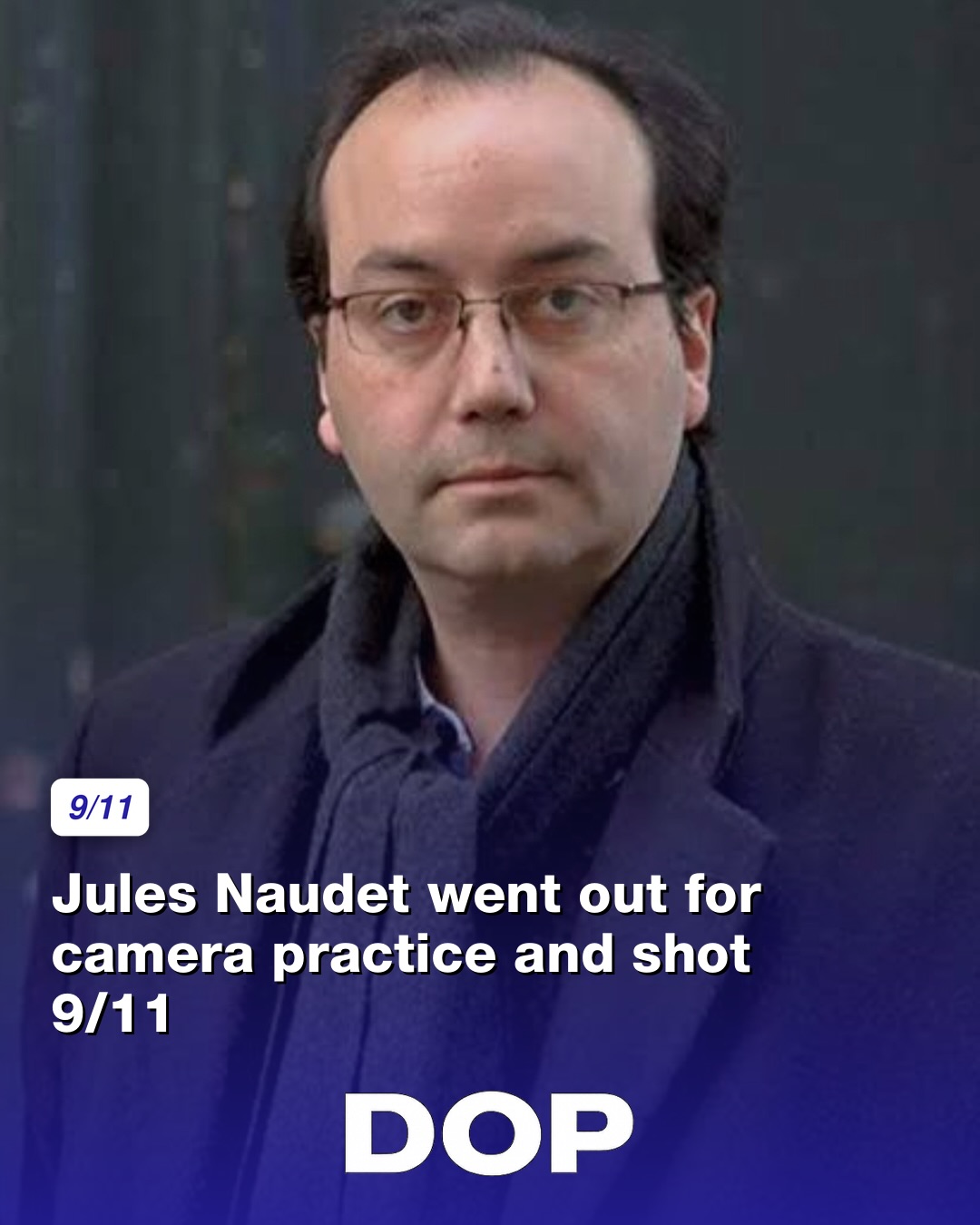
On September 11, 2001, the world changed. For cinematographers, it was a profound, horrifying demonstration of the power of the moving image, and the immense responsibility that comes with pointing a lens at reality. Among the countless frames captured that day, a singular sequence stands out: Jules Naudet's footage of the first plane striking the North Tower of the World Trade Center. It wasn't planned; it wasn't staged. It was, in the purest sense, accidental truth, born from a routine documentary shoot that suddenly found itself at the epicenter of an unimaginable catastrophe.
Naudet, alongside his brother Gédéon, had been embedded for months with New York City firefighters, specifically Engine 7, Ladder 1, in a Manhattan firehouse. Their project was a human-interest piece, focusing on a rookie firefighter's struggle to experience his first major fire. On that fateful morning, they were out on a reported gas leak at Church and Lispenard Streets, a mundane assignment. Jules, ever the documentarian, was rolling, capturing ambient footage, practicing his framing, perhaps hoping to catch a candid moment for their film. The camera he wielded, a Panasonic AG-DVX100, was a workhorse of its time for independent filmmakers and broadcast news, known for its robust build and ability to capture decent quality DV footage in a relatively compact form factor. Little did he know, he was about to capture not just a moment, but a monumental turning point in human history.
The Unflinching Lens of History
The stark reality of Naudet's footage lies in its raw, unadorned authenticity. There's no dramatic zoom-in, no pre-calculated composition. It's an instinctive pan, a reaction, as the cameraman's gaze follows the sound and then the sight of an aircraft flying impossibly low. The moment of impact is visceral, a sudden, violent explosion that rips through the blue sky. The camera doesn't flinch; it holds its ground, capturing the immediate aftermath, the debris, the smoke, the sheer, disbelieving horror. This wasn't a DP crafting a narrative; it was a human being reacting with the tools of his trade, an extension of his own shock.
Comparing Naudet's footage to the other known recordings of that initial impact highlights its unique significance. One was an unattended webcam in Brooklyn, capturing frames every four seconds for an art installation, a passive observer. Another was from a man filming from a car, a hurried, shaky glimpse. Naudet's is distinct because it was aimed. It was a conscious, albeit instinctual, act of cinematography in the face of the unthinkable. His camera, now a poignant artifact housed in the Smithsonian's National Museum of American History, represents not just a piece of equipment, but the conduit through which a nation, and indeed the world, first truly grasped the scale of the tragedy unfolding.
"Naudet's camera wasn't just recording an event; it was recording the birth of a new, terrifying reality, and the human response to it. It's a masterclass in accidental vérité, where the camera operator becomes an integral part of the narrative, not just its chronicler."
The Legacy of Observational Filmmaking
The Naudet brothers' film, simply titled '9/11,' became a seminal work of documentary filmmaking, not just for its unparalleled access and footage, but for its profound human perspective. It demonstrated the power of deep immersion and observational cinema, where the camera becomes a silent, trusted witness. Their approach, rooted in classic cinéma vérité, allowed the story to unfold organically, capturing the raw emotions and heroic efforts of the firefighters without intrusive narration or manipulative editing. The handheld nature of the footage, often shaky and imperfect, only amplified its authenticity, placing the viewer directly into the chaos and confusion of that day.
From a technical standpoint, the choice of a prosumer DV camera like the Panasonic AG-DVX100, while perhaps not as 'cinematic' as 16mm or 35mm film, proved to be serendipitous. Its portability, ease of use, and quick setup allowed Naudet to be responsive in a dynamic and rapidly deteriorating situation. The immediacy of video, rather than film, also meant that the footage could be processed and disseminated quickly, contributing to the world's understanding of the events as they unfolded. This incident underscored that the 'best' camera isn't always the most expensive or highest resolution, but the one that allows you to capture the moment, no matter how extraordinary or horrific.
The impact of Naudet's work extends beyond the historical record. It serves as a powerful reminder to documentarians and cinematographers of their unique role in society, to bear witness, to record, and to present truth, however uncomfortable it may be. It speaks to the ethical considerations of capturing trauma, the responsibility of the frame, and the indelible mark a camera can leave on history. The footage isn't just an archive; it's a testament to human resilience and the enduring power of the moving image to shape our collective memory.