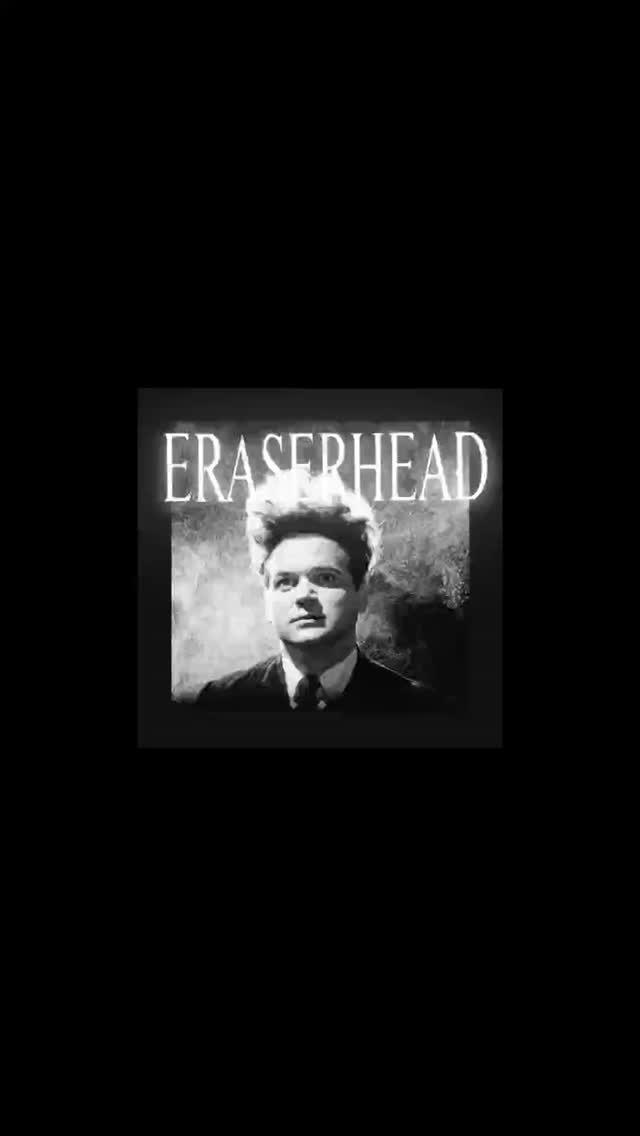
Few debuts in American cinema carry the mythic weight of David Lynch’s 1977 masterpiece, Eraserhead. To discuss the film is to summon images of decaying industrial landscapes, haunting chiaroscuro light, and a soundscape so dense it feels tactile. Yet, for all its deliberate iconography, the initial spark of the film remains shrouded in a fog of geography and time. Born somewhere in the creative ether between the grimy urban terror of late-1960s Philadelphia and the sun-drenched sanctuary of the American Film Institute in Los Angeles, the project began not as a meticulously outlined feature, but as a mysterious pull toward the subconscious.
When Lynch received an independent filmmaker’s grant from the AFI in 1970, he set out to build a world that reflected his visceral experiences living near Philadelphia's industrial zones. That environment, marked by soot-stained brick, buzzing electrical towers, and pervasive dread, became the psychological foundation for Henry Spencer’s claustrophobic universe. What was intended to be a modest short film quickly mutated into an unprecedented five-year production saga that would redefine the boundaries of independent cinema craft.
The Five-Year Odyssey of Industrial Chiaroscuro
The visual grammar of Eraserhead was forged under conditions that would break most directors. Shot mostly in the stables and disused rooms of the Greystone Mansion in Beverly Hills, the production operated on a shoestring budget, relying on night shoots, recycled sets, and immense patience. The film’s striking look was initially shepherded by cinematographer Herbert Cardwell, whose sudden passing mid-production posed a devastating challenge. Camera operator Frederick Elmes stepped into the Director of Photography role, working closely with Lynch to maintain complete visual continuity across years of sporadic shooting.
Elmes and Lynch achieved the film’s distinctive monochrome palette using 35mm black-and-white stock, leveraging high-contrast lighting setups that drew heavily from German Expressionism and classic film noir. Rather than softening the frame, the filmmakers embraced the coarse texture of the medium. Deep, impenetrable blacks were pitted against harsh, pinpoint highlights, transforming mundane rooms into surreal, void-like spaces. Every frame felt sculpted from light and shadow, giving the film a graphic precision that rendered Henry’s interior anxiety strikingly physical.
Philadelphia was a place of fear, but it was also a place of total inspiration. It was the atmosphere that birthed the world Henry Spencer inhabited, a place carved entirely out of shadow and texture.
Lenses, Light, and the Architecture of Nightmares
To capture the claustrophobic interiors of Henry’s apartment, Elmes utilized classic spherical lenses, often framing at tight focal lengths to isolate characters within their suffocating environments. Shot in the traditional 1.37:1 Academy aspect ratio, the frame pushes the viewer inward, emphasizing vertical lines, peeling wallpaper, and the grotesque textures of organic props. There is no room for off-camera escape; the composition traps the audience in Henry's dream logic.
The lighting philosophy on set was meticulously minimalist. Using small tungsten instruments, hard directional key lights, and deliberate scrims, the camera team carved out distinct zones of illumination while letting the surrounding environment drop into complete blackness. Practical lighting, such as the flicking lamps on Henry’s nightstand, acted as key narrative elements, pulsing with energy and enhancing the impression that the physical world itself was alive and hostile.
The visual success of Eraserhead launched Frederick Elmes into a legendary career, establishing a creative partnership with Lynch that would later yield visual masterpieces like Blue Velvet and Wild at Heart. Yet Eraserhead stands apart as an unrepeatable artifact: a film whose origin is as elusive as its meaning, captured through extraordinary technical patience and an unyielding commitment to the power of black-and-white cinematography.
This article contains affiliate links. We may earn a small commission at no extra cost to you. Learn more.