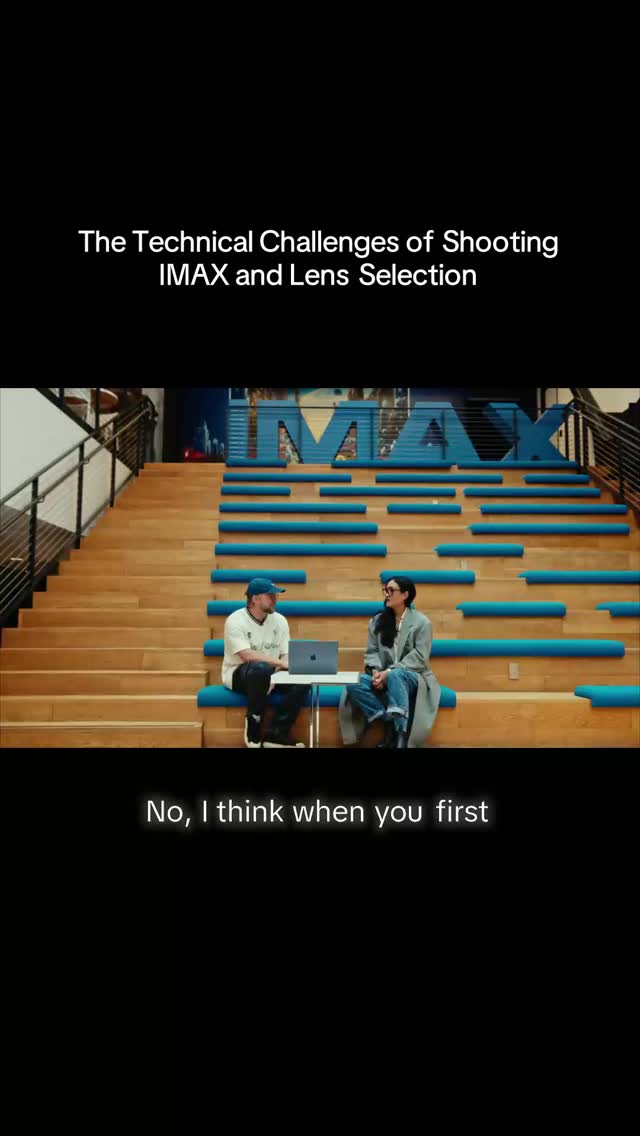
When a director and cinematographer decide to capture a feature on 15-frame, 70mm IMAX film, the announcement is usually met with reverence. We talk endlessly about resolution, color depth, and the unmatched immersive quality of a 1.43:1 aspect ratio projected on a six-story screen. Yet, behind the romanticized lore of large-format celluloid lies a grueling physical reality. The IMAX camera, specifically classical bodies like the MSM 9802 or the MKIV, is not merely a tool; it is an unyielding, noisy, heavy industrial machine that dictates the entire rhythm of a movie set.
Ergonomics and the Left-Eye Operator Dilemma
Pre-production plans for IMAX shoots are notoriously fragile. A Director of Photography can story-board elegant, sweeping camera moves or tight, intimate dialogue setups in prep, only to watch those plans dissolve during camera tests. Weighing upwards of 40 to 100 pounds depending on the rig, lens, and 1,000-foot magazine, operating an IMAX camera handheld or on a lightweight jib is a logistical nightmare. The sheer physical footprint forces immediate creative overhauls on set, often shifting blocking from fluid dynamic moves to static, monumental frames.
For operators, the physical strain is amplified by basic human anatomy. Camera viewfinders on traditional 15/70mm bodies were engineered around right-eye dominant operators. For a left-eye dominant cinematographer, operating an IMAX body is a exercise in physical contortion. To get an accurate eye-line through the optical viewfinder, the operator must press their head directly across the top or rear of the camera chassis. In doing so, their ear is placed centimeters away from the internal movement mechanism.
Operating a 15/70mm camera isn't just cinematography; it's a wrestling match with an unyielding industrial engine that demands every ounce of physical endurance.
The Sonic Cost: Vacuum Backs and Post-Production ADR
The mechanical sound of an IMAX camera is unforgettable, it sounds less like a cinema camera and more like a lawnmower or an industrial sewing machine operating at full throttle. To keep a film frame that large perfectly flat across the focal plane at 24 frames per second, the camera utilizes a high-powered vacuum back system that sucks the film against the pressure plate. The resulting acoustic signature is deafening on a quiet soundstage.
Because sound recordists stand virtually no chance of capturing clean production audio when the camera is running within twenty feet of the cast, the visual choice directly alters the sound workflow. Entire scenes shot on 15/70mm must be completely recreated in post-production through Automated Dialogue Replacement (ADR). This reality impacts the actors as well; knowing their live vocal performance will be replaced, performers must alter their energy on set, relying on the director to guide their vocal re-recordings months later in a dubbing booth.
Format Wars: IMAX 15/70 vs. Ultra Panavision 70
The choice to shoot large-format film usually leads to a pivotal debate: the vertical grandeur of IMAX 15/70 versus the ultra-wide scope of Ultra Panavision 70. While IMAX pulls film horizontally through the gate across 15 perforations to create a massive 1.43:1 canvas, Ultra Panavision 70 runs 65mm film vertically through a 5-perforation gate, paired with specialized 1.25x anamorphic lenses to yield a sweeping 2.76:1 aspect ratio.
From an optical standpoint, the two formats demand entirely different visual languages. IMAX relies on pristine custom spherical prime lenses, often modified Hasselblad or Mamiya medium-format glass, to deliver hyper-real, grain-free depth with absolute linear clarity. Ultra Panavision 70, famously revived for films like The Hateful Eight and Rogue One, introduces distinct anamorphic characteristics: gentle roll-off, vintage flare characteristics, and a wide-angle field of view without extreme vertical distortion.
Ultimately, choosing between these formats isn't just an aesthetic preference for aspect ratio, it is an operational strategy. Where Ultra Panavision offers a classic widescreen cinematic elegance with slightly more manageable camera packages, IMAX demands total operational surrender to its scale. It transforms the set into a high-stakes arena where every frame is hard-won, reminding us that true cinema craft often thrives on technical friction.
This article contains affiliate links. We may earn a small commission at no extra cost to you. Learn more.