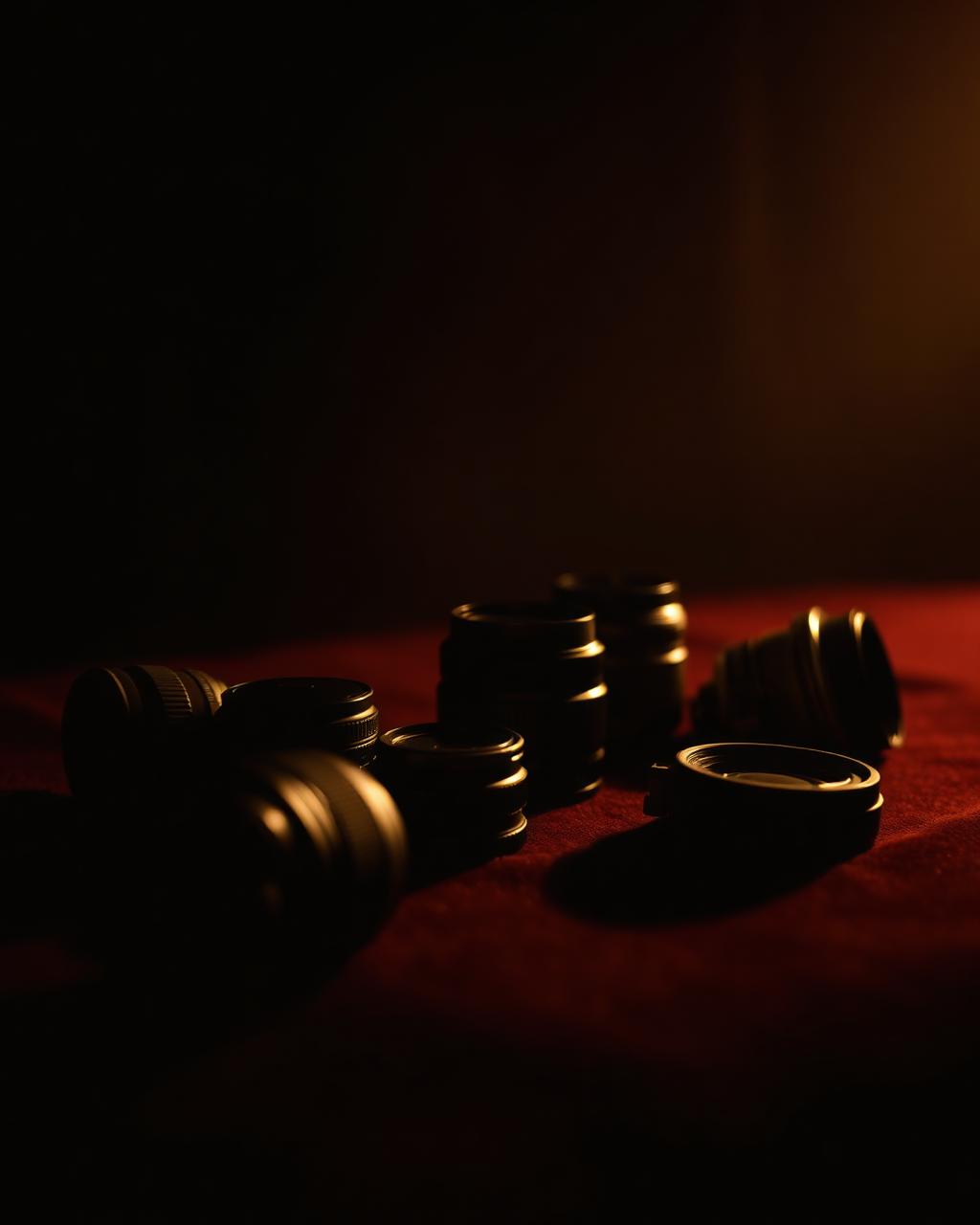
Sam Levy, cinematographer of The Only Living Pickpocket in New York, spent years testing vintage lenses before he found the glass that could do what he heard in his mind. He was looking for a specific optical quality: lenses that would veil highlights gently, that would produce organic halation, that would soften faces without sentimentalizing them. He first encountered Bausch and Lomb Super Baltars while working as an assistant to the legendary cinematographer Harris Savides. He tested them many times. The search did not end until he was ready to shoot Pickpocket.
The Super Baltars were originally produced in the 1960s, and original examples are now vintage glass—hardware that predates digital cinematography by decades. The optical design produces a specific rendering: a kind of glow at highlights that modern lenses avoid. Modern optics are engineered to produce sharp, clean highlights with hard edges. The Baltars let highlights breathe. They bloom slightly. They diffuse. The halation—the internal glow in highlights—creates a warmth in the image that feels lived-in.
When Levy described the Super Baltars to British Cinematographer, he was specific: "They veil highlights gently and produce an organic, easygoing halation that softens faces without sentimentalizing." This distinction is load-bearing. Many vintage lenses are soft, but softness alone can read as romantic, as nostalgic, as sentimental. The challenge is to soften without those associations. The Baltars accomplish this through the specific quality of their halation. The softening is not romantic. It is optical. It is what the glass does.
The connection to Gordon Willis matters here. Willis, one of cinema's most technically rigorous cinematographers, used the same Super Baltars on The Godfather in 1972. The lenses appear in one of the most visually sophisticated crime films ever made. Willis was not looking for soft or romantic images. He was looking for control. The Baltars gave him the optical quality he needed while maintaining the precision his visual language required. The lenses could do dramatic, could do subtle, could render skin texture and architectural detail with sophistication.
When Levy chose the Super Baltars for Pickpocket, he was inheriting a tradition of precise use of vintage optics. He was not sentimentalizing. He was solving a specific cinematographic problem: how to photograph aging men on the margins of New York City in a way that respected their faces without being condescending. The gentle halation of the Baltars allows the cinematographer to create images that feel warm while remaining rigorous about what they are showing.
The technical distinction between vintage and modern glass is increasingly important for contemporary cinematographers. Modern lenses—ARRI Master Primes, Zeiss Ultraprime, Canon K35—are engineered to be optically neutral. They render the sensor as faithfully as possible without imposing the lens' own optical character. Vintage glass like the Baltars imposes themselves on the image. The halation is not neutral. It is a signature. Every lens renders the world according to its optical design, and the Baltars' design includes that gentle veil over highlights.
For cinematographers considering vintage glass, Levy's approach demonstrates that the choice is not about nostalgia or affectation. It is about solving a specific visual problem that modern glass may not solve as well. The Super Baltars can do things that modern lenses cannot do, not because they are better, but because they are optically different. The halation of the Baltars is not available in modern optics. If you want that specific optical quality, you have to use vintage glass.
Levy tested the Baltars many times before Pickpocket because he needed to know they would perform reliably on a professional production, that they would work with the Alexa 35 digital sensor, that the optical quality would translate to the final image. The testing was not nostalgia. It was due diligence. By the time Pickpocket was shot, Levy knew exactly what the Baltars would do and why he needed them to do it.
Gear Recommendations
- ARRI Alexa 35 | Adorama – B&H Photo
- Canon K35 Primes | Adorama – B&H Photo
Note: Links above are affiliate links. Occupy Cinematography may earn a commission on qualifying purchases at no additional cost to you.