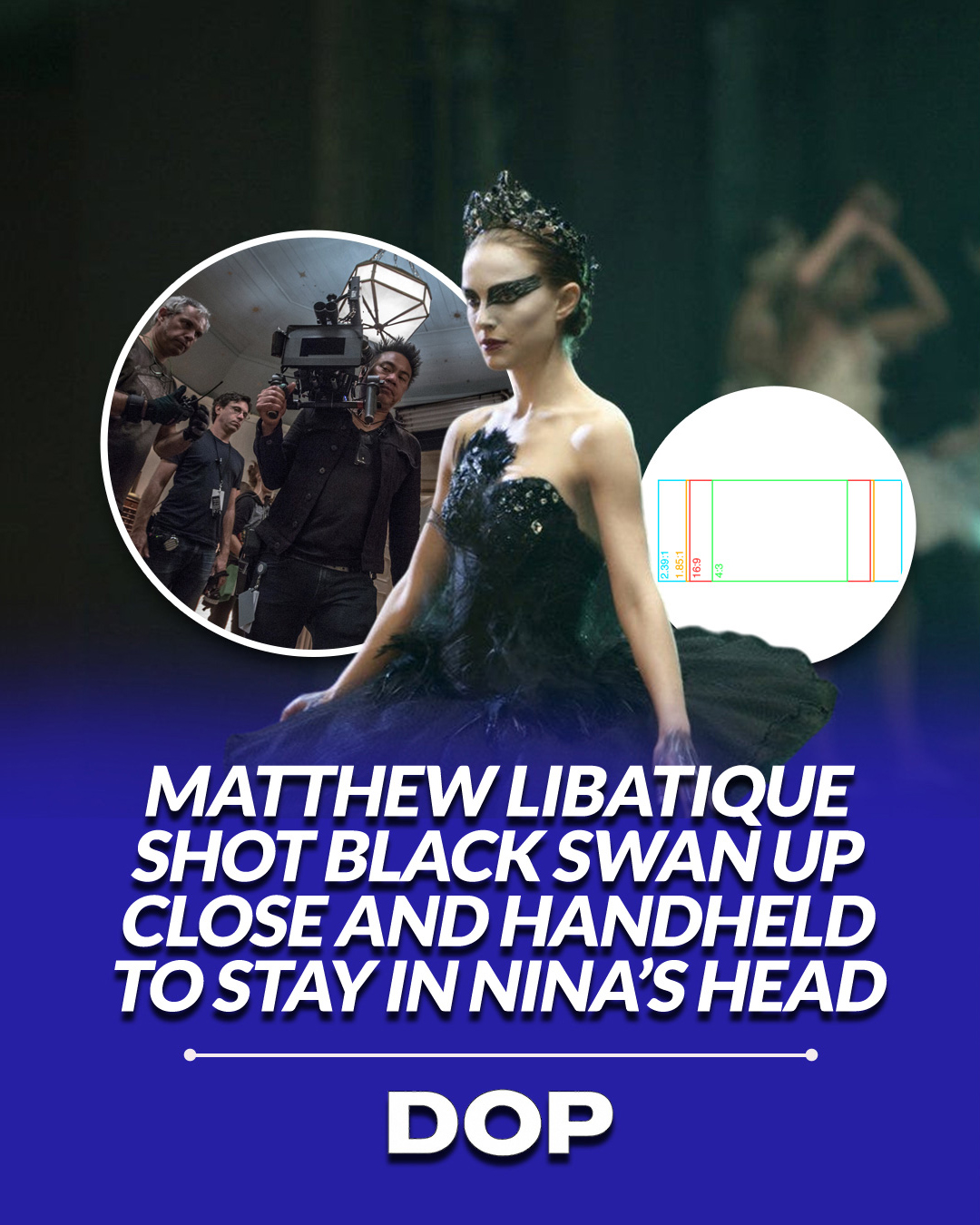
When Darren Aronofsky and cinematographer Matthew Libatique, ASC teamed up for Black Swan, they faced a unique visual hurdle: how to transform the rigid, pristine world of professional ballet into an immersive psychological nightmare. Rather than mounting the camera on steady, detached cranes or shooting with long, objective telephoto lenses, Libatique opted for extreme visual intimacy. The resulting image language doesn't just observe Nina Sayers (Natalie Portman); it locks the viewer inside her unraveling mind.
Libatique's approach relies heavily on subjective camera placement. By choosing to shoot predominantly handheld with wide focal lengths held inches away from Portman's face, the camera moves in concert with her breathing, twitching, and spinning. The frame drifts and jitters with every sudden movement, forcing the background to smear into an abstract blur during pirouettes. This proximity creates an unbearable sense of claustrophobia that instantly bridges the gap between performer and audience.
Super 16mm Texture and Close-Proximity Optics
To capture this raw, somatic energy, Libatique famously chose to shoot the majority of the film on Super 16mm format using Arriflex 416 and 16 SR3 cameras paired with Zeiss Ultra 16 prime lenses. The inherent optical characteristics of Super 16mm, its pronounced grain structure, organic highlights, and distinct color response, yielded a gritty texture that feels grounded in visceral reality rather than digital perfection. For specific low-light sequences and tight dressing room spaces, the production also integrated early DSLR bodies like the Canon 1D Mark IV, blending digital flexibility with analogue grit.
The choice of wide lenses placed close to the talent alters physical perspective. Wide glass naturally exaggerates depth and spatial distortion when positioned near a subject. As Nina's mental state breaks down, the optical distortion subtly amplifies her isolation, turning rehearsal rooms and apartment hallways into imposing, elastic caverns of anxiety. Focus breathing becomes an expressive feature rather than a technical flaw, mirroring the chaotic focus of an anxious mind trying to retain control.
If you want the audience stuck in a character's anxiety, put the camera where their head is and let the environment go slightly out of control.
Practical Illumination and Architectural Mirrors
From a lighting standpoint, Libatique embraced an environment-first philosophy. Rather than locking the camera down for intricate three-point lighting setups that would limit performance, he motivated the majority of the light through practical sources within the location. Fluorescent tubes in bleak backstage corridors, harsh overhead stage spill, and soft tungsten table lamps inside Nina's childhood bedroom provided an authentic, uncluttered canvas.
This practical approach gave operator and actors complete physical freedom. Without a forest of C-stands and flag setups obstructing the set, Portman could execute uninhibited choreography while Libatique tracked her movements seamlessly. The practical fixtures also interacted dynamically with the film's extensive mirror motifs, creating recursive, fractured reflections that visually reinforced Nina's shattered sense of identity without creating unwanted equipment glare.
A Masterclass in Psychological Visual Storytelling
For modern cinematographers, Black Swan serves as an essential case study in aligning technical choices with narrative psychology. Libatique's work demonstrates that horror does not always require high-contrast directional key lights or elaborate camera rigs. True dread often stems from unrelenting subjectivity, trapping the viewer in the physical space of the protagonist's suffering.
By combining the kinetic texture of Super 16mm film, close-proximity wide lenses, and flexible practical lighting, Libatique achieved an iconic visual signature. The camera becomes an active participant in Nina's tragic transformation, crafting a masterwork of kinetic, psychological cinema that continues to influence DPs today.
This article contains affiliate links. We may earn a small commission at no extra cost to you. Learn more.