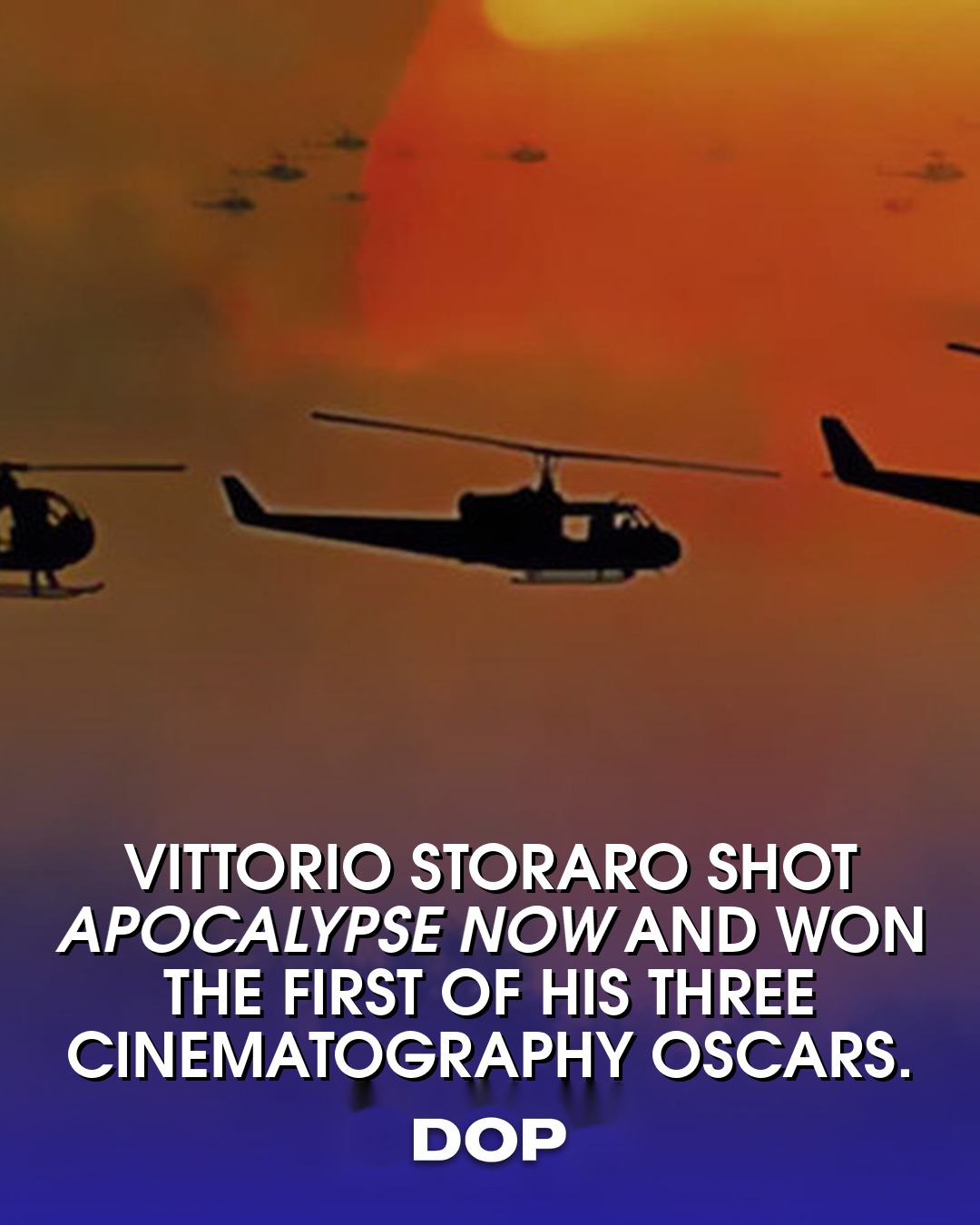
Vittorio Storaro's name is synonymous with a profound, almost spiritual, approach to cinematography. His philosophy, famously articulated as 'writing with light,' transcends mere technical proficiency, delving into the very essence of human emotion and narrative. While his illustrious career boasts three Academy Awards for Best Cinematography, for Apocalypse Now (1979), Reds (1981), and The Last Emperor (1987), it is arguably his groundbreaking work on Francis Ford Coppola's Vietnam War epic that most vividly encapsulates his mastery. Apocalypse Now isn't just a film; it's a sensory overload, a journey into the heart of darkness painted with the boldest strokes of light and shadow, forever altering the cinematic landscape.
When contemplating Apocalypse Now, the mind immediately conjures images of burning orange skies, the ominous silhouette of Huey helicopters against a fiery horizon, and the humid, oppressive greens of the jungle. These aren't accidental flourishes; they are the meticulously crafted visual vocabulary of Storaro, heavily influenced by Johann Wolfgang von Goethe's theory of colors. Goethe's treatise posited that colors aren't merely physical properties but evoke specific psychological and emotional responses. Storaro embraced this concept wholeheartedly, assigning symbolic weight to every hue, transforming the screen into a canvas where color becomes a character, speaking volumes without uttering a single word.
The Palette of Madness: Color as Narrative
Storaro's application of color in Apocalypse Now is a masterclass in psychological realism. The film's early scenes, depicting Captain Willard's disorienting existence in Saigon, are often bathed in sickly yellows and oppressive browns, reflecting his internal turmoil and the moral ambiguity of his mission. As Willard journeys deeper into the jungle, the palette shifts. Lush, almost suffocating greens dominate, hinting at the primordial, untamed nature of the environment and the escalating madness that permeates the air. The transition is gradual, almost imperceptible, pulling the audience deeper into the film's hallucinatory world alongside its protagonist.
The iconic 'Ride of the Valkyries' sequence, with its napalm-scorched landscapes and explosions, is a prime example of Storaro's 'burning color.' Here, reds and oranges dominate, not just depicting destruction but symbolizing the inferno of war, the primal aggression, and the sheer, unadulterated chaos. It’s a deliberate choice that elevates the destruction from mere spectacle to a profound statement on humanity's capacity for self-immolation. Storaro wasn't merely lighting scenes; he was imbuing them with a visceral, emotional resonance that few DPs before him had achieved with such audacious clarity.
"I wanted to use color to suggest the psychological condition of the characters and the emotional content of the story. Color is not just decoration; it's an expression of the subconscious." - Vittorio Storaro
Technical Brilliance: Beyond the Brushstrokes
While Storaro's artistic vision is paramount, his technical execution on Apocalypse Now was equally groundbreaking, especially considering the challenging conditions of shooting in the Philippines. The film was shot on 35mm film, primarily using Arriflex cameras, and Storaro, ever the innovator, pushed the boundaries of film stock and processing. He meticulously controlled the exposure and color timing, often employing extensive on-set practical lighting and gels to achieve his desired effects. His use of strong backlighting and silhouetting, particularly in the helicopter sequences and the final confrontation with Kurtz, creates a sense of epic scale and dramatic tension, turning human figures into mythic, almost archetypal, symbols.
The film's low-light scenes, particularly in Kurtz's compound, are a testament to Storaro's daring. Instead of illuminating every corner, he embraced darkness, allowing shadows to swallow details, fostering a sense of dread and the unknown. This selective illumination forced the audience to lean in, to actively engage with the limited visual information, mirroring Willard's own descent into the murky depths of Kurtz's psyche. It's a bold move that prioritizes mood and psychological impact over conventional clarity, a hallmark of Storaro's inimitable style.
Storaro’s brilliance lies in his ability to harmonize the technical with the philosophical. He didn’t just point a camera; he sculpted light, imbued color with meaning, and ultimately, created a visual language that is as complex and unsettling as the narrative it supports. Apocalypse Now remains a towering achievement in cinematography, not merely for its aesthetic beauty, but for its profound demonstration of how light and color can be wielded as potent storytelling tools, forever etching Vittorio Storaro's name into the pantheon of cinematic legends.
This article contains affiliate links. We may earn a small commission at no extra cost to you. Learn more.