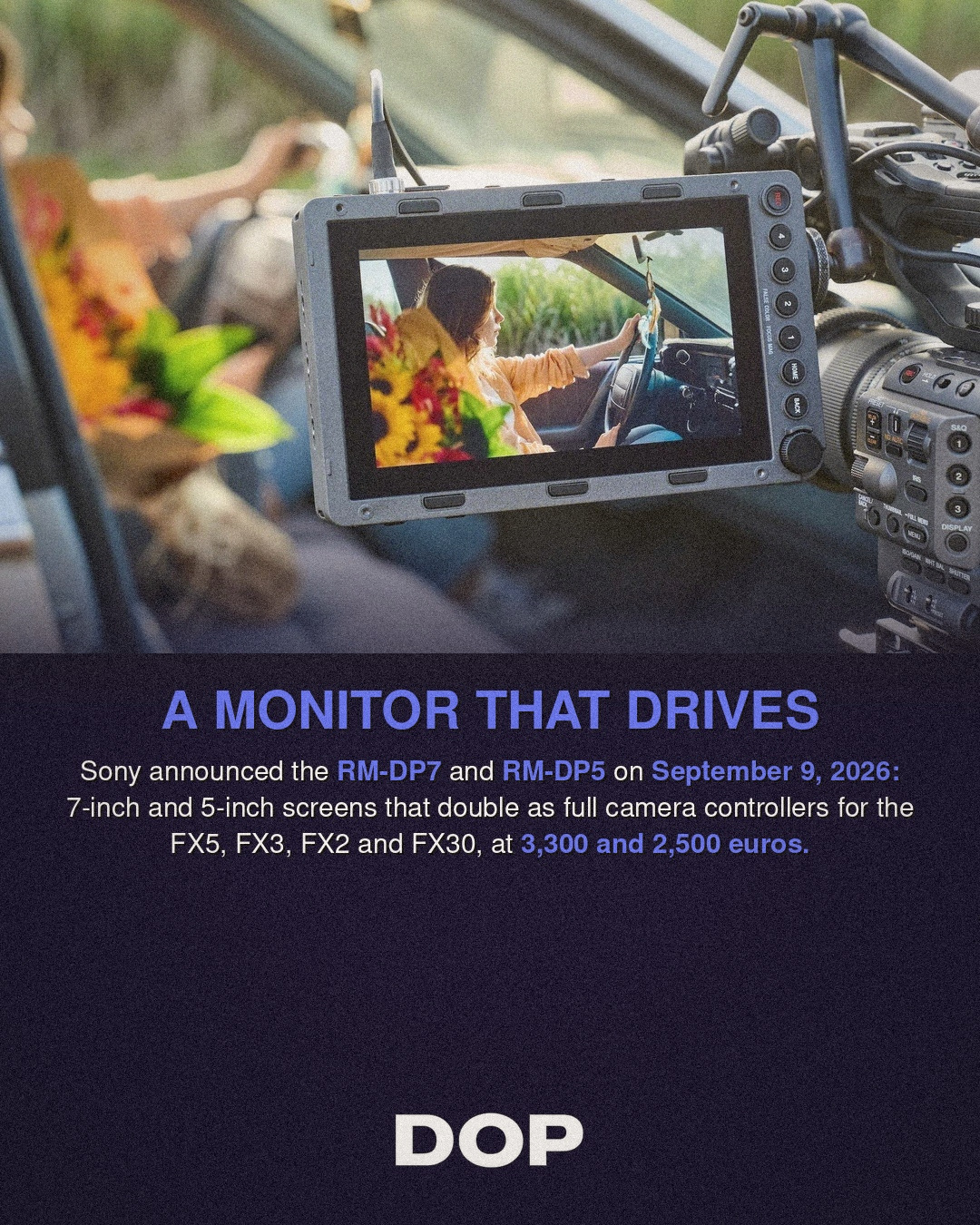
For years, the promise of modular cinema cameras has come with an unspoken compromise: the more compact the camera brain, the more chaotic the rig becomes. Directors of photography building out compact packages like the FX3 or FX30 have routinely had to rely on a patchwork quilt of third-party monitors, flimsy control cables, and laggy wireless protocols just to adjust shutter angle, roll focus, or toggle a LUT on the fly. With the announcement of the RM-DP7 and RM-DP5, Sony is stepping directly into the cockpit, engineering an integrated monitoring and hardware control solution purpose-built for its Cinema Line ecosystem.
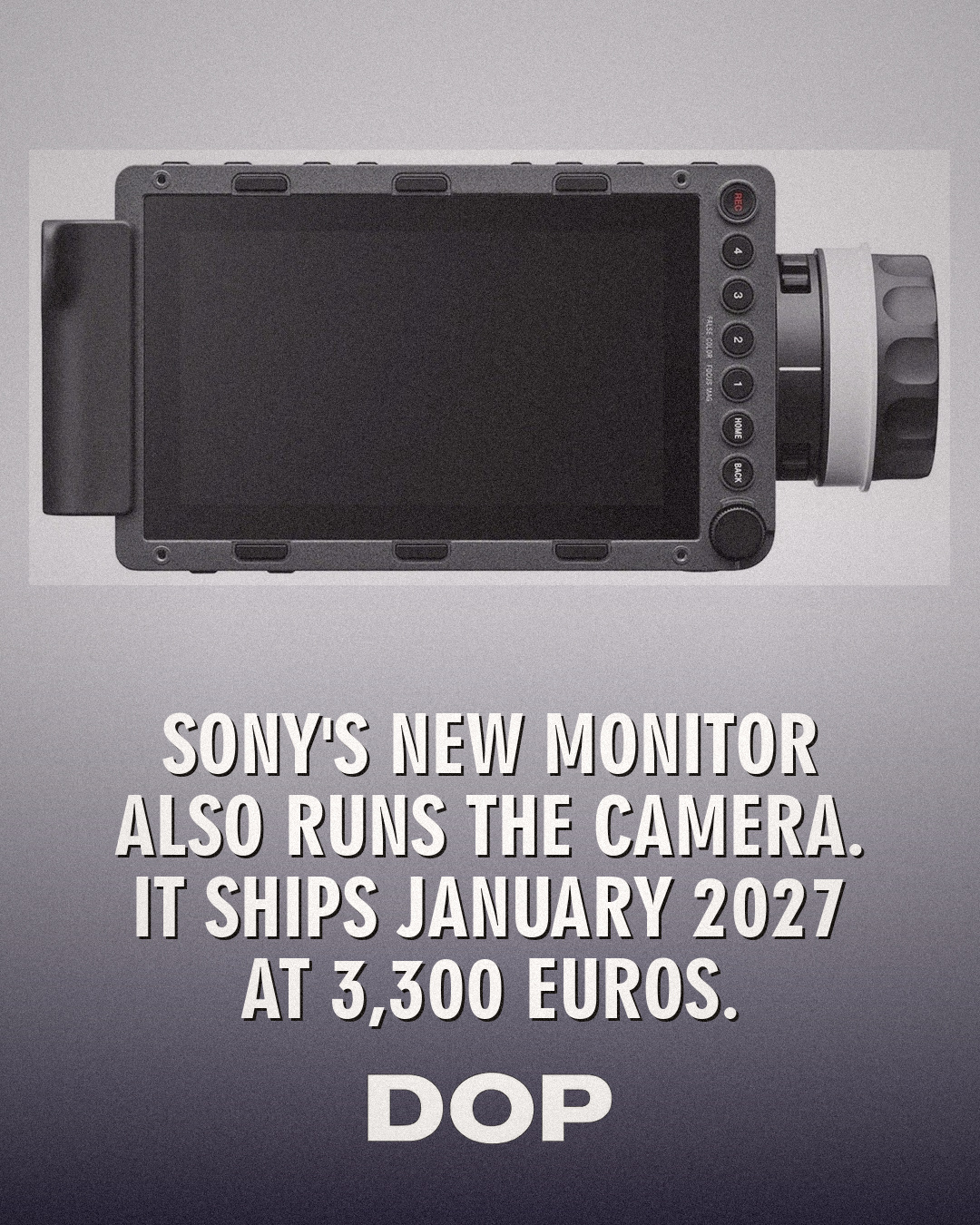
Priced at €3,300 for the seven-inch RM-DP7 and €2,500 for the five-inch RM-DP5, these monitors are designed to function not merely as passive viewing panels, but as active command centers. At launch, both units interface directly with the FX3, FX30, and companion compact bodies, delivering deep bi-directional menu communication that has previously been a headache to configure on set. Shipping in January 2027, the units represent a deliberate shift toward streamlining operational ergonomics on single-operator and splinter-unit shoots.
Engineering Tactility into Compact Workflows
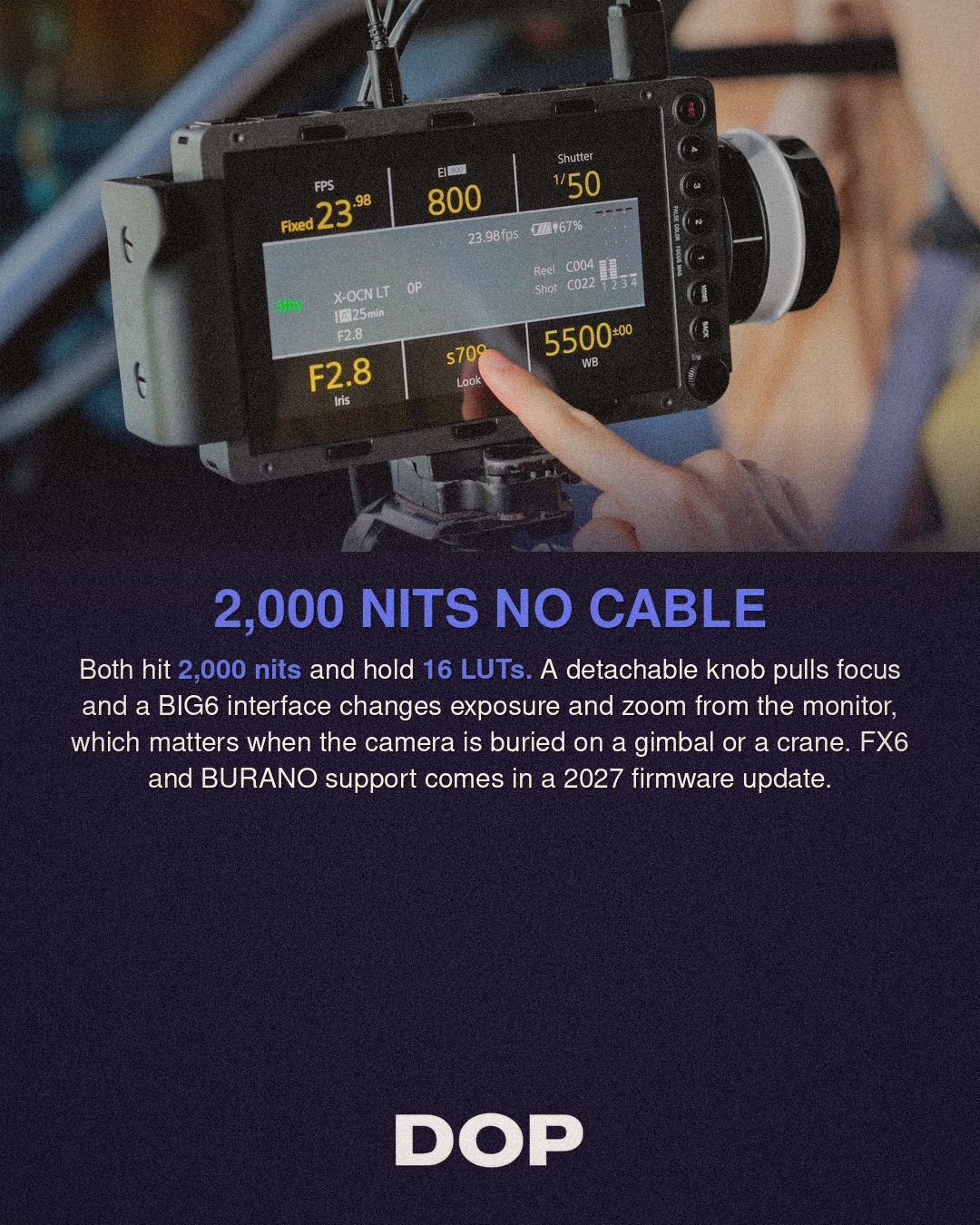
The true standout feature of the RM-DP series is the conscious departure from screen-only menu diving. While touchscreens have become the default interface on modern production monitors, they remain notoriously problematic on active sets, whether an operator is working with tactical gloves in freezing conditions, fighting smudges under direct midday sun, or needing to execute an exposure adjustment mid-take without shaking the camera rig. Sony addresses this by equipping both the RM-DP7 and RM-DP5 with assignable physical dials and an innovative detachable focus knob.
This hardware implementation allows operators and ACs to manipulate key optical parameters, exposure indices, internal variable ND filtration, digital zoom, and precise rack focus, without ever touching the camera body itself. For gimbal workflows or jib setups where touching the camera balance point spells disaster, having a dedicated physical dial mapped directly to the internal electronic variable ND or iris is a game-changer for maintaining consistent depth of field when light levels shift unexpectedly.
“By relocating tactile mechanical inputs onto an ultra-bright panel, Sony eliminates the friction between viewing an image and executing precise technical adjustments.”
The detachable nature of the physical focus dial speaks to modular operational velocity. An operator flying an FX3 on a shoulder rig can position the focus knob directly on the monitor chassis within thumb’s reach, or decouple the module depending on how the camera package is balanced. This design sensibility mirrors high-end wireless hand units, democratizing micro-adjustments and eliminating third-party LANC controller tangles that clutter lightweight builds.
Display Precision and the Daylight Challenge
On the monitoring front, both panels deliver a robust 2,000-nit Full HD display, making them formidable tools for exteriors without the mandatory crutch of a bulky sun hood. When framing high-contrast scenes in blazing natural backlight, 2,000 nits provides the latitude needed to accurately evaluate clipping highlights and shadow falloff. Paired with Sony’s proprietary color mapping, the monitors preserve the subtle tonal roll-off native to S-Log3 and S-Cinetone, ensuring that what the operator sees in the field matches what the colorist sees in the grading suite.
Both units feature internal processing capable of housing up to sixteen user 3D LUTs, accompanied by critical exposure evaluation tools such as customizable false color, waveform monitors, and peaking algorithms tailored specifically for high-resolution sensors. For cinematographers who routinely bake in custom viewing transforms to guide client monitors or balance ratio lighting on the fly, having instant, latency-free LUT toggling tied to physical programmable buttons speeds up set etiquette exponentially.
Expanding the Cinema Line Architecture
Choosing between the five-inch RM-DP5 and the seven-inch RM-DP7 comes down to footprint and set role. The RM-DP5 offers an ultra-compact, low-profile footprint ideal for gimbal work, car mounts, and tight handheld run-and-gun documentary operating where every gram counts. Conversely, the seven-inch RM-DP7 provides the screen real estate necessary for focus pullers pulling off marks or for DPs wanting an uncompromised overview of complex multi-subject staging.
While the launch firmware focuses squarely on smaller cinema bodies, Sony has confirmed that broader Cinema Line integration, specifically bringing deep hardware support to workhorses like the FX6 and the flagship CineAlta BURANO, will arrive in a major firmware update later in 2027. This staged rollout signals an overarching strategy: standardizing a single, unified monitor-and-control language across the entire Cinema Line tier. If the RM-DP series delivers on its promise of rock-solid reliability and instant response times, it may finally render external breakout boxes and third-party control cables relics of the past.