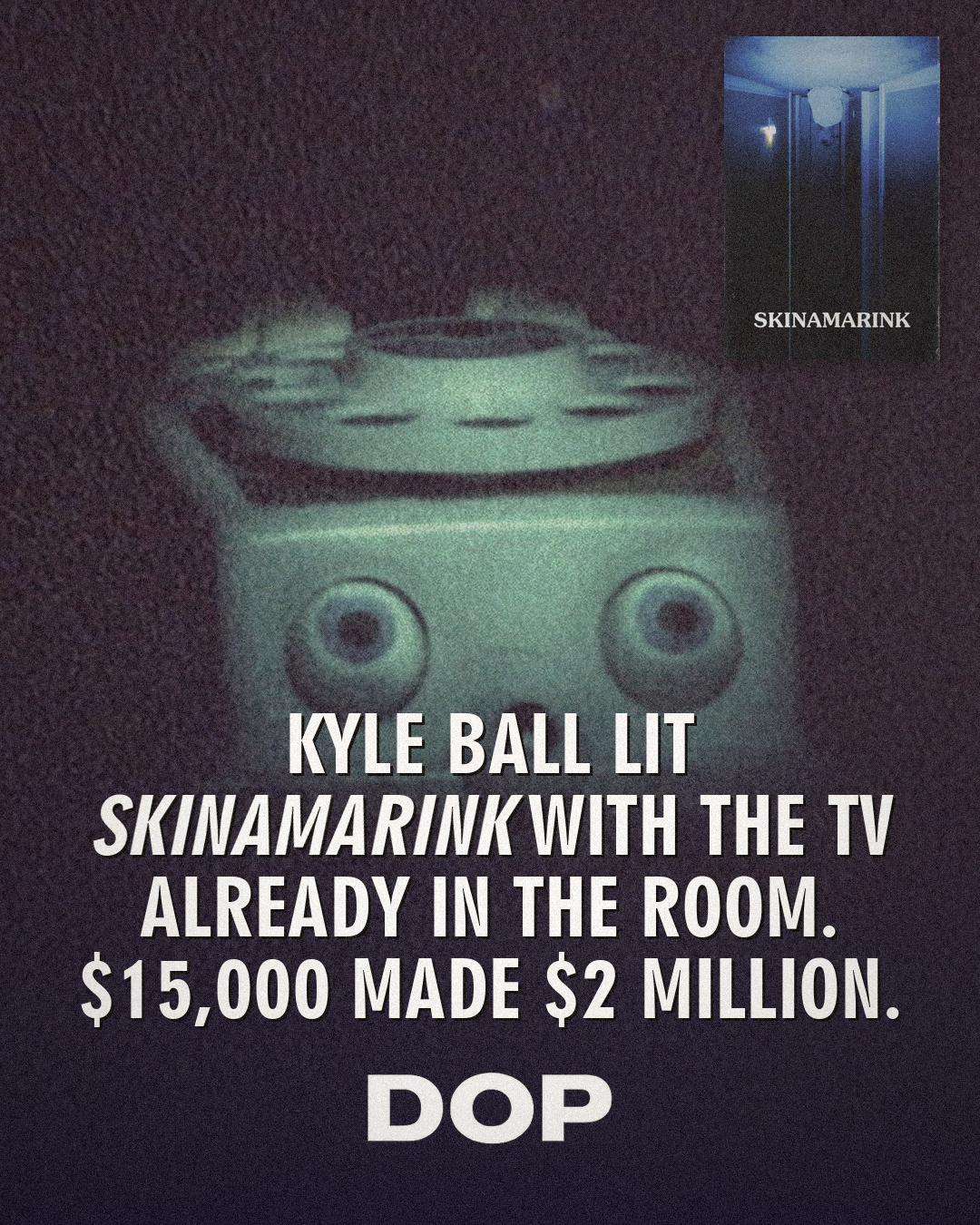
In an era dominated by hyper-clean large-format digital sensors, pristine internal optical elements, and meticulous LED volume stages, Kyle Edward Ball’s 2022 sensation Skinamarink arrived like a transmission from an alternate dimension. Produced on an astonishingly lean fifteen-thousand-dollar budget within the tight confines of Ball’s childhood home in Edmonton, Alberta, the film bypassed conventional visual grammar entirely. Instead, director Ball and cinematographer Jamie McRae engineered an oppressive, tactile nightmare through extreme exposure strategies and sheer reliance on diegetic light.
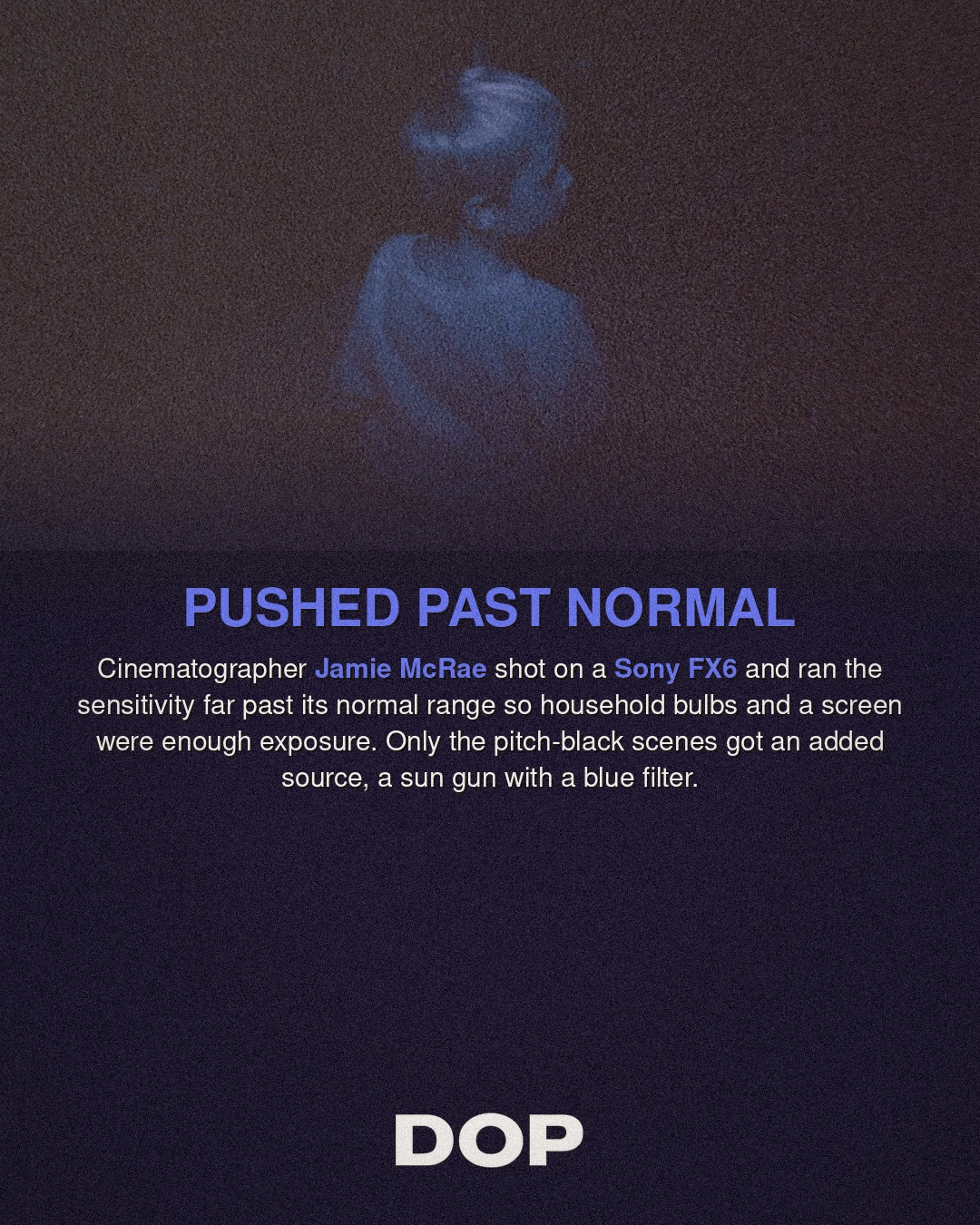
The technical triumph of the film lies in McRae’s willingness to push hardware past its polite tolerances. Rather than fighting low-light limitations with battery-operated cinema LED kits, the production embraced the full-frame sensor of the Sony FX6, leveraging its dual-base sensitivity, specifically relying on the high-base 12,800 ISO setting and pushing gain even further into chaotic digital territory. By daring to let the camera digest underexposed rooms illuminated primarily by domestic incandescent fixtures, McRae treated the camera not as an objective capture device, but as an unstable witness.
The Geometry of Domestic Absence
Rather than framing human subjects, McRae and Ball systematically anchor the frame to doorframes, baseboards, ceiling cornices, and pile carpets. This inverted framing style shifts the psychological burden squarely onto exposure value and contrast ratios. The bulk of the film’s key lighting emanates from a single cathode-ray tube (CRT) television looping vintage public-domain cartoons. The fluctuating, cold blue phosphor light cast by the CRT provided dynamic, moving exposure gradients that rake across hollow hallways and forgotten plastic toys.
When deep, unnavigable blacks threatened to drop completely off the sensor's IRE scale, McRae introduced a handheld sun gun fitted with a saturated blue gel. This minimal intervention preserved just enough edge luminance on doorframes and corners to imply vast, architectural emptiness without ever filling the shadows. The resulting imagery subverts the conventional Hollywood doctrine of shadow detail; in Skinamarink, negative space is a physical, suffocating presence.
McRae treated the camera not as an objective capture device, but as an unstable witness, daring to push the digital sensor into raw, noisy chaos.
Embracing the Digital Noise Floor
Modern cinematography often obsesses over clean signal-to-noise ratios, burying sensor noise under aggressive temporal noise reduction or layering sterile, synthesized 35mm grain over pristine 4K log footage. McRae and Ball reversed this hierarchy. The native sensor noise of the pushed FX6 was not an artifact to be masked, it became the foundational texture of the entire cinematic world. Married with heavy post-production grain passes and analog distortion filters, the image vibrates with kinetic pareidolia.
This aesthetic weaponizes human perception. At sub-foot-candle light levels, the human eye frantically searches darkness for coherent shapes, a psychological phenomenon known as hyperactive pattern detection. By starving the sensor of photons and filling the void with dense, dancing grain, McRae forces the viewer’s own ocular processing to construct monsters out of compression noise and shadow gradients.
A Blueprint for Radical Microbudget Craft
When Skinamarink went on to gross over two million dollars theatrically, it sent shockwaves through an industry convinced that theatrical viability requires million-dollar grip trucks and elite glass. McRae proved that visual storytelling is not determined by the size of the lighting package, but by absolute conceptual coherence. By restricting the toolkit to domestic lamps, an obsolete television screen, and a modern mirrorless cine body, the filmmakers turned economic necessity into an uncompromising stylistic signature.
For independent cinematographers, McRae’s work remains an inspiring case study in authorial voice. It serves as a stark reminder that true cinematic atmosphere is rarely purchased in a rental house; it is forged by understanding the physics of your sensor, respecting the raw power of darkness, and having the courage to let the darkness bleed back into the lens.
This article contains affiliate links. We may earn a small commission at no extra cost to you. Learn more.