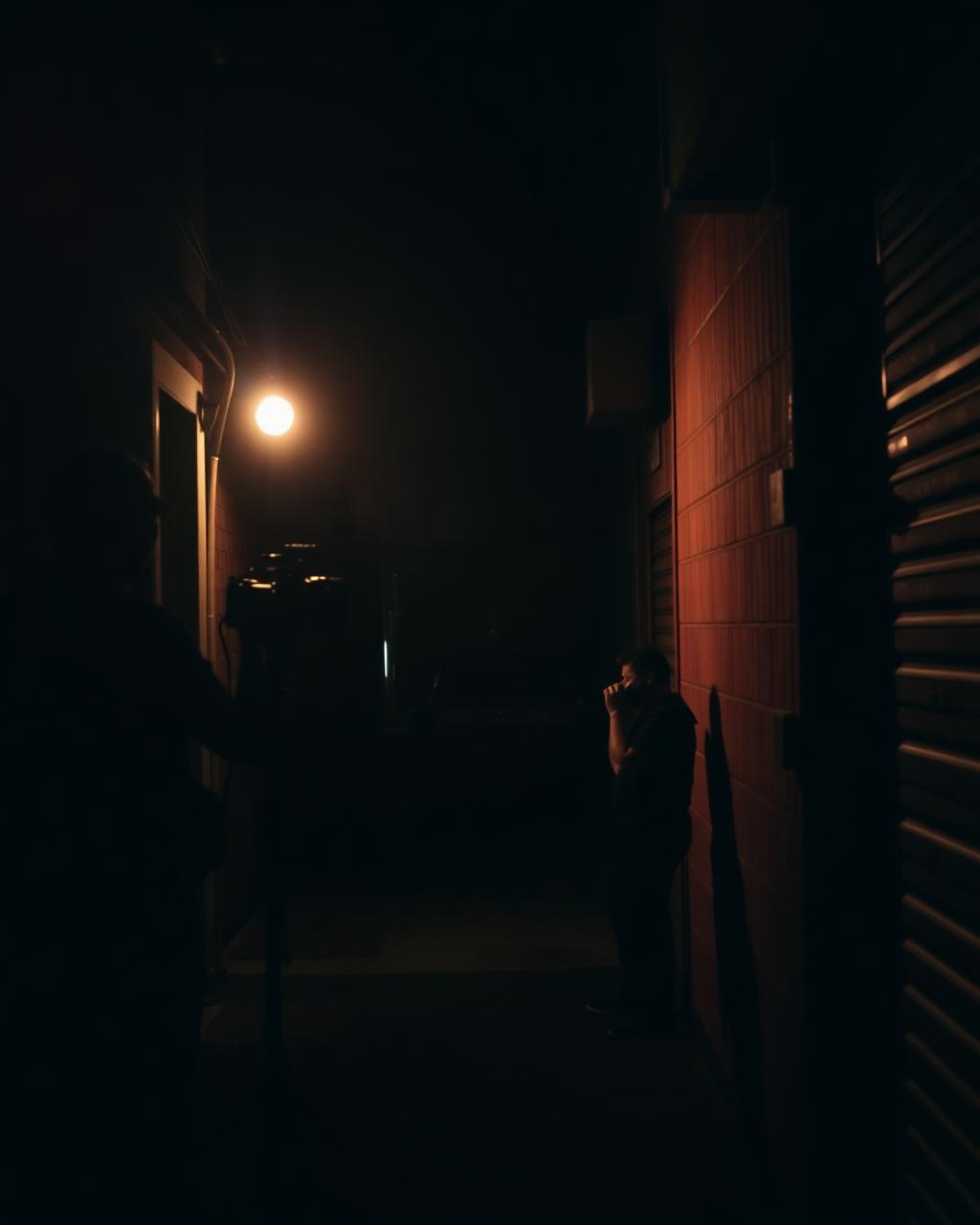
In In a Whisper, directed by Leyla Bouzid and premiering at Berlinale 2026, cinematographer Sebastien Goepfert made a specific decision: the house itself would be the main character, and light would prove it. The film follows a Tunisian woman returning to her family home in Sousse for her uncle's funeral. The interiors are sculpted in chiaroscuro—high-contrast light and shadow—with strong exterior light from windows and doorways creating backlit silhouettes of characters inside. The rooms remain dark. Characters emerge from shadow.
Bouzid described the house as 'the main character,' inspired by her grandmother's home. This is not metaphorical language in an interview. It is a production directive. If the house is a character, then Goepfert's job was to photograph the house's interior state, its emotional temperature, its relationship to the people living inside it. The answer was shadow. Lots of shadow. Shadow as presence, not absence.
The technique of backlit figures in front of windows is ancient in visual language. But Goepfert's application is specific: he uses it not to create drama through silhouette but to photograph how family erasure manifests visually. The film is queer cinema, and Bouzid draws on her own experience of queer lives within family structures that do not acknowledge or accommodate queerness. The cinematography renders this as darkness. Not darkness as depression or sorrow, but darkness as architectural fact. The room is dark. The light from outside does not penetrate far. The people inside are silhouetted, half-visible, existing in the space between visibility and erasure.
This is thematic cinematography. Every lighting choice argues something about the story. Goepfert works with strong exterior light—windows and doorways are the film's primary sources—but deliberately prevents that light from filling the interior space. The contrast between bright exterior and dark interior becomes the visual register of how the family holds silence. The home that should be warm becomes a space of enforced obscurity.
For cinematographers interested in how to photograph psychological states through lighting technique, Goepfert's work on In a Whisper is essential study. The chiaroscuro approach is not elegant for elegance's sake. It is motivated entirely by the film's thematic content. The backlit characters are not compositionally beautiful; they are thematically necessary. The darkness of the interior is the film's central metaphor photographed directly.
Film Fest Report's interview with Bouzid noted the collaborative relationship: 'Shot with cinematographer Sebastien Goepfert, the interiors are sculpted in chiaroscuro.' This language—sculpted—suggests that Goepfert was not merely lighting a set but constructing a visual architecture. The light and shadow were the film's structure, not its decoration.
Goepfert backlit characters in front of windows so the house could hold more shadow than light. That is not a lighting decision. It is a thematic one.
Gear Recommendations
- Blackmagic Pocket Cinema Camera 6K Pro | Adorama – B&H Photo
- Sigma 18-35mm f/1.8 Art | Adorama – B&H Photo
- Tiffen Black Pro-Mist 1/4 Filter | Adorama – B&H Photo
- SmallHD Ultra 7 Monitor | Adorama – B&H Photo
Note: Links above are affiliate links. Occupy Cinematography may earn a commission on qualifying purchases at no additional cost to you.